
When we talk about longevity, most people immediately think about living longer.
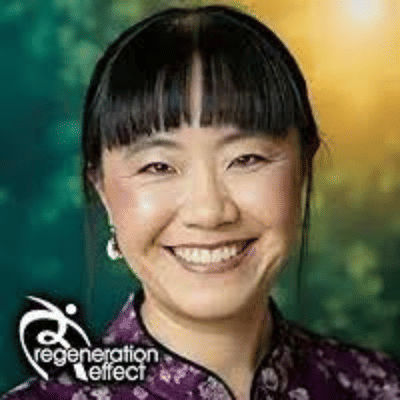
But during my conversation with Dr Yi Song, we explored a different question.
What if the goal isn't simply adding years to your life, but adding life to your years?
For many women in midlife, that's the conversation that matters most.
It's one thing to reach your eighties or nineties. It's another to arrive there with your energy, mobility, independence and sense of vitality intact.
Dr Yi Song combines Traditional Chinese Medicine with modern regenerative medicine, creating a fascinating bridge between ancient wisdom and emerging science. Throughout our conversation, we explored what it really means to support health over the long term and why prevention deserves far more attention than it often receives.
One of the things I found particularly interesting was the Chinese Medicine perspective that health isn't simply the absence of disease.
Instead, it's about balance.
According to Traditional Chinese Medicine, each person has their own constitution, strengths and vulnerabilities. The goal is to identify imbalances early, before they develop into something more significant.
This approach feels very different from the way many of us have been taught to think about health.
So often we wait until symptoms become impossible to ignore before we seek help. Yet by the time something shows up in blood work or scans, the underlying imbalance may have been developing for years.
Dr Yi explained how practitioners use tools such as tongue and pulse diagnosis to identify patterns long before they would necessarily appear through conventional testing.
Whether or not you're familiar with Traditional Chinese Medicine, there is something valuable in the reminder that health is often shaped by the small things we do consistently over time.
Our sleep.
Our stress levels.
Our recovery.
Our relationship with food.
How much time we spend outdoors.
How often we slow down enough to actually listen to our bodies.
A major theme throughout our conversation was the impact of chronic stress.
Many of us have become so accustomed to pushing through exhaustion that we no longer recognise it as a warning sign.
Dr Yi described this as creating an energetic debt — a situation where we continually withdraw from our reserves without making enough deposits back into the system.
Over time, that imbalance can influence everything from immune function and inflammation to overall resilience.
As someone who regularly speaks with experts across health and wellness, this is a theme I hear again and again.
The body keeps score.
Eventually, it asks us to pay attention.
We also explored the role that nature can play in supporting health and recovery.
Something as simple as spending time outdoors, reconnecting with natural rhythms, and creating space away from constant stimulation can have a profound impact on the nervous system.
It's easy to dismiss these things because they're simple.
Yet often it's the simple practices that become the most powerful when repeated consistently.
Towards the end of our conversation, we discussed stem cell therapy and its growing role in regenerative medicine.
Dr Yi explained how stem cells may support the body's repair processes and why there is so much excitement surrounding this area of research. At the same time, he was clear that no therapy exists in isolation.
There is no magic treatment that can compensate for poor sleep, chronic stress, nutrient deficiencies, lack of movement, or years of neglecting foundational health habits.
The basics still matter.
Perhaps more than ever.
What I appreciated most about this conversation was that it wasn't focused on chasing immortality or finding the latest biohacking trend.
It was a conversation about creating the conditions that allow us to age well.
To stay engaged.
To remain independent.
To continue doing the things we love for as long as possible.
For me, that's a far more inspiring definition of longevity.
Not simply living longer.
Living better.