

Narcissism has become one of the most overused words on social media.
Someone is selfish? They're a narcissist.
Someone doesn't text back? Narcissist.
Someone disagrees with you? Narcissist.
But narcissistic personality disorder (NPD) is something very different.
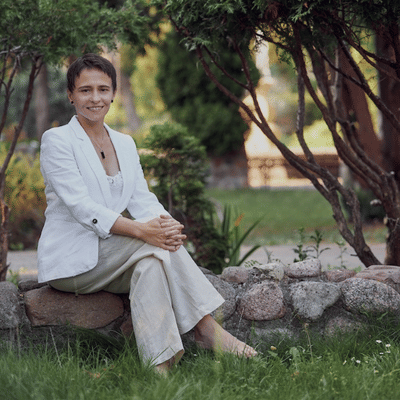
In this episode of The Midlife Rebel Podcast, I sat down with psychologist and author Kasia Dodd to separate internet myths from clinical reality. We explored what narcissistic personality disorder actually is, how covert narcissists operate, why these relationships are so damaging, and—most importantly—how people begin rebuilding after emotional abuse.
What is narcissistic personality disorder?
One of the biggest takeaways from our conversation was that everyone can behave selfishly sometimes.
We all have moments where we're stressed, defensive, anxious or emotionally immature.
That doesn't make someone a narcissist.
Narcissistic personality disorder is a deeply ingrained personality structure. It isn't simply a collection of bad behaviours—it becomes someone's default way of relating to the world.
People with NPD typically struggle with:
A chronic lack of empathy
An overwhelming focus on themselves
Difficulty accepting responsibility
Seeing criticism where none exists
Rewriting events to protect their self-image
As Kasia explained, even something as simple as asking someone to turn on the bathroom fan can become, "You're disrespecting me."
Reality gets rewritten.
Covert narcissist vs overt narcissist
Many people picture narcissists as loud, arrogant and attention-seeking.
Those certainly exist.
They're often referred to as overt narcissists.
Covert narcissists can be much harder to recognise because they often appear vulnerable, anxious or even deeply wounded.
Rather than controlling through confidence, they often manipulate through sympathy.
You find yourself rescuing them.
Walking on eggshells.
Constantly explaining yourself.
Eventually, the relationship revolves around managing their emotions while your own needs quietly disappear.
Although the presentation looks different, the outcome is often the same: you shrink while they become the centre of the relationship.
Why gaslighting is so damaging
One of the most destructive parts of narcissistic abuse is gaslighting.
Over time, your own perception starts to feel unreliable.
You hear things like:
"That never happened."
"You're imagining things."
"I never said that."
"You're too sensitive."
At first you question isolated conversations.
Eventually you begin questioning yourself.
This is why recovery isn't simply about ending the relationship.
It's about rebuilding trust in your own judgement again.
Can narcissists change?
This was one of the questions I was most curious about.
Kasia explained that treatment is incredibly difficult—not because people don't want to help, but because genuine self-awareness is often impaired.
Many people with narcissistic personality disorder simply cannot recognise their own role in what's happening.
Without accountability, meaningful change becomes extremely difficult.
Trauma may contribute to narcissism, but trauma alone doesn't explain why some people develop narcissistic personality disorder while others don't.
There may be genetic, prenatal or intergenerational influences that researchers are still trying to better understand.
The cycle of narcissistic abuse
Many people search for terms like:
Love bombing
Devaluation
Discard
Hoovering
These are common patterns described in narcissistic relationships.
The relationship often begins with intense attention and affection.
Over time, criticism, control and emotional manipulation replace the idealisation.
If the relationship ends, attempts may follow to draw the partner back in—a pattern commonly referred to as hoovering.
Understanding these patterns can help people recognise what's happening much earlier.
Healing after a narcissistic relationship
Leaving is often only the beginning.
Especially where children, shared finances or housing are involved, walking away isn't always straightforward.
Kasia emphasised the importance of reconnecting with your own deep self.
Learning to trust your intuition again.
Listening to your body.
Recognising red flags before they become patterns.
We also discussed EFT (Emotional Freedom Techniques or tapping), which she uses to help clients process emotional triggers, calm the nervous system and begin rebuilding self-trust.
Healing isn't just about recovering from another person.
It's about recovering yourself.
Listen to the full conversation
If you've ever wondered whether you're dealing with narcissistic behaviour, wanted to understand the difference between covert and overt narcissism, or are rebuilding after emotional abuse, I think you'll find this conversation both compassionate and incredibly practical.
Listen to my full conversation with psychologist Kasia Dodd on The Midlife Rebel Podcast.