
There’s an idea we can easily absorb as we get older: that by now, we should know who we are.
We should have worked ourselves out. Made the big decisions. Settled into our beliefs, our relationships, our careers and the way we expect the rest of our lives to unfold.
But what if we’re never really finished becoming who we are?
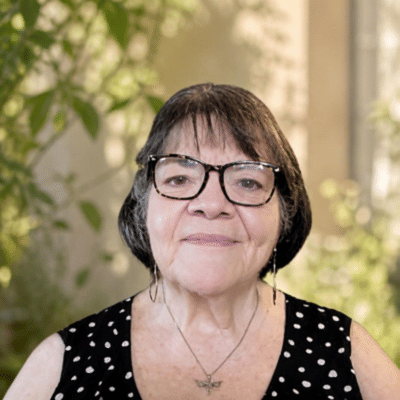
Toni LaMotta’s life is a wonderful example of what can happen when we remain willing to question, change and keep discovering ourselves — at every age.
Learning to Live by Your Own Rules
Toni joined a Catholic convent at just 17 years old and spent the next 16 years living under a vow of obedience.
Her days were shaped by rules and expectations about what to wear, what to eat and how to live. By the time she left the convent at 33, she had spent much of her adult life looking outside herself for direction.
Suddenly, she had choices.
And some of the simplest ones were surprisingly difficult.
Toni tells the story of realising she didn’t even know what colour sofa she liked. It sounds like a small thing, but underneath it was a much bigger question:
What do I actually want?
It’s a question that can become particularly loud in midlife.
Our circumstances may be very different from Toni’s, but many of us have spent decades absorbing messages about who we should be, what a good woman looks like, what success means and what we’re supposed to prioritise.
Eventually, some of those rules stop fitting.
And that can be the beginning of something rather than the end.
The Courage to Question
One of Toni’s pivotal memories from her years in the convent happened during “grand silence”, when speaking was forbidden.
She heard another woman crying.
Toni knew the rules, but something in her told her that comforting this woman mattered more than obeying them. So she broke the rule.
And nothing terrible happened.
It became an important lesson in trusting her own judgement — recognising that an external authority isn’t always more reliable than our own values, compassion and inner knowing.
There’s a little rebel energy in that.
Not rebellion simply for the sake of breaking rules, but the willingness to stop and ask whether the rules we’re following still make sense.
Whose expectations are these?
Do I still believe this?
Does this reflect who I am now?
And what might I choose if I trusted myself?
Finding Your Inner Compass
Leaving the convent was far from the last time Toni reinvented herself.
Her life has moved through mathematics, computer programming, teaching, ministry, business and coaching. Looked at individually, those chapters could appear disconnected.
Looked at as a whole, they become stepping stones.
That idea forms part of Toni’s Inner Compass work. One of the practices she shares is to identify ten significant stepping stones in your own life and explore what each experience gave you.
What did you learn?
Who did you become?
What strengths developed because of it?
What are you still carrying?
It’s an interesting way to look back at a life because it challenges the idea that changing direction means everything that came before was wasted.
Sometimes the experiences that appear to have taken us off course are part of what prepares us for whatever comes next.
Understanding the Patterns We Carry
Toni also uses tools including the Enneagram to explore the motivations and patterns underneath our behaviour.
Rather than using personality systems to put ourselves into another box, the invitation is to become curious about why we respond to life in particular ways.
Where do we automatically go when we’re afraid?
Which parts of ourselves do we rely on too heavily?
What are we avoiding?
What old beliefs are still influencing our decisions?
Toni describes herself as an Enneagram Seven, with the natural optimism that can accompany it, while also recognising how positivity can sometimes become a way of moving away from pain.
Self-awareness gives us the opportunity to notice those patterns without allowing them to make every decision for us.
Journalling, shadow work and other reflective practices can help us uncover some of the conditioning underneath them — including deeply held beliefs such as I’m not good enough — and begin making more conscious choices about the life we want to create.
We Don't Stop Growing
Perhaps one of the things I loved most about this conversation is that Toni is now 80.
Her story doesn’t end with leaving the convent at 33.
It doesn’t end with a career change, discovering a new belief system or finding her purpose.
She has continued to question, learn, work, teach, explore and change.
There’s something powerful about that in a culture that can make ageing sound increasingly narrow — as though our possibilities gradually diminish and eventually our job is simply to settle into the person we have already become.
Toni offers a very different picture.
Life can continue to expand.
Our beliefs can change. Our work can change. Our understanding of ourselves can change. We can discover new interests, question old assumptions and choose a different direction.
Midlife can be a particularly powerful time to begin asking those questions, because we have decades of lived experience behind us and, hopefully, many years still ahead.
Maybe reinvention isn’t about throwing away the person you’ve been.
It’s about becoming curious about who you are now — and giving yourself permission to keep finding out who you might become next.
Because there’s a little bit of rebel in all of us.
This article was generated with AI from the original podcast transcript.