

That midlife thought — “Is this it?” — can be easy to dismiss. But often, it’s the first honest signal that something in your life is ready to change.
If you’ve been wondering how to not be scared of change, or questioning the choices we make in life, this conversation meets you right at that edge.
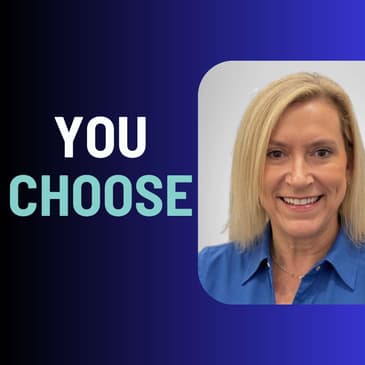
In this episode, I’m joined by Ev Foster, author of Change Starts with Choice, to talk about the crossroads many women face in midlife — from midlife career change to the deeper midlife identity shift that often comes with it — and what it takes to rebuild self-trust when the next step isn’t clear.
Ev shares her own turning points — navigating divorce, raising four children, shifting careers, running businesses, and facing financial pressure — and still choosing to move forward. Not perfectly, but with intention.
We talk about burnout in a more useful way, as a sign that something isn’t working, whether that’s overcommitment, constant busyness, or habits that keep you switched on all the time.
Ev also shares how her work has evolved into intuitive psychology, and how building deeper self-trust can help you overcome self doubt, bringing hidden patterns to the surface — fear of judgement, confidence issues, and the identity shifts that come with change.
We also explore her practical sat nav analogy for combining intuition with action, along with her CHOICES framework for navigating change and defining success in your own terms.
If you’ve been feeling that nudge you can’t ignore, this conversation will meet you right there.
Visit our website to find out more about this week's guest.
All of our guests, including this one, are included in our Guest Directory so that you can find out more about them and the work that they do.
https://midliferebelpodcast.com/guest-directory
If you'd like to support the show you can buy me a coffee!
https://buymeacoffee.com/midliferebelpodcast
The Choice That Changes Midlife
SPEAKER_01But it was, it was the choice that I had to make to take me into midlife, if that makes sense. Because you know, I got to that point of um, gosh, is you know, is this it? I'm you know, I'm I'm not happy. And the choice was there of, well, I can just ride that out and just you know, carry on or make a change. Um, so I made that change, I changed business, I changed job, I set up a business, I closed a business, and yeah, it was quite a quite a um quite a journey.
SPEAKER_00Welcome to the Midlife Rebel Podcast. It's time to rewrite the midlife story for women who refuse to be put in a box. Because maybe midlife isn't a crisis, maybe it's an awakening. The expectation in midlife is that we should have everything together. But for many women, this is the stage where things start to shift. There can be a sense that something needs to change, even if it's not fully clear what that looks like yet. And making that change isn't always straightforward. Backing ourselves, making a decision, and staying with it can feel harder than we expect. My guest today, Ev Foster, works right in this space. In her book Change Starts with Choice, she explores how real change is built through the choices we make and the self-trust we develop as we follow them through. Today we'll be exploring turning points, the role of choice in creating change, and how to start moving forward when life begins asking something different of you. Ev, thank you so much for joining me from the other side of the pond, would they say? I'm AM and you're CM. So hopefully this is a good time for you. Just kind of yeah, rolling into the day here in Australia.
SPEAKER_01Yeah, yeah. Yeah, well, you're you're the next day, aren't you? You're 12 hours ahead, aren't you? Yeah. You're tomorrow.
SPEAKER_00Thank you for joining us. You've got a great story, and you've been on quite a journey through your life and particularly had some upheaval in your midlife. And I know that well, I I don't know that you necessarily relate those experiences to your midlife, but they certainly happened at that time, didn't they? Do you want to kick us off with a little bit of that journey?
The Quiet Nudge Of “Is This It?”
SPEAKER_01Yeah, I mean, I think um, gosh, I I you know, I think when I talk about this, it's it's um, you know, change has been happening for me a lot through my life and different transformations, and I think that's true of a lot of people. Um, I think what happens when you come to midlife, you you get a little bit more scared of it to a degree. Some people get scared and other people, you know, get a little bit stuck because they think, oh my goodness, you know, what well, what's the point in changing now? Or, you know, where where do I change? And as you said in your intro, they they they lose trust in themselves. Um so I mean, I went through, you know, a divorce um kind of you know, not quite midlife, but you know, kind of a little bit earlier than midlife. But it was it was the choice that I had to make to take me into midlife, if that makes sense, because you know, I got to that point of um gosh, is you know, is this it? I'm you know, I'm I'm not happy. And the choice was there of, well, I can just ride that out and just you know, carry on or make a change. Um, so I made that change, I changed business, I changed job, I set up a business, I closed a business, and yeah, it was quite a quite a um quite a journey, quite a few years. Um, but yeah, it was uh it wasn't something that anticipated, it wasn't something that you know uh you plan for, but sometimes things just happen, and you know that's where that's where the choices come in. You gotta either ride with it or stay stuck.
SPEAKER_00Yes, well, you are a ride with it kind of girl by the sounds of things. Um can you talk us through some of the things that you did? Because like you said, it I feel like there's this like yeah, there's this feeling of of there's something more when we hit midlife. And I guess we can also, you know, midlife actually I I study astrology in midlife, some of the midlife things that happen, that you know, official midlife crisis time is around sort of 42, 44, and there's some planetary stuff that happens at the same time. So it does have it does kind of kick off pretty early in our lives, really, just when we think that we're getting into a groove with you know, we've got the job, the career, the the home, the family. Um, but then there comes this quiet or maybe not so quiet urge to change, or there's something more. Did you have that? And and how did you navigate it? Because I do, like you said, we find it difficult. We uh yeah, it it's like, what am I gonna do if I blow up my entire life as I know it?
SPEAKER_01I think I think to me, a lot of the time it's a quiet nudge. You know, I think there's just an underlying knowing, you know, whether in my case it was, you know, relationship, it was a marriage, um, and I had four uh four kids under four young kids, four kids under 12 at that, at that point. And society would tell me that I should just kind of, you know, you've made your bed, you're lack, you're lying on it, you know, you have four young kids. What I why are you even and I had an abundant, financially abundant life. Um, you know, my my husband at the time was not a bad guy. There was no, it was just there was something in me that I mean I I never talk about the details of the marriage, that's not fair, but you know, there was something in me that just thought I was 44. So that ties in with your kind of midlife. Although I think that's still now the age I'm at and think that's not midlife, it's really young. But at 44, I just thought, yeah, I literally thought, well, actually, it was my 40th birthday. And I remember thinking, is this it? And then feeling incredibly ungrateful and feeling incredibly pressured because I actually even had that thought. Because I had a financially abundant life, I was healthy, I had four young kids, uh, you know, I'd ever on paper, everything should have been perfect. So I pushed that down. I pushed that feeling down for another four years, and and then, but it kept raising its head and the you know the emotion would come up, and it was then I I thought, no, this isn't it, this can't be it. This this is not the the kids are not getting a fully rounded, full focused mum because I wasn't functioning that way. I was, I was, I was literally, well, I was functioning, but I wasn't fully functioning. And I then made the decision it wasn't fair in them to not have the full of me, the full part of me. And it was better for them to come from a you know, a house that had broken than a mum who was feeling really broken. Um, and of course I wasn't broken, I just was stuck and I just wasn't, you know, I just wasn't happy. Um, and if you if you if you were, you know, if my kids were were on here now, they're obviously a lot older, they would they can't remember dad and mum together. They they kind of know that it was the right thing to do, um, because they've seen him go on to be happy, me go on to be happy. And you know, sometimes society, you've got to just go, no, that's not the right thing to to listen to. Listen to your listen to your internal, you know, kind of intuition, your nod, your own voice. Um and that's that's what I did.
SPEAKER_00So it kicked off really with your relationship ending, or was there other stuff? Was it did you feel held back in the things that you wanted to do? Or like do you just feel like that um relationship breakup was a catalyst for you know you then having to step up into your career because you that's that was a very big focus, wasn't it? After your divorce.
Divorce And Reinventing Work
SPEAKER_01Yeah, I mean, I had stepped back, stepped back from my career because I'd four kids, sort of five and under. So it was it was kind of like right, okay, something has to give here. And as I say, fortunately, financially, I could give up my my business um and move, you know, it just sort of support my husband. Um, but when my youngest went to primary school, which he is the age of five, I set up a another business. I was never going to be the kind of you know, stay-at-home mum. I I just I like the busyness of business and I like people and I like connection. So I set up two gym businesses and um it was great, it was fine. But when I got divorced, they weren't serving me financially because obviously I then was having to support myself, the kids, etc. So whilst they were ticking along and um let's just say they were more of a hobby lifestyle business, loads of people got lots from it. I just wasn't getting much finances from it. So I had to give that up and I had to walk away from it and um actually go into an employed position because you know I ended up in quite a lot of debt, keeping the gyms going, and that whole kind of period of my life was quite stressful. But um again, it was the choice to go into employed, clear off the debt, and then go back into another business. So I went back into the a real estate business, which I'd known before, and that was really the then the turning point of the kind of rest of my career up into up into date. So yeah, you know, as you do, you've got four young kids, you know, you think, oh yeah, I'll set up another business that's easier than being employed. Um, and no, it's not, but it certainly gives you more freedom to a degree, and you know, you're not told when to come in. Estate agency here, you know, it's like you've got to be in the office, you have to be in at a certain time. You can't leave, I just couldn't do that with the with the kids. So yeah, there was a bit of balance had to come back in that way.
Burnout, Alignment And Busyness
SPEAKER_00I have to say, you look and sound very chilled. Given that you've had you know that experience and had to put in some real hard yards, you know, a single mum and starting your own business. Um has it always been like that? Because you know, you see so many women who are trying to juggle all of the things and they are completely frazzled.
SPEAKER_01No, I I I I probably get criticized sometimes for this, but I do believe that is kind of that can be choice as well. Okay, because I think that I don't I think work-life balance is a myth. I think that sometimes in life we have to really focus on our work, particularly if it's a business that you're you're building up, which then means sometimes you know your time with family is less, but at other times we focus on time with the family, and we can take our foot off the pedal a little bit with business. Now, that's not to say, you know, and some people go, oh no, business is everything, and I've always got to be on the ball. I'm I'm of an age that I remember prior to mobile phones and emails and laptops and all these things, right? So, how did we survive? How did businesses survive when we weren't on call 24-7 when we didn't have a mobile phone in our hand? We went on holiday and we didn't contact the office for two weeks, and we didn't have you know this kind of absolute urge to pick up this thing and check our emails and check our social media and check all that. So I kind of plug into the the the the you know the the the belief that we can choose to to not get frazzled, we can choose to be present in our business and give that our full attention, to be present with the family, give them our full attention, um, but still have time that we can step back and go, I just need a little bit of time for me. And even a five-minute sort of check-in with yourself can then keep you going for a couple of days, you know, and and I think it's um it's so important. I think I mean burnout is a real thing, you know. I know that I've seen people who have who have experienced it, but I do think we can be in control of that a little bit through the choices that we make.
SPEAKER_00Yes, I I I hear you. And I I wonder whether part of that experience is what you were talking about earlier of like feeling that nudge but not listening to it. And so therefore pushing um when we're not in alignment. Um yeah, and doing the things that don't really light us up, because you seem like you're pretty lit up as well by by your life and and the expression.
From Business Mentoring To Inner Work
SPEAKER_01Yeah, I think that's that word alignment is so key. If you're doing something that you're not in alignment with and it doesn't feel right, you're you're gonna get frazzled, you're gonna be frazzled, you're gonna have burnout. If you are really in alignment with yourself, your your own body, your own intuition, your own trust in yourself, then you're not gonna get so frazzled and so burned out. Um and you know, I I think for me, a lot of relying on self is a big thing for me. And that's not to say I I I've I can do it all, it's absolutely not, it's not, it's just choosing when to have that bit of rest. I think some people get addicted to being busy, yeah. Okay, and busy is not always productive. So busyness is very different to business. You know, why can't we actually just put our phones down and take a rest? Why can't we have that time? Who's telling us that we need to be on call all the time? It's it's pressure we're putting on ourselves.
SPEAKER_00Yeah. So you in the last few years you've um set up a very successful business. And during that process, you've now um well, from what I can gather, and you're gonna tell us more about that, you've written this your book, and you are coaching people um with intuitive psychology. So we're gonna talk more about that. I just wonder what that when did you decide that you needed to you've obviously had your own experiences, you've learned from making the choices, making the changes, working through those um crossroads, uh making the tough decisions. When did you decide that this is something that other people could benefit from? Um and when did you decide that you wanted to sort of teach others or mentor others in these sort of experiences and processes?
SPEAKER_01So in in my um real estate business, it was always very much kind of business mentoring that I did. So it was always okay, you want to sell houses, you want to be productive, there's your 30, 60, 90 day plan, there's your steps, there are your tasks, go and do it, you'll be successful. It was very kind of do do do do do activity. That's what I did, you go and do it. And people would come back to me, you know, a couple of weeks later for a check-in, for accountability and how you get known, and they would say, Oh, I haven't done it, I haven't done anything. And I would be like, but you told me that your goal was X, Y, Z. And then, you know, I would say, why? Why, what's what's what and I realized so many, particularly women, I work with a lot of women, you know, had blockers, had had things that were stopping them taking the action that they wanted to do. So I wasn't equipped to deal with that side of coaching. So I would sometimes have somebody just absolutely open up to me, you know, in tears. And it was fear, it was confidence, it was lack of self, it was doubt, it was all these things. So I made the decision to to study intuitive psychology to then help people move past these blockers, you know, so that they could then be successful in whatever way they wanted to do. Um, so I work with people, so I work with people who we talk about you know, shadow alchemy, so people who have these things that have been put on them or beliefs that are now become their stories, and it's a real you know, paralysis, it keeps them keeps them stuck. So I wanted to bring that side of it in to help people to then be successful if that's what they wanted in real estate or or or um in any business or just in life um in general, and and then that trick kind of transferred to a lot of female leaders, me included, have been very do do do strategy business, do you know that that's where the whole burnout comes. But if we actually sit in like our feminine energy, which is intuition, which is you know, where is it we're going, what do we need, etc., actually the do becomes easier to do because you then have that nudge, you have that intuition, you know what you know where you want to get to, and the self-trust comes in. So it's an interesting combination, but one that I I feel really strongly about, and intuitively that's how I did it, but I didn't know that I was doing it intuitively till I then studied it, if that makes sense.
SPEAKER_00Yeah, definitely. I love that. I had a guest on a little while ago, and she's a money coach, but she's very much the same. She's like, you need the spreadsheets, you need the structure, but you also need the flow, you need to trust. You need to and uh yeah, so that like balance between those two energies, and that's where the the magic happens.
SPEAKER_01And I think my my best exam, my best analogy of it is um if you look at if you look at set setting satnav, right? So, you know, if we're gonna we've got a nice fast car, we've got a good, you know, really big engine car, beautiful car, um, and you go out and you go in your car and you haven't set your sat nav, where are you going? Where where where where where's your destination? So your intuition, if you like, is the feminine energy of taking time to set that sat nav, but you need the car to get you there. Yeah. So you need the strategy, you need the engine, you need, you know, you need the the vehicle to get you to where you where you want to get to. And add into that the fuel of the car, which is then your choices and your actions and all the things that then fuel the car to get you to your destination, that's the kind of how I would describe the masculine energy and the feminine energy. Um, because if if you went out in your car and you just drove really fast, where's it gonna get you? Maybe into a brick wall.
unknownYeah, yeah.
Intuition Plus Strategy Sat Nav
SPEAKER_01And you know, and and equally, if you set your satnav and you didn't have a car, how are you gonna get there? So that's how I always look at the kind of masculine and feminine energy. And um, yeah, it kind of that I'm quite a visual person, so it kind of if I ever go too fast, if I go too fast and I'm taking too many, you know, tight bends and all the rest of it, I just go, whoa, whoa, whoa, whoa, whoa, wait a minute. Where where are we going? Wait, wait, where what you know, where where where is the destination? What is my intuition saying?
SPEAKER_00Yeah. So that's a really good description.
SPEAKER_01I think that's hopefully that explains it.
SPEAKER_00Yeah, definitely. Um, I'd love to talk more about that. I just wonder before we do, if you could like, how did you come across intuitive psychology at like to find out there was a thing? Were you like, okay, there's something missing here in my coaching practice, or did it just pop up somewhere and you were interested, or did someone tell you about it? Because it I've never heard of it before.
SPEAKER_01Yeah, it's a very new thing. So, and and actually the The founders of it, so um Sarah Gregg and Jill Ritchie are the founders of Intuitive Psychology Association, and Jill is actually from Glasgow, from my home city. So when I was kind of looking around, um, you know, obviously social media and things, lots of different modalities of coaching and and and what have you. And um it literally just popped up. Now, call it call it higher power, source, universe, whatever. There was a reason it popped up on on my feed. And um I I I wrote and I thought, oh, this this is kind of I talk about my intuition quite a lot. Um, or I did, but I didn't know that's what I was talking about. My gut feeling, oh, I have a feeling, oh you know, this whole kind of thing. So um I then went to a meeting and of a network meeting in Glasgow, and the first person that came across to me was Jill Ritie of the Intuitive Psychology Association, and I recognised her face, and it was like, okay, right, I hear you. It's more than a nudge. Yeah, it's uh find out more about this. She was just super to deal with, and yeah, so that's me just just about to graduate in my masters, just done a course this week, and um so the it was I was definitely led to it. Um and um it's an a kick, you know, it's uh it's uh it's a I think it's only one of 11 um coaching courses like that that's accredited in in so yeah, it it's a fairly new, no, it's not new. That's it, it's ancient wisdom and science being brought together and packaged as you know, intuitive psychology. And I think it's that way of it's not therapy, it's not counseling, it's not anything, it's working with you know, working with your past, bringing it into your present to help you change your future.
SPEAKER_00Okay.
SPEAKER_01That's the easiest way to kind of you know describe it.
SPEAKER_00Sounds a bit like astrology. That can do the similar sort of thing.
SPEAKER_01Well, do you know it it's quite it's quite linked, really. When when you know, I mean, if you if you you know, it if you think about intuition as being like the memory of of truth, everything our bodies hold on to everything. Our bodies hold on to every memory that you've got, everything you've experienced is in your unconscious mind. Yeah, yeah, everything, you know, and astrology and you know, all the all the the there's there's so many, you know, there's so much thing. I mean, I could talk to you all day. I would love to learn more about astrology. I know enough to kind of go, I know when it's a full moon coming, I know how I feel about things, I know. Um, but yeah, I mean that's a uh a really interesting subject as well.
SPEAKER_00Um yeah, they're tools and self-knowledge, aren't they? And like you said, you can kind of look at the patterns that you might have been experiencing in the past and look at how can I, as you just as you put it before, how can I use those experiences for uh a more aligned purpose rather than sort of repeating the same experience.
SPEAKER_01Exactly, that's exactly it. I mean, and that's the you know, some people you hear people say, so let's say for example, somebody's you know, you we've maybe got what that one girlfriend who's just been through a series of bad relationships, right? But it's it's all you know, so there are she's attracting the same type of guy, but they're always the ones that are wrong. But if you actually look at her, right, and and and and what what her experiences are and and her past and and shadows, and shadows are not bad, shadows are just things we push down, and you discover that and you work through that, then all of a sudden it's kind of like ah, right, okay, and now I can see so we can work with it and we can alchemize it and move on from that. But if you don't know these things exist in you because it's unconscious, how do you work through it? How do you work through that and and change it? So it's a really interesting topic. And uh I'm I I feel really passionate about it. That um and I think the difference with this me training in this is I am actually going through the and getting coached a lot, and that is something that you know that's transformational as well, um, because you're actually experiencing what a client may experience, yeah. Um, which is which is truly, truly magical.
SPEAKER_00Is that a bit of an eye-opener for you? Because you're like you've obviously been through some of your own processes, and you like like I've said before, you seem like you've you've got it together and you're in alignment. Um, you know, you seem to be following your path, um going into intuitive psychology as a client to help with your learning. Does stuff still come up?
Deep Intuitive Trust And Shadows
SPEAKER_01Yeah, yeah, stuff stuff comes up because you know, even so to to give you an example, I mean, obviously I'm very well versed in the real estate market, you know. I would say I'm you know, to use the term I'm an expert in my field and all the rest of it. Um, you know, one of my things moving to a different field is that need to be an expert and that need to have kind of respect and you know, and that's something that's earned, you know, right. You can't, so there's a little bit of that confidence. So it comes down to confidence, you know, and people would look at me and go, oh, she's really confident, and that, but that we kind of shot that wee person inside going, oh, this is new, you haven't done this before. Um, you know, so the confidence needs to be worked on as well. But when you then work with that, and ultimately, how do you gain confidence? Practice, experience, you know, all these different things, just doing it. So we all have sh we all have shadows. We all we all have things that we could work, we could work through. Um, and that's the interesting part because a lot of people don't know that they have them.
SPEAKER_00Yeah, right. Can you talk us through some of the um there were some things that you talked about uh or you just sort of listed when the women you're working with um in your um real estate business and they come to you, you know, they've set their goals and then they don't do them, and and you said there's fear, there's what what were some of the other things that you came out with uh came came up with?
SPEAKER_01Um self-doubt. So there's fear, there's self-doubt, there's um lack of worth, uh-huh. There's the that that you know, in their voice in their head, yeah, that you know, is the is is the only person that you know you can hear yourself and it's the worst person to speak to to you about anything. Um I think there's also the the the kind of identity part of a particularly in the midlife, you know, if somebody has maybe been you know at home with the kids for a while, and you know, it's that kind of stepping back out and being them, being themselves, but who are they? Who is who who am I? Who is myself? Um so I think most a lot of it is a lot of it is fear, and a lot of it is fear of judgment, fear of failure, yeah, fear of all these things. So, but usually that has come from experience of something, um, which is what we would work through and and and you know, and help people. So that's where the kind of that side of it then would help people who come and say, I would love to, I would love to sell houses, I would love to have my own business, but they don't say but at that point, they just stop it there. But that we we need to get over that but um that they sometimes don't even know exists till they start moving forward.
SPEAKER_00Can you talk us through that process? So if they don't even know, where do you begin if they don't even realize that they've got that blockage?
SPEAKER_01So this is where the the the the the the the intuition comes in. So we have a technique that we would we would literally it's called deep intuitive trust. So we would we have a technique that we would work with, so we would coach somebody, we would take them through deep intuitive trust, which is literally taking them out of their head into their body, and taking them through different techniques to really and questioning and really going deep into heart space with people, because you know, five percent of our brain is our logical brain, 95% is unconscious. So it's it's it's bringing so it's making the unconscious conscious to then work with it and work out how you work through that. Um, so that that's where the the the I guess the the coaching skills come in because you then help people you know work through that to the point where they can change, they can you that you're never going to necessarily get rid of shadows or that, but you can then realize why you're doing something or why you're thinking that way because you've brought it to your conscious mind. Um, and uh, you know, we take people through even back to childhood things, you know, traumas with small t's, you know, not necessarily big trauma, but you know, incidences that have happened to somebody, you know, like in the playground, right? Like, you know, somebody said something to them, so they never ever did that thing again or never put themselves out there, or you know, they answered a question wrong in the classroom and got laughed at, so they didn't know why they never put their hand up in a meeting when they knew the answer. You know, there's a lot of stuff like that that we hold in our bodies that that that that is if we can if we can find it, alchemize it, then these blockers and that stuck feeling can really lift and people can absolutely find their and and and and you'll get their full potential.
SPEAKER_00How do you work with the alchemizing? Because I feel like there's there's that there's that step of you've been through the process, you've become aware of some of the behaviors that might be holding you back, but then there's that step of like you need to move away from it, but there's that kind of in-between, and I I feel like that's something that you work with people on is that that stuckness. It's like, yeah, I know, I know that that's how I behave, and and I know the reason why. But how do you get people to alchemize it and to move away from it and to start moving towards something new or different?
Small Actions That Break Patterns
SPEAKER_01A process of working with them and setting kind of smaller goals, you know, um, setting, so the whole thing with what we're doing is a lot of people aren't aware of why they do things and their behaviors. So it's about bringing the awareness. But it's it's one thing bringing the awareness. Oh, that's why I do that. But the next step is the action. So, so if you're set, so if you've got uh an awareness and then you have an intention that you want to get to, there has to be alongside that, there has to be an action. So we work with the with clients to perhaps set a very small goal, um, which is working towards a bigger goal, and then kind of get the a different habit, changing, interrupting habits are habits are what get us through most of our day, right? It's just automatic, autopilot, automatic things we say, we do. So it's breaking that kind of pattern and changing it to then have a better autopilot, but that takes a little bit of time. Um, some some clients, you know, they they see right away, they're like, oh my goodness, that's why I do that. And now I understand and they work through it quickly. Um, others it can take a longer time. It just depends on what you're what you're dealing with. But if you can find if a client, usually when a client comes to someone uh like myself or the some of the other they they know that they want something to change, so they've already started that process of of transformation because they've made a choice to find out what's keeping them stuck, even if they don't know that they're actually stuck, um, or what it is. So, you know, it's so so I liken it. I mean, and in my book, I liken transformation to the cycle of a butterfly. So how um I've I don't think I know anybody who at some point has not gone into their chrysalis, has not gone through a transformation, and literally, you know, deconstructed to then build themselves up again. And if people haven't done that, then sometimes that's what's required. And that can literally take people a real big transformation. Um, you know, if if I liken that with my divorce, for example, I didn't know what was what was going to come out the other end. I just knew I had to sort of, you know, literally go into my chrysalis, who was around me, who was in my circle, who was helping me, um, and completely deconstruct my life and then emerge as a as a you know a different version of myself. Yeah, well, I don't know. Yeah, yeah, I mean, it just yeah, I think it's um I think it's just it it but we can do that so many times in our lives. We don't, you know, we're not like a caterpillar and a butterfly that it's only can only happen once. And I think women, a lot of women do it um naturally, you know, because they they have come out of relationships or they have, you know, they they they they move from one to another or a job to another or whatever the situation is, but they might not call it you know transformation or um you know the but it happens, but some people they just need that little nudge um permission or you know, and they don't need permission, but they think they need permission, but again, that's a little bit of a shadow.
SPEAKER_00Yeah. Let me have a look. I'd love to know a little bit more about it and just like okay. Let's talk about um I'm just reading my notes. Well, you've kind of answered why turning points are invitations, not endings, but can you kind of extend on that a little bit? I mean I feel it like it's all really exciting, like this this idea of like you're feeling the change and you're saying go for it, and that that you know, using your intuition and getting the right tools is is you know makes it possible, but so much so many of us do not do it. Um and so I love this yeah, this outlook why turning points are invitations, not endings.
Turning Points As Detours Forward
SPEAKER_01Yeah, I mean I think you know who do you know in your life who who has kind of had a straightforward linear life? Who do we know anybody who's never had a challenge or a problem or you know, it could be small pro you know, small trauma. No, I don't know anybody who's not had decisions or things that they've had to make a decision about or a choice about. But when something, you know, happens that's fairly divorce is fairly drastic, you know, or loss is drastic, or you know, redundancy, lose any of these things that are literally thrown at us, we still have a choice as to what we do next. You know, we can we can and and don't get me, you know, we can have a little you know time that we just don't know what we're gonna do, and we just sit there and we just don't, you know, we go into our chrysalis because we literally do not know what's going to emerge, and that's okay. So, but these things I believe we come out of them stronger if we look at the choices that we make while we're feeling that way. Um and that that to me is really important. Uh is is you know, you cannot control what we you can't control what happens to you or what's thrown at you sometimes, but you can absolutely control how you deal with it, how you react to it and and what goes through your mind when you're reacting to it or dealing with it. So turning points, yeah, goes back to the car analogy, right? You know, I mean, if you if you're in a car and you've set your sat nav and you're on you're en route to get to where you want to get to, and suddenly there's a road closure. What do you do? Do you go, oh that's rubbish, I'm just gonna go home now because that road's closed. You don't, do you? You find another way. Yep. You find a left turn, or you find a right turn, or you, you know, you you you go, oh well listen, you know what? I'm halfway, I'm not gonna go home. There's there's got to be another way because I want to get to that place, I want to get to that destination, and and you know that you might you might have to sit for a minute and go, hmm, right, okay, I'm not quite sure how I'm gonna get to this. I'm really not actually very clear and it's dark, and I don't know whether I'm going left or right, but you very rarely go back from where you came from because you're wanting to get to where you're going.
SPEAKER_00Yeah.
SPEAKER_01That's that's how I'd look at it.
SPEAKER_00Yeah, I like it. I like it. How much is it um when you talk about these things, how much is it related to goals, like you know, work goals compared to making big decisions in your life that are, you know, relationship um or moving home or you know, any of the other changes that we might feel coming. Goals seem like when you're talking about destination, I don't know, I feel like it's like you've set yourself a goal, you know, I want to get this new job or you know, sell this many houses in your um um business or whatever it might be, compared to I feel this change coming and I don't quite know what it is, but I've but the first step is to leave a job. Is that still would you still consider that kind of a goal? Like it just feels a bit different, and maybe one's more kind of aspirational and one's a bit more scary.
SPEAKER_01Yeah, I mean, I think there's two different things with that. I think set again, it's the setting goals um is is it's not a bad thing. It's absolutely not a bad thing. Our brains are wired that we need to have something that we're working towards. Um, but you've got the goals, you know, people set financial goals and they set, you know, these kind of goals. Again, going back to the intuitive psychology, we would you know, we would sit with a goal in our intuition and think, is that really what I want? You know, I and sometimes the goal is not about um changing job, you know, if you're looking at it's very rarely actually I want to earn X amount of money or I want to do this, it's something deeper. Um, but setting goals is part of you is part of human nature. But I think where the what people do is they set a goal and then they absolutely beat themselves up if they don't get that goal within that set amount of time. Sometimes that's just not that's just not the process. Um and if it doesn't, you know, like I've left, um I was speaking to somebody today actually who has has left who who's wanting to leave a job, yeah, um, but she doesn't know what her next step is. And You know, financially she she was okay to leave the job. Um, but you know, had this kind of like, but I mean, what do I do? What you know, who what about and it was kind of like what sit with that? You know, sit with that and see. So by the end of our meeting, she was like, I'm gonna hand in my resignation tomorrow. Why am I because she was talking about the fact that she didn't have time to follow what she wanted to do, and she didn't have time and she didn't have this. And I said, Well, if you got these three days back that you were in a job, how much time would you get back? You know, and and so her goal, she didn't know what she was going to do, how she but her goal was to get more time back. Does that make sense? So that was actually her goal, yeah. Um, so I think when we go deeper in our goals, then that's where it's a different sort of goal setting than than you know, you look at you know, strategy and smart goals and all these things. If we were looking at it differently, then it's a different kind of goal, goal setting, but absolutely still with goals. Intentions probably uh a good word for it.
SPEAKER_00More more feminine. Yeah. And also gives you a little bit more flexibility, doesn't it, when you have intentions. Goals can feel a bit rigid and and kind of um yeah, like if we don't get to them, then we've failed, kind of thing. Whereas intentions give you a little bit more flow.
SPEAKER_01I get it it gives you more flow, but goal or intention both need action.
SPEAKER_00Yeah.
Goals, Intentions And Real Action
SPEAKER_01Okay. Uh you know, you don't set an intention and then sit back and go, Well, my intention is this, and it's all airy fairy, and you know it's going to happen, and no, no, no. Intention still needs action. So if you have a really strong intention, then you have to have action to get to that intention. Yeah. And that's where the kind of the unconscious, if there's if somebody has a really strong intention stroke goal, and they're not take because back to what I was saying about people wanting to be, you know, in the real estate space, but they're not taking the action. What's blocking it? It's something in their unconscious.
SPEAKER_00Yeah.
SPEAKER_01And that's where the the the kind of working with that um unconscious blocker then helps get the the action to be taken.
SPEAKER_00Yeah. Makes sense. Your book, you mentioned um so change starts with choice is the name of your book. And you mentioned um choice, you've mentioned choice a number of times, and you also mentioned that uh sometimes people don't like you for this, or you didn't say that exactly, but you're like don't like what you say about having choice. But um can you talk us through that's a big part of the message of your book, isn't it? Um, and I think that and like I'm I love the fact that you're kind of really piecing these things together like through we need action, we need to take action, and choice is um always there, but we can kind of fall into the victim, can't we? And you know, my life's so bad, and these things are happening, happening to me, um, and I can't do anything about it, and woe is me. But you're saying choice, we always have a choice, and I think that's a real um yeah, good point to make and a good reminder. Can you talk us a little bit through um through that and maybe some of the choices framework? We're we're we haven't got a whole bunch of time, so I don't know that we'll get through all of it, but we might be able to fly through it.
SPEAKER_01Yeah, I mean the this the simple thing is if you look at so the the acronym of choices, so the first C is um crisis, okay, with a small C. So people talk about, you know, oh I'm going through a crisis.
SPEAKER_00Yeah.
The CHOICES Framework Explained
SPEAKER_01What does that actually mean? So if you take again an acronym, circumstances requiring immediate shift in strategy. Because if you don't shift your strategy, you're going to be stuck, you're going to be absolutely stuck in your crisis, in your drama, whatever it is that you're going through, in your situation. So we have to look at how do we change our strategy. And then the so the C, the H is help. So again, it's like who who do we need help? Who can help us? And that's shown a little bit of vulnerability because and that's okay, because you know, we we we don't have it all all the time. I certainly don't, I certainly didn't. You know what? You have to look at who who can help me. Um, and you know, the O is then the open to opportunity. So if we're close, if we're saying we're in a crisis, I don't need any help, um, and I'm absolutely closed off to opportunity, nothing's going to change, nothing is going to change in your life. And then the I and the choices. So I've kind of changed. So when I wrote the book, it was very much implementation. Um, I've kind of softened that a little bit to intuition, stroke implementation, because that kind of ties into the coaching that I'm doing. And I think sometimes we just have to sit with it and just think, okay, you know, what what what is what is my intuition telling me to do? And then how will I implement it? Um that's then when change happens. Um, because we begin to set intention. So the I could be a whole bunch of things intuition, intention, implementation, but it's then about taking that action after that to then get change. Um, and then again, the E, it's it's funny when when I wrote the book, I was very clear on what the acronym stood for. And as I've been kind of talking about it more, so the E was execution, but sometimes again you could relate that to energy because again, going back to what we're talking about with the feminine and masculine energy, but execution, action, you know, it's we have to do something, change will not happen unless we do something, take an action. Um, and uh an NS is you know, obviously, success at the end of it. Now, success can be measured in many different ways. Success could be a feeling of happiness, of joy, of success could be, you know, it could be a promotion, a different job, it could be a whole diff, but but it could literally be sitting and thinking, I feel so much better than I did, you know, weeks ago or days ago. That's success because you're not you're you're out of that feeling. So it doesn't have to be a big grand gesture and you know thing of success, it just is that, you know, or you know, I did that, or look, you know, look at me now. I feel so much better than I did. So, you know, how do you measure success? How you know that's it could be the smallest thing, the smallest thing. And I think if we go, you know, if we go through all these stages, it it the the process it you can move forward in whatever situation that you're in or whatever thought you're in, because you are literally moving through a process. Um because the only time I think again, you know, if we we think we don't have a choice, you're gonna remain stuck in your thoughts. You're never gonna get out of that. I don't have a choice. Oh, you do you do because you can change your way of thinking about the situation that you're in. So that's the very shortened version of that kind of process, succinct version, that's the word.
SPEAKER_00Thank you. Um you have over the past six or so years um created or uh created a very successful business, and within that, as we've talked about, you've become your or you're becoming an intuitive psychologist, you've written a book. Do you feel like you're at another point of change where your direction as a coach um with the intuitive psychology is going to um I don't know dominate's not the right word. Take a take a front front take a front seat in your life, or do you feel that these two um things that you're doing that are like kind of work side by side?
Coaching Options And How To Connect
SPEAKER_01I think that it's a really good question because I have actually sat with that um myself um when I'm being in uh intuitive trust coaching. Um I think at the moment it's like it's like the they they could they work side by side, you know, it's like it's like train lines, tram lines, you know, they're they're kind of parallel with each other. I think at some point one will kind of become more and probably because I have a a team that runs the business, you know, um alongside me at the moment, I haven't been in my business premises for two weeks. Okay, and guess what? The business is still going. Yay! You know, and and that's you know, so that it's great, right? And it's it's it and I've been on this course for four days and everything's still standing and everything's still functioning, um, because I've got a really, really good team round about me. And that's really important if you're then looking at a different if you still want to have a business, but you're looking at a you know, a different direction, then yeah, my team can run the business that I have, um, which allows me to do the other things with the intuitive psychology coaching. And I mean, I'm I I'm very passionate about part of what I want to do is is take this to worldwide, if you like, because I think it's it's something that that that uh if more people knew about it and more people heard about it, they would be it would sit well with them. So um and I'm okay with that. If that's the path that that I get taken on, then I'm okay with that, you know, because I I now am in a position where my kids are older, so I can travel, I can go places, you know. I I I I'm in that fortunate I I've you know, I'm in the fortunate position that the timing of it is such that I can do that. So yeah, I mean it's something I'm really passionate about. Um that yeah, I think the world, you know, it sounds but the world will be a better place if more people just listen to the nudges that they're getting, you know?
SPEAKER_00Yeah, love that. And it's a kind of a no-brainer, isn't it? If you've got the real estate business and it's doing really well and and you can let it do its thing and not have to be there all the time, it's like why would you why would you get rid of it if you can do two things that you love?
SPEAKER_01Yeah, yeah.
SPEAKER_00As we get uh draw to the close, Ev, well, I've got one more question actually. I'm just curious because um you obviously are working in the real estate industry and using your intuitive psychology in that space. Is your work something that you are making available to um people outside of that space? Um you know, anyone who kind of is interested?
SPEAKER_01Oh yeah. Yeah. I mean, I yeah, I mean, I think it's um anybody, um, you know, so anybody who wants to so I have like a community, a school community that people can get some support in it. Um also, you know, be kind of doing one-to-one coaching with with, you know, but it no, it's making it as available to anybody. Um, because yeah, real estate's what I know and is in my it is in my kind of DNA, but there's yeah, it's it's not exclusively, not exclusively to that. Um I would say uh, you know, women I tend to work more with women than than than men. Um again, I guess I I know that I know that that better than than but yeah, but it's available to anybody, yeah.
SPEAKER_00Great. So we're going to um share your link from the guest directory in the show notes so people will be able to access your profile page with all of the links to your socials, your website, and I would think the school community. Um is that the would that be a first step for someone to to join the community, or is there something else you think you can do?
SPEAKER_01Yeah, I mean they can join the community um or if they want you know more information about one-to-one coaching, um, go to the website and just book a book a call, book a you know, just uh you know, no obligation chat with me, and we'll see whether you know it's something that they they want to proceed with. Um so yeah, there's various ways of of kind of getting getting in touch with me, yeah.
SPEAKER_00Brilliant. Ev, thanks so much for joining me. It's been a really cool chat. I've really loved hearing about your work. Appreciate your time. Thank you very much. Thanks for having me. Hey there, Rebel. Thank you for listening to this episode of the Midlife Rebel Podcast. If you'd like to support the show, you can buy me a coffee by going to Buy MeACoffee forward slash Midlife Rebel Podcast. Thanks for listening.