
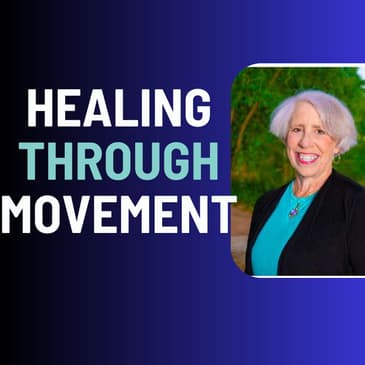

Your body has been speaking to you your whole life. The question is, have you been taught to listen?
In this episode of The Midlife Rebel Podcast, I’m joined by somatic psychotherapist, spiritual integration hypnotherapist and author Melanie Smithson to explore the incredible wisdom of the body. Melanie has spent her life helping people understand the connection between movement, emotions and healing, and her new book, Shake Yourself Free: 81 Somatic Practices to Use Your Body's Wisdom to Support You in Letting Go, is full of simple ways to reconnect with yourself.
We talk about why so many women, particularly in midlife, have become disconnected from what they're feeling, and how stress, anxiety, grief and trauma can become held in the body when emotions don't have the chance to move. Melanie explains why your body isn't something to control or fix, but one of your greatest sources of guidance and self-trust.
This conversation is both deeply practical and deeply spiritual. We explore the relationship between intuition and the nervous system, and how conscious movement can become a powerful doorway into healing. Melanie also shares simple practices you can begin today; shaking, swaying, breathing, sounding and even gentle movement while sitting at your desk, to help regulate your nervous system and release stored tension.
We also talk about parenting emotionally aware children, the stories we carry in our bodies, and why healing doesn't always require years of talking. Sometimes it begins by allowing the body to finish what it has been trying to do all along.
If you've been feeling stuck in your head, overwhelmed by stress, or curious about somatic healing, nervous system regulation, emotional wellbeing or reconnecting with your intuition, I think you're going to love this conversation.
If you enjoy this episode, please follow The Midlife Rebel Podcast, leave a review, and share it with someone who needs the reminder that their body isn't working against them; it's trying to guide them.
Visit our website to find out more about this week's guest.
All of our guests, including this one, are included in our Guest Directory so that you can find out more about them and the work that they do.
https://midliferebelpodcast.com/guest-directory
If you'd like to support the show you can buy me a coffee!
Why The Body Holds Wisdom
SPEAKER_03We are missing out on the amazing wisdom that is available in the body, how the body communicates on a very regular basis, and what the body is capable of that we don't even know about. So this is, you know, kind of what I've gotten super committed to. Like, you know, how how many people can I educate before I go? What kind of, you know, what can I leave behind? And um it's you know, life life can be easier.
SPEAKER_00Welcome to the Midlife Rebel Podcast. It's time to rewrite the midlife story for women who refuse to be put in a box. Because maybe midlife isn't a crisis, maybe it's an awakening. So um I was really keen actually when you um sent your message to me in um podmatch. You opened your message with
Midlife Rebels And Real Rebellion
SPEAKER_00midlife rebels are the best. And and also you said freedom comes with aging. So I'd love to hear what what like midlife rebel, when that when you hear that kind of term, what that sort of says to you.
SPEAKER_03Yeah, well, so many things, but you know, it's like especially now, especially in the United States. I know this, you know, it's reaching worldwide, but it's time for rebels, you know. And it's like, I mean, this is the thing that's like most upsetting me about what's like where is the rebellion? Who is gonna start the rebellion? And you know, I've tried to figure out how I can do it, and I I just don't know how. But you know, the more women that come into their power, into their rebellious nature, the more we will see shift in the world, and that is critically important to me because this world is not one that I like living in anymore, you know. So um, I I will say, even before all of this, I like rebels. Rebels mean to me that I am not okay with status quo. And I'm willing to make some changes, I'm willing to do something, I'm willing to step up to say no to what is not okay with me. So, yes, yeah. And once you've reached midlife, well then you're at a place that you book, you know, like an eight-year-old rebel is very different from a 40-year-old or 50-year-old or a 70-year-old rebel, you know, an eight-year-old, which is good. They've got things to teach us. Let me show you how to do rebellion, but we have the wisdom to do it differently.
SPEAKER_00Have you felt that in your own life that you have kind of what like you said, like um, you know, standing up against the status quo and going, no, this is not who I am, or this is not what I stand for. Have you had moments in your life where that has been prevalent?
SPEAKER_03Um yes and no, in in some ways, I feel like I have always um been fairly clear about like that's a no. And I have been fortunate enough that I haven't been put in a lot of positions where I've had to get up and go get out of my face, you know. Um so, and you know, again, like back to what's happening in the world right now, one of the um terms I heard recently in one of the hypnosis sessions I was facilitating was that what there is for us to do now is to practice radical nothingness. And that term so resonated with me, you know, it to me, what it feels like is I'm ready. You know, it's like if I'm called, if something needs to happen, I am ready. And so there's a quality of like, you know, I'm not out there in the streets, though I am sometimes. If there's a protest, I'll be going out. Um, but you know, they're talking about drilling some sacred native sites here in New Mexico. And it's like that is a very loud no. And if it gets if it gets necessary, you know, I will be one of those people, and there's no tree, so I can't sign myself up to a tree. But you know, we'll flo, you know, flat, you know, flat out in the you know, in the um desert, and you know, like, no, just no, this is not happening on my watch. Um, so I and and as I age, I feel like there's less to lose. There's also that, you know, it's like, hey, I'm not here that much longer, you know. If I have to die for this cause, so be it. Um, I feel like that is also happening for me.
SPEAKER_00Yeah. What's um what's been your experience of what's like when you sort of say what's going on in the world right now, what are
Grief, Power And A World Shifting
SPEAKER_00those things that are really sort of prominent for you?
SPEAKER_03Um, you know, the day he got elected, and I won't use his name.
SPEAKER_02Okay.
SPEAKER_03Um the day he got elected, I just started crying. And I cried for months. And the bottom line is that my highest value is kindness, and he is the opposite of that, and um that we would elect a pedophile, a rapist, a crook, a felonist, all of these things that this country would think that was a good idea on any level is just heartbreaking to me. So, you know, it's like people have said things, you know, it's like I do know some people that think he's great. And it's like it's just so far beyond comprehension to me, you know. But I was told by one of these people that they she voted for him, even though she doesn't like him because of his policies. And it's like, I mean, I don't I don't know how you overlook his character. I just don't know how you do that, and it's certainly not part of my makeup.
SPEAKER_00So uh yeah, thank you. A lot of people that I've spoken to, um, and this theme seems to be running um is that the that that there's there is a change coming. Like you mentioned that being ready um for for whatever you're needed for, um, and that that that this kind of crazy disruption and like you know, extreme um uh gosh, I can't think of the word power, you know, of like the the the world leaders and just this like it's almost like it's a necessary part of that whole breaking down before before the rebuild. Um and it's yeah, it's very painful and messy and and extreme. But that it's it's also like needed so that people can see how ridiculous the yeah some of the the people in power are behaving.
SPEAKER_03I mean, you know, the you know, the thing I've been praying for is like maybe this is what we need to end the patriarchy. You know, maybe this is what it's gonna take. But you know, um I'm a dancer, I do conscious movement, specifically the five rhythms practice. Are you familiar at all?
SPEAKER_00I am familiar with it, I haven't ever done it.
SPEAKER_03Okay, so the rhythms are um, I'll just go through them quickly, or flowing, where we start to orient ourselves, staccato, where we start to come into relationship with others and navigate how we're moving in the world, chaos where we're taking in and letting go and reorganizing, lyrical, where we start to come into some new patterning and finally stillness, the integration of them all. So my teacher has been speaking about you know this time in our country as chaos, as you know, things have to do this so that we can come into something new. So it's wonderful to have that, to have it in my body, you know, and also, you know, that I do have all this, you know, spiritual perspective, you know, that this is all a dream, this will pass. We've been through this before. But, you know, I'm still, you know, I'm still Melanie in a body dealing with heartbreak on a daily basis right now. So um it's it's an interesting journey.
SPEAKER_00It certainly is. It's uh it's so it's so simple and yet so complex, isn't it? So when you're able to step out of it and go, okay, this is all a dream, or you know, that higher perspective of I'm in this human experience, um for you know for my own sort of spiritual growth, but you're still in the human experience, you still feel all of the things ready. Yeah. And you have your and you have your strategies for managing those things as well, but still you're in it.
SPEAKER_03And I suppose it's also why we need as many strategies as we can get.
SPEAKER_00Yes, yes, and and that's kind of what we're here to talk about with with your work, isn't it? And I'm really fascinated by this. So you're um let me have a look at the official title, um, a somatic psychotherapist and also a list between the lines, spiritual integration hypnotherapist. That's yeah, that sounds pretty cool.
SPEAKER_03Yeah, so that's the work of Michael Newton.
SPEAKER_00Okay, I have I haven't heard of him, but it yeah, it sounds interesting. There is the dog. He wants to come in and join the party. Her husband is luckily gonna tend to. That's that's all right. Um, so yeah, I'm really curious about somatics and just this, you know, whole idea of us holding emotion and trauma in the body. Um, I'm a personal trainer, so you know, I'm really interested in that whole idea of you know using our physical body and the psychology that sort of starts to come out of those experiences, you know, discomfort and like how it all connects. So I'm loving the idea of hearing all about what you do. Um let me have a look at my let me have a look at my um well, do you want to decide where we go? Because I've I've kind of got all of these notes. I can't. I'm sorry, I can jump in. Yeah, yeah, jump in and and tell me a little bit about it.
SPEAKER_03So um first, you know, at the at the core is we feel emotions in the body. We feel them in sensation.
Five Rhythms And The Chaos Phase
SPEAKER_03When you start to pay attention, you will notice that when you get angry, there might be a tightening in your jaw or your throat. When you feel sad, and this is a generalization, people feel things different places. When you feel sad, you might feel a heaviness in your heart. When you feel afraid, and this this one is pretty common, you know, a shortening of the breath, a shaking with anxiety. So all of the emotions have a sensation, and it's not always the same. So as you start, you know, getting learning this language, so to speak, which was my you know, training in school, was to start, you know, tuning into what is happening, what am I feeling in the body. But because of that, when we don't move with the sensation, we are not fully moving through a feeling. And a couple of things, well, basically what happens is what we don't move through gets held. It gets held in the cellular system, waiting to be released. So if at you know, seven or eight years old you felt like you had to hold yourself in, that you couldn't speak what you needed to speak, a lot of feelings got stuffed, but also you went into a contracted position or something like that. Nope, don't look at me. I don't have anything to say. And learning to come back to hear and claiming your voice and being all of who you are means moving through what didn't get moved through in the first place. So we have both, you know, the necessity, because what happens to the stuff that didn't move is it actually turns into physical illness. So we want to move the emotional stuff so that we're not now emotionally and physically ill, but also we are missing out on the amazing wisdom that is available in the body, how the body communicates on a very regular basis, and what the body is capable of that we don't even know about. So this is, you know, kind of what I've gotten super committed to, like, you know, how how many people can I educate before I go? What kind of, you know, what can I leave behind? And um it's you know, life life can be easier. So that's that's that's always my motivation, you know, it's like move more, let go, because things get easier, I can have more fun. And I kind of wish more people knew that.
unknownYeah.
SPEAKER_00How connected do you think that this is with, well, for women especially, this idea of like not listening to our bodies. How connected do you think that is to that patriarchy, that patriarchal system that you mentioned? Because um we're kind of we are taught to disassociate from what we're feeling,
Somatics 101 Feeling As Sensation
SPEAKER_00aren't we?
SPEAKER_03Like especially like unfortunately, men are too. Okay, you know, so just in different ways. So yeah, women tends to, you know, we we tend to have more leeway when it comes to being sad or fearful. Yeah, men tend to have more leeway when it comes to being angry. And anger is associated with power. So as I'm speaking, it's like, oh yeah, maybe some of this has to do with this. If we were allowed to have that feeling and they were allowed to have this feeling, you know, what would that look like? But we have, you know, um decided that, you know, like is better than oh, you know. And I, you know, I've been thinking about this on a lot of different levels lately, uh, specifically in terms of my style of leadership, which is much more collaborative than the way that I think of leadership. And I wonder if that's not true for all women, because we thrive on collaboration and they do not. So then I think this is part, and this definitely feels accurate to me. Um, and by the way, I'm just talking off the top of my head, out of the bell, out of my belly. But that if what we are you know uh comfortable with, programmed with, is a collaborative style, but what we think we should be doing is this you know, push, I'm in charge style, then a lot of us are gonna start to feel like, oh, I can't do that because our style is different than the model that has been upheld.
unknownOkay.
SPEAKER_03So, you know, I have a client right now who um she is very aware of being collaborative in her leadership style. And she has a boss who happens to be a woman that says, No, you can't do it that way. I want you to just tell people this is what it's gonna be, how it's gonna go. And, you know, my clients like, well, that's not the way I work. And it's like, you know, well, we've got a conflict here. How are we gonna negotiate this? But I think it's true for a lot of women that this because of the way we prefer to interact, and we then we compare that to the model that we've told is the way that we're supposed to act, then we don't wind up acting.
SPEAKER_00So is this what you would also call intuition? Following how we feel, but being over, but kind of overriding that with what we've been taught.
SPEAKER_03Yeah, I I think of intuition more as access to that which is beyond me. Okay, but it you do have to be able to move through a feeling you know, I actually um I have been experiencing more um intuition doesn't feel right, you know. I feel like I hear the universe better than I used to. And I believe that's because I've done so much work about not identifying with my thoughts and not identifying with my feelings and not identifying with my sensations. So the more that I stop thinking that I am Melanie, that I am this body mind, and letting this body mind run my life, the more I can do that, the more I feel like I hear guidance from beyond, which some people call intuition.
SPEAKER_00Okay. Oh my god, I got so many things. What's this? It's I've got so many things that are going through my mind because it they're just so many, it's it's yeah, again, it's kind of complex, isn't it? It's simple but complex. Because then I'm asked, I'm wondering, like, how do you how have you done that? How have you um identified that the difference between those things? I had an experience myself um a little while ago. I've been meditating, but you know, just I do have the what do we call it, the monkey mind happens quite a lot. And there was just one moment a couple of weeks ago where I meditated and I was just going to bed and I had a voice that it it felt like it came from deep inside me, but it didn't feel like my mind, and it just said, I love you. And I was like, Oh my, that I could feel the difference, but it's take that's taken a lot of time for that one little moment. Yes. So, what have your practices been and what are they to help you sort of tune into that?
SPEAKER_03Um, so many. I mean, you know, I was I really, you know, it's interesting in the last five years. I've so started to appreciate my mother for putting me in dance class at four years old. Because to me, you know, the dance floor is where everything opens up for me. Um, but I when I was um 25, I started getting involved in some communities and some practices and things like that, you know, way back in New York that were about you know mind expanding and you know, channeling and all this, you know, out there stuff. And I I do believe I was meant to be on the path I'm on because so many things just kind of like here, do this, here, do that. Oh, okay. Um I started I started reading and exploring. I read Edgar Casey's stuff. I started studying The Course in Miracles when I was 25, which is right about the time it came out. I didn't realize that, you know, but I've been with it almost since the beginning. And my therapy work, my life between life work, all of my work supports this. So it's interesting because it's like in some ways, well, I had to get to a place where I could teach it, but teaching it gets me to the place where I can live it, you know? So what I teach moves through me and transforms me more than it does anybody that I teach, it's just the way that it works. So I've been teaching a lot of letting go for a lot of years and a lot of recognizing that even though a feeling is arising in me, I am not that. Even though a thought arises, I am not that. And then I can laugh at myself. So, you know, my practice, my primary practice is move the body. So Shake Yourself Free, 81 Somatic Practices to Let Go of Lamentation is the most recent book. And it came to me while I was on the dance floor. And what happened is, you know, I just it started one day and then continued for about a year. I just kept getting
Patriarchy, Emotion Rules And Intuition
SPEAKER_03all these different ways to play through movement with letting go, was letting go of thoughts, was letting go of feelings, with letting go of habits. And so I just kept, you know, hearing them, trying them on, or I would try them on, and then they would come into form, and then I would write them down. So, you know, my mind just kind of works like that. So um one of the practices I talk about in the book came from a session with a client where she was saying, you know, I feel like my head's not on straight. And whereas a lot of people would kind of lean into, well, why do you feel that way? And how do we get your head on straight? Where my training and my brain take me is like, well, what's that feel like? You know, how how does it feel best to have your head on straight? And to just lean into the experience that is coming out of the mouth and take it into the body. So um that's what I do. So if I hear myself, you know, and sometimes I don't, you know, so I can be I can complain like anybody else. I I feel like shit today. Okay, uh, well, could you let yourself feel what that feels like? No, I don't want to. But if I if I was gonna practice what I preach, I would start to say, okay, where do you feel that in the body? What feels crappy? Does your lower back feel crappy? Does your head feel crappy? Does your heart feel crappy? How does it want to move? What does it need? So I'm gonna go into sensation to try and shift what's happening for me.
SPEAKER_00How much of uh you know when oh how much of uh someone's story is like just the repetition, is just repetition of you know, you get up and you're like doing the same thing every day, and or you know, how much of that is just I don't know where I'm going with this. Yeah, the story, how much does that impact our bodies, like the mind? Um, yeah, how can how might that impact the body? Like you just when you mentioned sort of waking up and feeling crappy, um you know, if we do that regularly, does it it just becomes a yes pattern?
SPEAKER_03Yes, absolute self self-fulfilling prophecy. Yeah. So, you know, when um I'm tired, I'm tired, I'm tired, it's like say that five or six times, and all of a sudden, oh no, I'm exhausted. Because the body does respond to the mind.
SPEAKER_02Okay.
SPEAKER_03Mind also responds to the body. So one of one of my taglines now is where the body goes, the mind will follow. So if, you know, um, and some of this, you know, I don't know if you're familiar with Amy Cuddy's work, she um has a very, very popular TED talk, which is about body posture, about finding this position of like, I got this, you know, and how that changes the serotonin and the brain and all of that. So there is science to it. So if I am sitting in a contracted position, which most of us do all day, this contracted position is associated with depression and you know, states that don't feel good. If I can, you know, sit more upright, more open, remember to pick my head up, maybe pick my arms up every once in a while, then I can remind the rest of me that, you know, ha, I'm here, I can breathe, there's space. So this is one of the ways that we want to use the body is to remind ourselves, even though we're sitting in a hunched over position all day, that we're not actually depressed. So um, yes, it's a lot. And I think the other thing is I'm also paying more attention to words, and I know a lot of people have been paying attention to words for a long time, but so often the words that we choose really speak to something that's happening for us emotionally. Okay, and so just paying more attention to that, you know. Somebody, I mean, a simple one, you know, I have a pain in my neck, I'll say, you know, okay, what's its name? Or, you know, who is it? Um, but there's there's so many more that aren't coming to me right now. But yeah, I think I think language, and the other thing I'm noticing lately about language, um, and on some level I've known this for a long time that, you know, the word stress is a catch-all. It covers so many experiences that it's really not a good word for us to be using. Because when we say I'm stressed, we just get more stressed.
SPEAKER_00Yeah.
SPEAKER_03If I were to say something like, there's a whole lot going on, I feel like I can't keep up, I am both validating my experience and not adding to it. So that's one example, but there are so many. So I'm stuck is one of those ones that's like just kind of like blanket the experience. Trauma, I was talking about this this morning. Trauma is another one that's just like, well, that was traumatic. Well, what was traumatic? And you know, it's like the more detail, the more information we can get about anything, whether it's sensation, whether it's words, we have more to work with.
SPEAKER_00So when we do have those stories, and let's maybe let's start. I was uh there's a few different um areas I'd love to find out more about, but let's start with trauma. Like we're assuming, I guess, that um, you know, when we're holding on to trauma, and you reference like being that eight-year-old who's been shut down for rebelling, and so we hold that in our bodies, so it's in the past. Um, how deep is this in the body, and how easily could we let it go? Um perhaps if you could describe um a practice for that, so a physical movement practice.
SPEAKER_03Well, I want to say a few things first, yeah. Um I don't I don't think in terms of how deep in the body is it, more where in the body is it?
SPEAKER_00Okay.
SPEAKER_03Two, um, healing happens in an instant.
SPEAKER_00Really?
SPEAKER_03In which instant is it gonna happen, we don't know.
SPEAKER_00Uh-huh.
SPEAKER_03And what is it gonna take us to get to that instant? So I will tell you a story, and um, I've told the story a couple of times on podcasts. I should come up with some more stories. It's such a good story. Um, there was a young woman that I was working with a
Words, Stories And Trauma In The Body
SPEAKER_03lot of years ago, and um she was feeling suicidal, and her parents brought her in. Her parents seemed lovely, you know. You don't ever really know, but it's it didn't seem like there was something happening that I wasn't being told. But she started to tell me about um how she felt. And I said, What do you notice in your body? And you know, and I I probably coached her a little, I can't remember, it's a long time ago, but she felt a heaviness in her chest. And I said to her, Okay, so you know, just letting yourself feel that if you were to imagine there's something in your chest, what do you see or sense? And she said, There's a box. And I said, Okay, can we take the box out of your chest and can we look at it? And so again, all in her mind's eye, she opens up the box, and the box is her dead cat from several months prior. She didn't grieve, the parents didn't know how much it was upsetting her, and that's what was being held in the body. One session that moved and released, and it was done. And I've had multiple sessions like that. Once we identify it in the body, it's like, oh, okay, oh, oh, my neck is loose. Oh, yeah, I feel lighter, oh, I feel different about that. So it can happen really fast. Where what um, and I don't want to say it slows down the process, sometimes the process takes longer because of the guards that we've put up against touching it. Yeah. So getting to it can take some time.
SPEAKER_00So once we get there, yeah. Sorry. I was just wondering with that particular story, and and I'm sure like with many other examples did she was she aware that she was upset about the cat? Or was no she didn't know that she had that it was completely suppressed. Yeah, because she wasn't allowed to.
SPEAKER_03She didn't know what to tell me about it.
SPEAKER_00Yes, yes. It wasn't like I've been, you know, no one understood me. I was you know, my cat died, sort of thing. It was there, but yeah, unprocessed. Yeah. So once that is discovered, how would would you then get someone to move to to start to release that from the body?
SPEAKER_03It totally depends. And you know, the thing about movement is it can be done at um, first of all, it could be done in our imagination. So if we can even, you know, it's like and it's funny because as I say, well, just imagine, you know, letting your belly expand and letting it come in, and even as I say that my belly starts to expand, but let me go someplace different. So um imagine the spaces in between the lungs expanding. So with just my awareness or my saying, I'm just gonna imagine that space aware, you know, expanding, it will start to expand. And we may not feel it, we may not think we're moving, but movement is happening. So movement happens at that very minute cellular level, and it can also happen at that very big, like, you know, throw myself around, you know, move everything level. So depending on the person, depending on how comfortable they are with movement, depending on what we're moving, there are a lot of different options.
SPEAKER_00Okay.
SPEAKER_03But yes, it's how do we restore movement? How do we get this what's being held? How do we get it to move?
SPEAKER_00That's a tricky one, isn't it? Because there's there's still some kind of mental processing that goes on when you have to imagine.
SPEAKER_03Yeah, so this is you know, this is you know, where the you know, so much of the work is, where you know, there's an invitation to go into the body, and the mind's going, oh, that's not safe, that's not safe. So my first couple, three sessions might be okay. Could you just let yourself feel like it's not safe to go into the body? And then we explore that. So, where'd you learn that from? What were your experiences? You know, and you know, I wrote my master's thesis on reclaiming an adult relationship to play. And play is also one of the things that has been tarnished for many, because somebody said, Oh, we're just playing when they were actually being abused.
SPEAKER_01Okay.
SPEAKER_03So, knowing that history, we might need to start with, you know, well, where do you think that thought came from? And how do you think that thought is serving you before we get anywhere near the body? So, again, like you know, with this 13-year-old, I think the good parenting showed up that she wasn't terrified of going into the body.
SPEAKER_00Yes, yeah, yeah. I guess the fact that her parents brought her there was a good sign that they cared about her well-being as well. Um, so okay, so it can happen um quite quickly, as you said, but you don't in an instant, but you don't necessarily know. When someone comes to you, do they well you've used the um the young girl as an example, but do does someone know? Do they just feel that there's something not quite right?
SPEAKER_03Um when it comes to, you know, people don't come to therapy unless something feels off. It'd be nice if they did. It'd be easier, probably. Yeah, because you know, the more, you know, it's like especially when you reach a certain level of consciousness, if you want to expand that, you know, like you're in a great place to do therapy. Hey, how far can we go? But, you know, people come because they're suffering in some way or another. And they can't necessarily identify where their suffering is. They just, you know, they'll use words like, I feel stuck, I feel like I'm not as happy as I should be, I feel like I'm not, you know, on track, I feel like blah, blah, blah, you know, all these things, which a lot of it is just programming, like you should be doing more, you should be better, you should be smarter, you should be further along. So um, I do a pretty extensive intake to figure out what are we working with.
SPEAKER_00What are we working with? Yeah. So trauma is one um thing um that you help people with. But when you're I was wondering about um like in the now sort of emotions um of anxiety, stress, depression, worry. Did I say anger? Anger, like, do we have strategies that are in the now that we can use oh yeah to physically?
SPEAKER_03I don't do a lot of trauma work anymore. So this is most of my working people.
SPEAKER_00Okay, okay, cool. And um, yeah, I've been kind of observing, you know, when my kids are in a certain emotional state, my son especially, um, will kind of he's 11, nearly 12. He'll get a bit ragy, you know, and it will all it will almost come out of nowhere. But like allowing him to feel it, um, as long as he's not you know hurting anyone else, like and not kind of shutting him down.
SPEAKER_03Right.
SPEAKER_00Yeah, so but like I haven't taught him how to like that it's a you know a feeling that's moving through him, but I just try not to shut him down, just like I wouldn't try and shut my daughter down if she was crying or if she was angry. Um where am I going with that? Um, I'm yeah, so I'm kind of aware that we do have these these feelings. Um but yeah, what is it that happens? Do we have a feeling? I'm worried about something, and then we just get the the mind, or with anger, we might just try and blame someone or you know, find a reason for it. Um, and so it just builds up and bubbles. But if we can kind of bring our awareness to it and move with it, then it will, it's just like a process, right? Right, right.
SPEAKER_03So um, you know, with your children, when they're expressing a feeling, when they're moving with something, you're doing exactly what there is to do, just let them do it, you know. I mean, for the most part, kids know how to move feelings. If they're stuck, and you'll know that they're stuck by like, you know, they've been angry for three days or crying for a week, you know, then something is not moving. Then if there's an opening, because sometimes, you know, a parent can't say shit. Totally. So um, and it's and again, that's why I ask the age, because like with with a five-year-old and you know, an angry five-year-old, you know, it's like, wow, you're really angry, you know. And it's like, I'm I'm gonna be angry too. It's you know, it's kind of fun to get angry sometimes, you know. You could join a five-year-old to do that to a 12-year-old, and they're gonna be like, they're not gonna want any part of it. But if there is an opening when you feel like a child is stuck in an emotion, is you know, and maybe I would even just start, you know, God, I feel
Helping Anger Move In Kids
SPEAKER_03it feels like this anger has been hanging around for a while. That must be hard. So I might just start with something like that, you know, because then you're validating the experience, which allows for a softening. So I might say that and see where that goes. And if your child's open to it, you know, it's like, you want to check something out, you want to explore something with me? And you know, let's just see what would happen if we added some movement to the anger. What if we went outside and broke some sticks? What if we started groaning and growling? You know, so where there is an opportunity, and and this is, you know, same with adults, you know, so with an 11-year-old, a 12-year-old, but same with self, you know, because when we get angry about something, we tend to also get pretty righteous. I have every right in the world to be angry, I've been wronged, you know. And and I do want to preface this by saying there is often intelligence in anger, if it's not a default feeling, if anger is authentically arising, it's telling us something, it's telling us a boundary has been violated, somebody did us wrong, something we should be paying attention to. But when we're holding on to that righteous anger, we're the ones who are suffering. So for me, it's like, okay, so could you really feel how angry you are? Could you notice, you know, what's happening in your chest, what's happening in your throat, how you feel like you want to strangle someone. So I'm gonna locate what wants to happen as I think about that person. So for me, um when I get angry with myself as well, because that's my least comfortable feeling. Um, but if it's somebody else that I get angry with, especially if it's somebody I love and I care about, where I don't want to. know cut them up with a knife or something like that in my mind's eye. The idea of shaking the shit out of them or shaking myself, what is wrong with you? That's very satisfying for me. Okay. Um I also like breaking sticks. So you know finding finding what will create the most satisfaction in expressing that anger. So that would be something you could say to your son. You know, so like is there something in particular he's angry about or angry somebody he's angry with or is it everything in the world?
SPEAKER_00No, I think it's just you know moods come and go, don't they? Yeah. Yeah.
SPEAKER_03Yeah. So um yeah so if moods come and go, simply validating is enough. This will be done in 10 minutes. Yeah. If it's stuck then I'm like okay let's go break some sticks.
SPEAKER_00Yes. Yeah. And we you know get outside, move, you know, don't lay on your bed and sort of stew in it that that kind of thing can and that that also takes someone's mind off of it, doesn't it? It changes changes the energy and I mind is really not our friend.
SPEAKER_03When it comes to solving emotional problems.
SPEAKER_00Okay. Because we'll find try and because we'll try and find all the reasons the answer but then the feeling is still stuck.
SPEAKER_03So um I in with the Sedona method which is one of my modalities um one of the things that is said frequently would you rather figure it out or would you rather be free? And too often we think that we have to figure it out to be free but that keeps us stuck.
SPEAKER_00Yeah yeah yeah what do you think about um physical exercise I I I work out and I have found that there are those times where I'm kind of a bit broody you know and everyone's irritating me and that physical like removing myself firstly from that environment and not taking it out on them but like moving my body like physical exertion really seems to help yes well yeah and I mean you know this because you you said you're a trainer is that what you said yeah so you know how good movement is for anyone it's like you know movement is medicine.
SPEAKER_03Yeah I mean you know get out and walk get on the bike do any of the things that you do movement in and of itself is medicine. I um two things about that I frequently tell my clients to drop the word exercise because of the aversion to that word and just replace it with movement because people like oh I like to move I don't like to exercise but the other thing is that when you add consciousness to the movement it gets even better. So now you know I'm moving my body and oh wow as I start you know running like this or you know whatever it is that I'm doing I'm doing my sit-ups oh I'm noticing that you know maybe um I've been contracting myself too much you know so something about the movement starts to inform the emotion and then it becomes a full body mind spirit experience so it's like you take good medicine you make it great.
SPEAKER_00Love it what um how does metaphysics come into this you talked um briefly about how if someone has stuck emotions that they can start to um get ailments physical ailments.
SPEAKER_03Yeah yeah yeah yeah yeah can we I mean sometimes metaphysics it can it can almost be like finding what that mental thing is that is associated with the body yeah and this is um it's interesting because one of the things that I've been seeing lately very clearly is that when you lead with the body and you lean into movement the mind will come in and support as necessary when you lead with the mind and trying to figure something out it doesn't have that same invitational quality so um it's funny because back to what we were talking about earlier about collaborative leadership style the body is much more collaborative than the mind.
SPEAKER_00Can you give an example of that?
SPEAKER_03Sorry yeah yep got a good one so I was dancing on Sunday and as I said all my breakthroughs come when I'm dancing and there was this really beautiful awareness of how the body was moving and I was just following it and there was no you know there was no initiation I should move this way I should move that way it was just movement was arising I was like oh this
Movement Medicine Plus Conscious Exercise
SPEAKER_03is so cool and you know why don't I just live like this and then what happened is I actually started to tire a little bit and the mind at that point came in and said slow down so that was beautiful the mind you know came in to give some direction and the body so the body is already just kind of responding to the environment which the body you know like in any given moment that's what it will do it will respond. But the mind comes in to give direction so that's what happened for me this Sunday is the mind came in and you know and it happened a couple of different times in a couple different ways that said you know slow down or like oh there's somebody over there that's moving too big for you move away so it's almost when I allow the body to be in charge and open to what the mind has to say it will support what's happening in a way that'll keep me safe and put me on the right path. And I believe that is a metaphor it's like you know the more I can live into what is you know what are the what does the emotional body want what is um what does spirit want where then the mind can come in and say hey how do I help you get there how do I be a supporting player instead of the one who's in charge yeah and in that process do you have to do you deliberately set aside time for that dance and you mentioned five rhythms so that's obviously in a class format isn't it but do you so do you set aside you know are you in your office and you're like okay it's time to time to get moving I don't you know it's like for me it's like Sunday is my it's it's my therapy it's my you know two-hour practice and I tend to do three or four dance immersive workshops a year um but it's not the kind of work and it's interesting because if again I've looked at this there's another option for me to dance on Thursday nights and I don't usually go because there's just so much self-work I want to do you know but that said what you know some of the practices in the book are things like you know if you're working at a desk all day get up every hour and shake your body or shimmy when you're walking to the bathroom or the phone rings you know put in practices that you can kind of just gently add my first book is that as well stress free in 30 seconds how do I you know add little practices here and there that take me out of the physical breath, the emotional breath the you know all of it that we tend to you know carry through the day. So just a little bit of shaking once an hour really is going to shift your mood.
SPEAKER_00And it I guess it's all it's almost like a physical reminder isn't it if you can bring if you can remember to do it which is I mean a challenge for for all of us and I think yeah just the more you practice the more you it's like pause it's like pausing right like just stepping like in your busy days stepping out of that and and looking at what's going on. Yeah the same sort of practice stepping out of you know your busy day on the way to the bathroom at work little shimmy.
SPEAKER_03Oh that's right and you know I have a swivel chair at my desk so you know swiveling on my swivel chair is a fun game I play you know so it's like anything is you know it's like we we try so hard it's like I feel stuck I can't get this and it's like we move deeper into thinking and we make ourselves more stuck. It's like well you know why don't I breathe for a minute why don't I shave my body why don't I swivel my chair why don't I shimmit you know why don't I do any of these things that can you know support movement. And there's that interplay as well of of the you know the inner critic that might show up in those circumstances I feel like that will try and stop you from doing it uh because you might look silly or yeah and you know and it's funny because so many of us are working at home alone true and nobody sees us but we're still so afraid of being silly. Yeah get over ourselves we need to get over ourselves get over so I actually have a new book coming out it's a mini book so it's a little you know just a small little book um called Make some noise okay and it's the power of conscious groaning and my dog taught me this practice because every morning she's like and I can't tell if she's groaning or moaning or what she's doing you know happy unhappy but I just started groaning with her this morning one morning and it's like oh this feels good. So I wrote a whole book about using the groan and the thing about the groan is it's also you know if you groan you'll notice it's like there's a vibration and there's movement.
SPEAKER_00So it's a really great way to move without having to get up yeah so um there's that okay love it your book we haven't spoken a little about it a little we've only spoken a little bit about it you've mentioned it the how many 81 somatic practices shake yourself free 81 somatic practices um you open the book chapter one letting go is a spiritual practice so I love this idea of letting go uh and um why we hold on but how does it become how is this um practice this move movement how is that a spiritual practice so I talk about letting go first as a spiritual practice and then using movement to support letting go okay but for me movement is a spiritual practice um as my teacher says we dance to disappear ourselves we dance to disappear ourselves so I get lost in the dance and Melanie is not in charge anymore so I feel more connected I feel more in tune so that's not true for everybody but for me movement is a spiritual practice but letting
Letting Go As Spiritual Practice
SPEAKER_00go for everyone is a spiritual practice. Letting go is getting ourselves out of the way and when we let go the only things that we are letting go of are the things that we've accumulated that are not attached to us that are not authentic to us that are not our essence so the more we let go of that which we're not the more we come into that which we are yeah so letting go it's like let that go let that go let go and whether you let go through movement or whether you let go through meditation or what do you know whatever ways work for you it's a spiritual practice movement supports letting go because of all the things we've been talking about because we hold emotions in the body so when we add movement to it it lets those sensations find a new way to be to release and come back to what matters do you think that I mean there's a lot of healing modalities in the world right now there's a lot of people that are teachers and healers like you do you think that your role is connected to this point in time that we were talking about right at the beginning of our conversation that being ready and that when you're helping people to let go and to sort of step beyond their mind into that higher perspective consciousness that it's in preparation for a hundred percent and you know it's um my process in writing the book was um different different than the way a lot of people write books not everyone but different than a lot of people write books and I certainly didn't come up with an idea for the book the book came to me and I started writing the processes and then it got you know okay I had some ideas about why the book was important but really over the last couple of years to me it's like oh this is why this book was coming to me now this is so important now
Readying The Rebels And Closing
SPEAKER_00and I feel like well I mean my podcast is is very much along those lines firstly the you know what you spoke about right at the beginning as well the the midlife rebel where we where we start to go no these stories do not serve us um and and also introducing those possibilities of healing because we are many of us searching for for those solutions because we feel that change coming um absolutely yeah absolutely it's like we're ready we're readying the rebels yes we're ready in the rebels yes just wait hey there rebel thank you for listening to this episode of the Midlife Rebel Podcast if you'd like to support the show you can buy me a coffee by going to buy me a coffee forward slash midlife rebel podcast thanks for listening