We change in midlife. Our priorities change, our bodies change, our relationships change, and the way we see ourselves can change too.
But sometimes our style gets left behind.
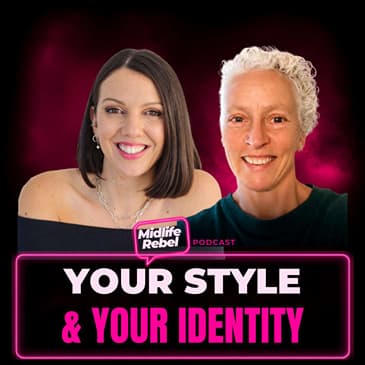
In this episode, I’m joined by Personal Development Mentor & Style Coach Sarah Ryan to explore what happens when the way we present ourselves to the world no longer reflects the person we’re becoming.
For Sarah, style goes much deeper than clothes. It’s connected to identity, values, creativity, confidence and self-expression. As we go through the transformations of midlife, what once felt like “us” may no longer fit — literally or figuratively — and our wardrobe can become one of the places where that disconnect shows up.
We talk about the conditioning that shapes how women believe they should look, the pressure to “dress your age”, why so many women focus on hiding or disguising their bodies, and how menopause messaging can turn normal physical changes into something we feel we need to fix.
Sarah shares why she begins with the woman rather than the wardrobe, exploring values, roles, relationships and lifestyle before thinking about clothes. We also talk about colour analysis without rigid rules, taking the pressure out of shopping, experimenting with clothes and using small actions to build confidence and self-trust.
And we hear the powerful story of one of Sarah’s clients who had removed every mirror from her home because she couldn’t bear to look at herself — and what became possible as she began reconnecting with herself.
This is a conversation about allowing our style to evolve alongside us, letting go of some of the rules we’ve absorbed about what women should wear as they get older, and finding ways to express the woman we are now.
Because maybe the loud coat, the sparkles or the electric blue trousers were never the problem.
Visit our website to find out more about this week's guest.
All of our guests, including this one, are included in our Guest Directory so that you can find out more about them and the work that they do.
https://midliferebelpodcast.com/guest-directory
If you'd like to support the show you can buy me a coffee!
https://buymeacoffee.com/midliferebelpodcast
Hi, Nidie.
SPEAKER_02Hello. Good morning to you.
SPEAKER_01And good afternoon to you. Good evening. Yeah, early evening. How are you doing? I'm good, thanks. Yeah, bright and breezy and ready for the day. So all good. How about you?
SPEAKER_02Yeah, I'm good, thank you. Thank you for doing this at such short notice. I just had this window and I was like, well, we'll do it now or wait, wait till December.
SPEAKER_00That's it. Yeah, why not? Yeah, let's do it.
SPEAKER_02Yeah, I'm looking forward to it. I've already hit record, so we can just kind of flow into the conversation. I'm just eating a meat, so we maybe maybe I should take it out. I don't know.
SPEAKER_01Enjoy it. Why not? I was gonna have a coffee, but then I thought maybe I shouldn't be slurping on the podcast.
SPEAKER_02So yeah. You know, sometimes you'll water yeah, you just gotta do do the real life stuff, haven't you?
SPEAKER_01That's this is it. This is it, yeah, especially at half eight in the morning on a Thursday. So have you got a busy do you have a busy schedule? Is your schedule pretty choc a block? Or yeah, I I've got three calls today. Um all of them are kind of like my work is uh online pretty much with clients internationally. Yeah, so I would say 95% of my work is actually online. Um yeah, which most people don't expect, I think, because you know how do you do that? Um well, I see I went into business. Um, I started this business in 2020, literally like February, March of 2020. We all know what happened then. Yeah, yeah. So um it was it was go online or die, you know. So it was it was adapt or die. So that's what I did. So um it's actually worked out probably better than I ever could have hoped because I've reached people right across the world, especially with my.
SPEAKER_02Yeah, I saw your YouTube channel. You've got it's huge.
SPEAKER_01Yeah, I mean, it's you know, compared to others, maybe it's not so big, but you know what? Like if 23,000 people showed up in a room to see me, I'd be like, whoa. Right. So yeah, yeah. So um, and most of those, like that audience is mostly in North America, you know, you so yeah, US, Canada, and then um UK, Australia, Ireland, um, and then uh sprinkled across Europe then as well. So quite a diverse audience. Um, and so that's where my work is. Right. That's yeah, that's so good. So a couple of good things came out of 2020 and those times. We won't mention the C word, but there you go.
SPEAKER_02Well, I think I I didn't start the this podcast until 2022, but it was definitely, you know, there's that connecting with people online is much more normal, isn't it? Like I feel like half my friends are people that I've never met before.
SPEAKER_01I know, yeah. I mean, I'm having I get together with like with people across the world now, you know, even clients who have become friends, and we have a coffee online, and that's just I mean, yes, wouldn't it be great to meet in person, but it's not always absolutely so you know there's yeah, I mean, look at us, we're like across the world, and here we are chatting like it's we're next to each other, you know, at a at a coffee shop.
SPEAKER_02So it's great, it's great, yeah. And I'm looking forward to this conversation, something that um hasn't been covered in the podcast so far. So is there anything in particular you want to kind of uh you know,
Style As A Door To Identity
SPEAKER_02steer us in the direction of, or are you happy just to kind of go with the flow?
SPEAKER_01I mean, I'm happy to go with the flow and see where the conversation takes us. Um, you know, I I think in a lot like a lot of the conversations you've been having on your uh podcast are you know that shift in identity, and basically that's the women I work with. Yeah, you know, that's that's because I found, and maybe this is something to put it into the podcast, but like when people were coming to me, something like colour analysis would pique their curiosity. And I say, okay, jump on a on a clarity call there with me and let's see, you know, what's right for you. And they'd inevitably say, I don't, I don't know who I am anymore. I've lost myself. And it was because of some significant change in life, you know, whether that was uh, you know, children were that bit older that they had a bit of time for themselves, um, and they had to relearn who they were and what they liked, maybe menopause and breakdowns of relationships. I've had people, uh, women who have gone through health uh challenges. They've yeah, they've lost their hair. And it all these things affect a person's identity greatly. I mean, I I listened to um the name escapes me now, but the uh one of your recent podcasts, and the lady was saying that she had to kind of think about what music she liked to listen to again. You know, it's it's those things, and you know, people think, gosh, what has my identity got to do with my style? But it's so interlinked. You know, if you don't know who you are, first of all, you'll be sold anything and everything, right? You're really easy to market to when you don't know who you are, right? It's it's a yeah, it's it's a pretty vulnerable space, I would say. But you know, this the the more you know yourself and the more you say, no, I I like this and I don't like that. If you can, and and you don't have to justify that to anybody, you just know it and and that's that's great. And you don't have to explain it, you you're not seeking approval. Uh, you know, I think that is something that um we can lose along the way in life, or maybe not never have even found it for some people, you know. Uh I I worked with a woman who was in a you know a coercive relationship and she was told what to wear, right? And she she got out of that relationship, thankfully, but she really didn't know where to start.
SPEAKER_02And that was really my mum was like that. I remember her saying that my dad had a very particular way that he liked her to look, and so yeah, when they split up, she wears something, she wears stuff that I I don't think you ever would have approved, approved of.
SPEAKER_01Yeah, yeah. And you know, that's like there's I think that's also like a a spectrum of um I uh you know, control is a is a strong word, but some people say, Oh, I wear this because my husband likes it, and that's lovely, right? But it shouldn't be the only reason you wear it, it should be I like it and he likes it too, right? Great, yeah. Um, you know, and I say to people, you know, I I met a woman recently and I she was wearing this great jumpsuit, and I said, I love your jumpsuit. And she said, Oh, thanks so much, that means a lot, because my husband hates it, and I just said, Well, he shouldn't wear it then, you know, it's personal style, it's not everybody else's style, it's personal, and it should mean something to you, you know. You it should it it can really be a tool to to make you feel good, and and we should use all the tools at our disposal, you know, to help us in any way possible. So, you know, that's I I I think style can often be seen as something uh superficial, it's shallow, and I I totally yeah, and it of course it can be, but um if we look at you know communication, psychology, uh history, and how style and fashion has been used, it's so much deeper than that. You know, it you can it's a sense of belonging, it's it's finding a community often, you know. Uh we've seen that through decades where you know you have maybe punks or goths, it's a sense of belonging as well. It's it's a way of identifying people that share your values, you know. So it's there there's a much deeper meaning to to what you wear than one might realize at first glance.
SPEAKER_00We can I hope we can fit all of this into an hour.
SPEAKER_01Yeah, well, listen, wherever it goes, you know, that's yeah.
SPEAKER_02Well, you've already given us a whole bunch of stuff that we can talk about. Um I'm just kind of rolling, we're we're rolling into it.
SPEAKER_00Yeah, yeah.
SPEAKER_02What did you start with? Did you start with coaching or did you start with style? And when I know you said that you were online and women were saying to you, you you know, they don't know who they are anymore. Yes, how did how did this work
NLP, Dubai And Finding Direction
SPEAKER_02evolve?
SPEAKER_01It was coaching, first of all. Okay, and uh neurolinguistic programming, mind coaching, and um I went into that myself because I was lost. I didn't know who I was, I didn't know where I was going. And at the time I was living in Dubai, and I I met a guy and he put NLP Neurolinguistic Programming on my radar, and I said, What is this thing? you know, and I really got my interest, and so yeah, I was looking for direction, you know. I wanted to leave Dubai, I wanted to leave the role that I was in, but I had no idea what was next. Um, I had been there, you know, eight years, and it's a very comfortable life, um, but it's it for me, it wasn't long-term. I mean, it's not a place you retire and grow old, right? For a lot of people, some people, the minority perhaps, but um yeah, for me, that wasn't going to be the case. And I just didn't know what was next. Um I I was probably I I learned a lot about myself by traveling the world while I was there, um, but also being in Dubai things can get a little superficial. And uh, you know, it's if if anybody who's listening has ever been there, you probably know what I mean by that. But um, you know, you you gotta you gotta find meaning when you're there and and purpose and good friendships and and not get swept away by the fast cars and the the champagne lifestyle and all of that kind of stuff, um, and and lose yourself a little bit. So I was um yeah, I was lost, and I was thinking, gosh, what what's next for me? So I started studying NLP, flying back to Ireland to take courses, and I found it so profoundly helpful. Um, I I gained so much confidence and clarity from it. Um, I overcame fears. Uh I, you know, I had a huge fear of public speaking. And for whatever reason, I always knew I was gonna work for myself. That was, I didn't know what it was gonna be, but that's something I knew about myself for sure. Um and I knew that speaking was gonna be part of that, and so I had to challenge myself and overcome this uh fear that I had. And all this NLP stuff really it helped me so much that I said, I want to be able to help people using this tool, help them get clarity. There must be other people there who need clarity and confidence and overcome fears and and um challenge their beliefs uh and their narrative on what's holding them back. And so I became a coach. And my first business in that was actually called live your authentic life. And you know, it was it was exactly as it sounded. It was about understanding who you are, what you wanted, and and how to go for it and achieve it. Um, but there was there was always something missing for me in that. I was I didn't quite find my niche, you know. There's so many coaches out there, and I you know, I thought, what else brings me joy? What else would I do if I wasn't getting paid? And I said, you know what? I love what clothing can do for a person. I love that you can almost borrow confidence from wearing an outfit. And I saw the link between the mindset stuff and the power of clothing, and that's when the style coach was born. Because I knew style on its own was uh valuable in terms of you know what works for your body shape, what colours suit you, you know, they're they're they're tools, but the mindset stuff was transformation. There's endless amounts of videos out there on wear this if you're this shape, don't wear that if you have this colored hair. There's endless amounts of videos, so really we should all have the answers, but we don't because it's the mindset stuff that's missing, and it's those things that can hold us back. Oh, well, my mother told me I can't wear yellow, or my husband doesn't like it, or any number of things, you know. Oh, I'm over 40, so I shouldn't wear this. I'm this size, so I can't wear that. And we put up all these barriers and and we don't know where to go. So the information becomes useless if we can't apply it and have freedom with it. So the combination of the two, the information and the transformation, that's that's the gold.
SPEAKER_02And when so did you have any background in style uh no?
SPEAKER_01No, okay. No, um, so my background, I was uh cabin crew for a long time. I was a teacher, I was working, I worked in a bank, I was um a belly dance teacher. So uh no, no, um, I mean, I much like anybody else, I learned the the rules, I suppose, are the guidelines of style. And I also realized very quickly that they are simply guidelines, that they can be thrown out the window. And this is where I think the identity
Questioning Style Rules And Body Ideals
SPEAKER_01part comes in really strongly because you know, I mean, here's an example of somebody I worked with only recently. She was what we might call an inverted triangle shape, right? Her shoulders were the broadest part, and she narrowed down through the hips. Okay. Traditionally, um, a stylist, I don't even consider myself a stylist, but they might say, okay, we need to balance your body shape. So we bring volume to the lower half, and that allows the shoulders to be balanced with the hips, we'll define the waist, and therefore we're creating a lovely balanced hourglass shape.
SPEAKER_02Okay.
SPEAKER_01Now, whoever said the hourglass was the be all mend all?
SPEAKER_02Marilyn Monroe, maybe was that Marilyn Monroe. Yeah, sure. But but who admired Marilyn Monroe? So are we dressing to for someone else to look attractive?
SPEAKER_01Yeah. Yeah. Who says a woman's body has to be an hourglass? What's wrong with maintaining an inverted triangle shape? What's wrong with strong broad shoulders in a woman? What's wrong with narrow shoulders and curvy hips? We don't have to create an hourglass. Maybe we just celebrate what you have. Or in the case of this client I'm talking about, she said, I like my shoulders. I'm not trying to define my waist. That's all too feminine for me. Okay. Is what she how she described it. So we this is where her identity was so strong. And if she wasn't clear on that, maybe she would have been led down this hourglass shape and she would have felt really uncomfortable in her style. But she knew that that style wasn't for her. It's not wrong, it just wasn't hers. So we created more of a trapeze shape for her where clothes kind of came from the shoulders and out in long lines, and really beautifully draped clothing, and that's where she felt at home. So we have to question all of these guidelines, and a quote comes to my mind when I think of this. The truth will set you free, but first it will piss you off. But she, like, you know, when you start questioning these things and we say, Oh, why am I trying to be an hourglass? Why do I have to defy my waste? Why are we doing this? And a lot of our narratives have come from the patriarchy, yeah, and we haven't questioned it. And when when you question it, it kind of annoys you, right? It annoys me. So, oh, if we strip back all these layers and actually turn it inwards and say, No, what do I feel good in? It's a it's tricky to identify because of those layers of of conditioning, but you can get there, and there's freedom in it, and and a lot of joy. And yeah, and so that's the kind of work that I like doing. I'm not your traditional stylist, I'm an identity and style coach. I help bring you out of yourself, understand yourself. Yeah, we use the tools then, the colors and the silhouettes and all of that to take you there. But without the identity piece, you might get really lost in it.
SPEAKER_02Yeah. Wow. Okay. There's so many things to unpack. One of the things when you were talking about like the body shape and and the expectations, and it's like that that in itself is amazing work that you can do, like standing up for women and saying, actually, you can do whatever you want with your and
Body Image And The Belly Story
SPEAKER_02wear whatever you want, you know. Obviously, you'll give some guidance, I assume. Um because your body's your body. That is a massive thing. Like we are surely nearly every single one of us has some kind of hang-ups based on what we should, we think we should look like like, or what someone said to us in the past, or and women in midlife, our bodies are changing as well. You know, there's bits that are kind of getting rounder and fuller and not as firm, and and there's messaging all over the place that says, Oh, you've got this belly fat that's coming along with menopause, get rid of it, you know, there's just so much stuff. Um God, yeah, so that's massive.
SPEAKER_01Uh on the the belly stuff, you know. I so I I'll often uh give um a questionnaire to the person I'm going to be working with, get an idea of who they are, what they're looking to achieve. And I'll say, you know, what what areas of your body um do you like, and what areas would you prefer not to draw attention to? Sometimes that first question is well, a lot of the time. It's left blank. Okay. Women have a real hard time identifying uh something that they feel good about in their bodies. And I'm generally working with women, let's say uh 45 plus.
SPEAKER_03Yeah.
SPEAKER_01Um and I find that profoundly sad. Um for you know, that we can't say, you know what, I actually I like the curviness of my hips, or I like my legs, or you know, I like something, or at least to say, you know what, I I accept this part of my body. We've, you know, it's this uh, you know, what we've been fed along the way is, you know, oh, you should love your body, you should do this, you know. But as soon as you do, the criticism comes. Oh, look at her, she loves herself. Well, what are we supposed to do now? Right? We're damned if we do, and we're damned if we don't, right? But it's the fine line women have always walked. You know, wear makeup, but don't wear too much makeup, too fat, too thin, too visible, you know. Get out there, be seen. You know, which which is it? So it's really hard to get a ride because if it feels impossible. So, you know, you're half afraid to say that I I actually like my boobs or something, you know. Because if you do, it might bring criticism or you know, people saying, Oh, you know, she loves herself, you know. Um, and that's the very thing we should be celebrating. Imagine if we all did like or love ourselves, it'd be a very different world. Yes, very different world. Yeah. But then the second question, you know, what do you what would you prefer to cover up? I can tell you that 99.9% of the time, women will put my belly, uh, my tummy, the stomach. And if we examine that, if all of these women have this similar, I put it inverted, commas, problem area of the tummy, is it really the problem or is it the messaging that we've been told about? And because we all have this belly, yes, we all have it, right? It's it's a part of being a woman, you know, as we especially as we go through life. And we've been told that no, it's not desirable, it's not attractive, and constantly being fed this narrative that um younger bodies are are beautiful, are worthy, are you know, um are of a reproductive age, or you know, and again you gotta question where this messaging is coming from. And why all of these women who have got to this stage in life, gone through must so much, achieved so much, um gone through various challenges and battles in their lives, and they're saying, Oh, my tummy is something I need to hide. When maybe it has given life, you know, or it's it's just has the potential, maybe something you didn't have children, but has the power to give life, or you know, being a woman, this is part of being a woman is to have that tummy. And and why are we being so hard on ourselves? All of us pretty much are saying the belly, the belly, the belly. If we if we if 99.9% of women changed that narrative and said, Look at my curves, look at this roundness, look what I've you know, this is how I far I've come in life, and and and celebrated that, that's powerful. Yeah, you know, so the the the thing that we think is a problem, it's a perceived problem. That's all it is.
SPEAKER_02What else is on your questionnaire? I'm gonna come back to how how you then fix it all.
Values, Roles And What Sits Underneath
SPEAKER_01I mean, my my questionnaire um it covers a broad spectrum of things, really. So I actually go into uh a kind of a bit of a life overview. So almost like um kind of the the circle of life where you might shade in um areas of your life where you're most happy or or where you'd like to work on. So, you know, it might even cover things like you know, relationships and um friendships and creativity and and you know, broader things like that. And then we might narrow down into okay, in terms of actual style, what is it? Is it accessorizing? Is it you know, those kind of finer details? And people might think, gosh, what does what does you know my creativity or um my relationships or anything like that have to do with my style? But I mean, it absolutely is wrapped up in it, you know. If you're in a relationship where somebody is has a strong opinion about what you're wearing, and maybe you're not entirely happy in that relationship, there's a bigger, bigger thing to be talked about rather than what colours you should wear. Right, you know, and your creativity. I had a client who she lost her creativity along the way, she loved to knit. And she said, Oh, I'd love to get back there, you know. And I said, Okay, right. Well, you know, that was something we worked on. Um, and week by week, it was like, okay, what's the first thing you can do? She's like, I'd like to buy a book on the subject. Great. Next time we talk, have the book. And it's just these little steps that build confidence and get you returning to who you are. You know, it doesn't always have to be the chat about, well, look how this shape works on you. It's actually about building foundations in who you are. I'm a creative person, I'm an adventurous person, I'm kind, I'm, you know, we can wrap ourselves up in roles so much, you know. Even I say I'm the identity and style coach. Other people would say, you know, uh, you know, on various Instagram profiles, wife, mother, you know, and list roles. But roles change in life. Yeah. Some sometimes naturally, you know, um retirement, something like that. Um, other times suddenly in the breakdown of a relationship. Um, and you're when you have wrapped your entire identity up in wife or teacher or you know, what and those roles change, you kind of go, ooh, who am I now? And I think that's really important to have a good think about, you know. We often say to people, oh, tell me about yourself. Well, I'm you know, and we list roles, yes, and the the roles are current at that moment in life. But I'm more interested in you beyond your role. You know, I talk about values. Values are something I I talk about in the questionnaire, and I get people to to list some values, values of theirs, and you know, some of mine are adventure, authenticity, growth, and all of those things show up in my style, they show up in what I wear. I had a client uh in California. Um in the first session, we had such a light bulb moment because she was living in direct the opposite direction to her values. And she said, I never thought of it like that. This is what's important to me, but this is what I've been doing. The actions didn't support the values that she was talking about or were so important to her, and she couldn't figure out why her style wasn't right.
SPEAKER_03Oh wow.
SPEAKER_01So this is the kind of stuff that you don't get in an hour and a half colour consultation, right?
SPEAKER_02This is all the stuff that I that I'm you know personally experiencing and that I'm talking to to other guests about, you know, this at this midpoint, and these are the the women that you're working with mostly, this midpoint of our life where there does seem to be that massive shift and that questioning of who am I beyond the roles, yeah. And yeah, like the fact that you're layering that style onto it. I was having a couple, I had a couple of little um things
The Eight-Week Program And Real Tools
SPEAKER_02there because, well, I mean, I wouldn't mind going into my own personal style in a minute or in a in a few minutes, just because I I think it would be interesting because I'm pretty useless when it comes to what I wear. Um, but I and and the role thing, and like when you introduce yourself, that all sort of I was like, oh my god, that happened to me today because I my husband and I have a gym business and I've worked for many years as a personal trainer, but I'm I've studied to become an astrologer, so I'm now a practicing astrologer, but I have a real difficulty and a disconnect between and and yeah, between like telling someone that I'm an astrologer, but what I wear is like a personal trainer, right? Yeah, but they're both roles, and it's like what's beneath that?
SPEAKER_01Yeah, what what's the common link there? There's probably something that you know, um probably, you know, obviously movement is something that is uh of great importance to you, yeah. And you know, some people think that you know, we we often like bash athleisure wear and say, Oh, you well, if you're not going to the gym, you shouldn't be wearing your athletic wear. But you know, if your lifestyle is that um you're not gonna go around in a blazer or something, you know, it just wouldn't make sense, like you know, so it's your lifestyle and how you dress are are very interlinked. And you know, if you are uh working out, even if you're now an a astrologer, but maybe like between studies or between calls, you know, you're you're out there, you're moving, you're you know, and you don't want to be changing all the time. So like it's gotta make sense for you. Yeah, and and this is where we gotta say, okay, let's put all those shoulds to bed. There's so many shoulds. I mean, that's a word that needs to be retired, but um, you know, there's the the expectations of what we should be wearing uh because of our roles, because of our age, because of our size, because what you know, the list goes on. Um yeah, put the shoulds to bed.
SPEAKER_02I don't want to talk more about some of the the shoulds that that come that you come across. Um, but I would love to hear a bit more about how you work with a client. So they come to you, do they do they come to you with an identity crisis or are they just like a I need a change? Um, I'm sick of the way that I look, um, I want to feel better about myself. Like, how do they come to you? And what you've already given us a taster of some of the the process that you go through, but like at what point do you start to so that you're starting to help them find who who they truly are, the things that they like, and how does the style emerge from that?
SPEAKER_01I think style is often an easy door to walk through. It's a it's a conversation opener, I think. You know, especially a lot of people are drawn to uh when I do color analysis, you know, that's when how a lot of people will find me, actually. Is like I've done colour analysis on YouTube, and you know, I'll say get in touch. So when they do get in touch, and we say, Okay, what is it about colours that you you're interested in? They say, Well, you know what? I just I've lost myself. That that's generally the sentence I hear. Okay. I've I've I've had kids, I've had you know, some significant change in life, and I used to know who I was, now I don't, you know, there's often a pre-COVID, post-COVID story as well. Lots of people lost themselves in that period of time as well, which I'm not surprised about because our roles were challenged, our um behaviors changed, our um lifestyles changed dramatically, and it shook our foundations a lot. For a lot of people, it meant you know, sitting at home and maybe in the athleisure wear, or you know, the cum figure or even the pajamas, and that was a novelty for a while, but over time it, you know, if that's not your norm, it can eat away at your confidence. Um I mean, style is a practice, okay. It's like a language. If you're not using it regularly, practicing it regularly, you do lose it a little bit, and it becomes this case of um you have changed as a person, but your wardrobe is still five, ten years ago, and there's a real disconnect. So it's like, how do I bring that wardrobe up to here to meet myself? And who is that person now? So you know, you can't it's like getting into or arriving at an airport, and a lot of people will say, um, well, I I don't want to go to Dublin. So they know what they don't want. They find it really hard to say what they do want or where they want to go. So getting clarity on that is so important. Um, but I've gone off, I've gone off track there. I so this is going back to how people are you know come to me and and what they're what are they saying. But this is this is where it starts. It's the often uh chatting about colours, it's it's less vulnerable than saying, I'm lost, help me. Yeah. Because that's that's scary, you know, to admit that um that that's where you are and that you would like help with that, it's vulnerable. And you know, so it is easier to come to me and say, uh, let's do colour analysis, but I I never just book people in without chatting to them because what I do is not for everybody, right? It's it's it's for a certain person who's you know ready to do that kind of work. Because if if you're I don't I don't drag people into this, they have to want to do it. Um, so I do have that conversation with people and say, you know, okay, what what what is colour of interest to you? And generally speaking, that opens up a bigger conversation about well, I've had kids and the kids are grown up now, you know, maybe it's empty nest, um retirement, uh, my body's changed, um, health challenges, any number of things like that. And a person can feel like, oh, I need a bit of help with this, and colour will take you so far. Um, you know, uh it is useful. Uh it I'm a big advocate of people knowing their best colours and building a wardrobe around it. But for a color analysis to give you back your identity, to build your confidence, to give you clarity, that's a lot to ask of a color analysis, you know. Um, but that's actually what's often wanted and needed. Yeah. Um, and and people just don't know uh maybe where to look in that sense. So um so that opens up the conversation, and then I say, well, look, what I do is a little different. There's quite a bit of deeper conversations, coaching, um getting clarity on who it is you want. Um, yes, we'll do the practical things of you know, putting an outfit together and colours and shapes and all of that, but but that that is built on top of your foundation of who you are. And you know, that's when I bring people through my eight-week program. And it's it's a wonderful opportunity for for a person to actually be heard, um, because often they when they say their concerns out loud, even that alone gives clarity. Hearing yourself say something can be profound. And again, if you do like a one-off body shape consultation or colour consultation, the opportunity for those conversations are not there. Whereas through eight weeks, we are layering and layering and layering, and g not just you know eight eight weeks of work, but tools for life, yeah. Because you will change again, just because you discover who you are now doesn't mean that's it. You you okay, I've figured it out, I'm done. Because you'll go through your 50s, you'll go through your 60s, and with you know, each passing year, we change, we evolve. And little adjustments need to be made along the way um for our style. Because we if we get this idea in our head that we we will figure it out and we arrive at this destination, the there's that's when we get caught in a style rut. Because the wardrobe doesn't evolve, but we evolve. And this gap widens between the wardrobe and who we are. So the tools um that I give are tools that can be applied as you go through life. I my aim is for you not to call me in five or ten years and say, I'm back to square one, right? I want you to be able to figure this out as you go along. So, yes, we work together for eight weeks. There's an option to do further work, but eight weeks is is certainly the foundation program. And then uh you have these tools that you can apply in different ways throughout life.
SPEAKER_02Yeah, wow. How does um neurolinguistic programming, NLP, come into it? Do you use that now in the program?
SPEAKER_01I do, yeah. So it's it's it's not like you know, okay, today we're doing NLP and coaching and it's very it's very conversational, and I think I probably use it most in terms of challenging beliefs. Yeah, that's where it comes in really useful. Um and you know, also just kind of interpersonal relations, forming rapport with somebody as well. Um you know, I I think I do that quite naturally anyway with a lot of people, but sometimes it can be a little bit more um strained, and that can help there as well, but certainly it's uh beliefs around um sure I can't wear that. You know, I'm whatever the the belief is, and being able to challenge that or reframe it, uh see it differently, and and change it give people freedom again because limiting beliefs take away freedom. So it's it's giving a person back, you know, using NLP gives a person back freedom, I think, and and to rewrite the patterns in our mind because our mind likes patterns, they can be tricky to change, you know. We like systems, we like sameness, um, that's just the way evolution has built us. Um, and so it doesn't come naturally to us to challenge these things or to change patterns, or we might believe that changing is actually a difficult thing. And so, you know, using NLP to change these things, challenge these things, have conversations, that's where it comes in. So it's about giving somebody back. Freedom to think differently.
SPEAKER_02And I guess if you've been doing something for so like potentially doing something for so long, there's that tendency of what, like you said, well that's what I've always worn, or someone told me once that this that colour doesn't suit me, or whatever it is. Um and all those social things.
SPEAKER_00Yeah.
SPEAKER_02Yeah. And it's just bringing awareness to the language that you're using around the way that you look. My bum looks big big when I wear X, Y, and Z. Yeah, that kind of thing. Yeah. Do you have Juicy topics? Yeah, yes, yes, yes, yes. Do you have like so someone comes to you and they're going through your program and they're like, I just really want to wear. And there's like something that's something that they've never done before, but that feels right. Have you had any of that? Do
Disappearing Woman Syndrome And Permission
SPEAKER_02you have that?
SPEAKER_01There's a yeah, I think there's a lot of people who wish that they could wear the thing, the loud coat, you know, the the faux for fluffy jacket, you know, my like I'm showing you my my blue fluffy jacket here, my my cookie monster jacket, you know. Um, but you know, people will say, but I can't, because people just don't do that thing where I live. It's you know, it might be rural or it might be, you know, it's just not the dumb thing. So so I don't. So yeah, there's a lot, there's quite a lot of that, I think. I think if we all found the freedom of and and confidence in in who we are, I think we'd make different choices completely. You know, there's a lot of this, um, especially again, uh, you know, for women 45 plus, there's this uh disappearing woman syndrome.
SPEAKER_02Uh-huh.
SPEAKER_01Yeah. Right? Quiet and down. Don't be seen. Don't be too loud. You just sit back there now and be quiet. No. You know, and and and our our clothes can reflect it. Even the fashion industry can reflect it. What we're sold, right? So sometimes the things that we want to wear, they're not available to us because it's a sea of beige, you know, when we go out to the stores and it's just not there. You know, oftentimes it means looking at alternative sources, you know, vintage clothes, thrifting. There's a lot more variety, I think, and fun. I think sometimes when you do with shop that way, um, I make my own clothes now. Yeah, because you know, it it fully expresses who I am, and it's my creative side coming out as well. And yeah, so um, yeah, there's this uh disappearing woman syndrome where I'm of a certain age, I've had my time in the sun, and now it's time for me to sit back and let other people have their time in the sun. That's all rubbish, absolute rubbish, and it's giving yourself permission to say, no, I'm not going to go out quietly, you know, I'm having the best time of my life right now, right? And and our clothes should reflect that, you know, often at that stage in life where the children have grown up, or you know, we we get a bit of freedom back in terms of how much time we have to ourselves, but we're not giving ourselves the same freedom in our choices of what we wear. And there's a missed opportunity here, I think. You know, there's so much fun to be had. And I think feeding yourself with the right narratives as well, and surrounding yourself with the likes of your podcast. Um, you know, what social media pages are you following and what messaging do they have? You know, there's a great Instagram page called Advanced Style, and it's just full of like older people who have this the most incredible unique style. And I I want that for myself, you know, I want that, and I I think most of us, if we see that kind of person walking down the street, we admire it. Yeah, because we kind of want we want it for ourselves, we want that. Gosh, they must be so confident to be able to do that, you know. They must have such freedom or um, and we want a little bit of that for ourselves. But I I think most of the people who get to that point of wearing whatever they want, they did it with the fear, anyway, of what will people say? What will people think? Oh, people don't wear this thing where I come from. That all probably went through their head at some stage, but you gotta say, you know what, get to hell with it, yeah, and just have fun with it. And you know, the more I talk to people, the more I hear I love seeing people walking down the street, and they just have this unique individual style, and it's not like anybody else, and I really love it. I hear that all the time. Imagine if we all had a little bit more of that, like that's that's our inspiration. And I think if we start addressing taking a little bit more risk with our style, it encourages other people to do the same. We're all lifting each other up, you know.
SPEAKER_02Yeah, you're you're getting me really excited. Uh um what are some of the so we have these things that are holding us back, you know, these this self-doubt, you know, tone it down, dress your age. You shouldn't wear that because you've got a big bum. You sh should be covering your boobs up a bit more, you know, that's inappropriate, whatever it is. Um, too bright, too trendy, I don't know. The breakthrough moment. Like, do you have women who go, fuck it? I'm ready, I've bought the thing, I'm doing it. Or not.
SPEAKER_01Yeah, so I think sometimes it's a slower process for some for most people. I think it's baby steps. Um I think it, you know, it takes a certain person, and and maybe that person who was you know just going to do that was a person that didn't need my help. You know, if they're that if they're that person who just says, fuck it, I'm gonna, yeah, well, you know, they're probably at a stage where they're like, you know, I'm just gonna do me, you know. Yeah. So and and that's that's the goal, that's the end goal. So um for for most people, that feels like too far of a jump, I think a lot of the time, um, and can be quite scary. Um, so sometimes baby steps are required, and there's nothing wrong with that. Absolutely, there's nothing to say that's you know, there's gonna be this absolute turnaround
Baby Steps That Build Confidence
SPEAKER_01overnight and you know, throw caught into the wind. Um, I think that can come in time.
SPEAKER_02So, can you give some examples of like what some of those baby steps might be? Like um, you know, is it someone who's just always worn black, wanting to wear some colour? Or, you know, it what what things are there that you know people change?
SPEAKER_01It depending on the person, I might it's always about taking action. Yes, because you know actions lead to confidence, not the other way around. You can't wait for the confidence to arrive first to take the action. It doesn't work like that. So baby steps towards confidence, it might look like for somebody, it might be a really simple thing like tucking your shirt in differently. You know, high highlighting something uh different, buttoning up the shirt instead of leaving a couple of buttons open. Just those things. And then saying, How did I feel in that? Did I like it? Did I not like it? And why? And examining. Sometimes it's as simple as that. And it might be, yes, the the person who's always wearing black, go borrow something off somebody that's not black. You know, you don't have to go. In fact, I I I put people on a shopping band when they work with me, they're not allowed to shop. Oh good, yeah. So it's it's you know, this is not about consuming at all, it's the quite the opposite. Um, so yeah, it might be borrowing something colorful from somebody else for a couple of days and um and wearing it and just seeing how that feels. Like so it's sometimes it's as small as that. Other times it's I had somebody who, by their own description, was a perfectionist, and she was so afraid of getting the outfit wrong, like it had to be perfect before she would leave the house. I said, Okay, your homework is to absolutely get your outfit wrong, right? Go the other way. I go there, really lean into getting it wrong and see what happens. Okay, and she did it. I, you know, and so I actually meant do this at home. Okay, but she actually went to work, which was like even better. So she went and she said, I really I thought these things really wouldn't go together, so I put them together and and I went out, and the realization was that the world kept turning, didn't come crumbling down around around her because she was getting the outfit wrong. And she said, actually, what I realized was as much as I tried to get the outfit wrong, I actually kind of liked it in the end. So, you know, so the this letting go of the perfectionism, you know, it depends on the person what I might suggest for them. Yeah, you know, I don't suggest everybody, you know, getting their outfits wrong or something like that, but um it's being playful with it as well, you know. How can we be more playful, more curious? Um, I also encourage people, excuse me, when they, you know, as I said, we're you don't shop with me while we're working together, but I do encourage you, if you can, get to some stores in your locality and try on things that scare the life out of you. Okay, and then put them back and walk away. There's a wonderful freedom that comes from trying on things knowing you're not allowed to buy. Yeah, right. Because a lot of us leave shopping till the last minute when we have an occasion, when we just need something, um and we put terrible pressure on ourselves, we have to come home with something. That's when mistakes are made, we might overspend, um, and we come home really frustrated and really not happy with the thing that we bought. But when I say to you, go and have fun, try on all the things that you say to yourself, I'd never put that on in a million years. Try that thing on, see what you learn about yourself. Always take a couple of pictures of what you're wearing, right? Because we get a different perspective through a mirror and through a lens. Um, it's all very, very different. Uh, always take a couple of pictures. And I'm not saying it's going to be perfect, but you're bringing back curiosity, you're bringing back playfulness, you're just seeing what happens because we don't allow ourselves to do that a lot of the time. So that's something I will often say to people, even if I'm not working with them, if anybody's listening and you've never done that, do it. Leave the cash at home, leave the credit card at home, go have fun. See what happens, see what you learn about yourself.
SPEAKER_02Funny. Yeah, it does. I was taking me back to it's taking me back to my teens when I used to do things like that. I remember a um psychedelic cat suit that I put on once when I was a teenager for fun. I'd love to do something like that. It was great.
Colour Analysis Without The Bossy Rules
SPEAKER_02I just learned so much about Unity and from that psychedelic cat suit. Well, you know, I was walking down the uh wasn't walking down the street, I saw a girl walking down the street. We live in a small country town, um, but it's kind of like there's a lot going on, you know, there's little festivals and music things going on. And there was a girl on Saturday afternoon, and she came out of the supermarket and she was wearing like electric blue, shiny tight leggings, pants, we call them pants. Um, and I was like, I want some of them, but then I did think I don't know if I could get away with that anymore. Being 50. What does that even mean, though?
SPEAKER_01What does it mean to get away with it? No one's gonna arrest you. Um you know it's getting away with it means do I have the confidence in myself to go out and wear them and not care what people think. That's what it comes down to. Self-trust, confidence, not caring, what other people think, tuning into how something makes you feel.
SPEAKER_02I do wear leisure wear a lot because it's easy. You said you basically described me when you said, you know, if you're going from one thing to the other, and um, yeah, so I I do basically wear you know shorts and t-shirt if I'm going out jeans and t-shirt. And uh there, I like you you are exciting me. Like talk talking about this. I like I do like a bit of glitter and like I would like to wear more more shiny things, brilliant, but I don't go out that much. So when am I gonna get the opportunity? Like, what would you suggest for someone who to to like try and throw some of that? You know, it's not like I'm going out on the town, but I do like the electric blue tights.
SPEAKER_01Where's the rule that says yeah, where's the rule that says sparkle and glitter and electric blue tights can only be seen going out? Right, yeah. Who's who says what what's stopping you doing that today? You don't have to be going anywhere because I think the thing we get uh you know messes with us a little bit is uh, oh nobody's seeing me today, so I'm not even gonna try. So that becomes dressing for other people. Yes, and if we're talking about personal style, it is always dressing for ourselves. There's nothing stopping you getting up in the morning, putting on the sparkles, and getting on with the day, whatever you have to do around the house, going to the supermarket.
SPEAKER_02Why not? Why not? Okay, gonna see what sparkly things I can find. Is there anything that you ever say to your clients? Don't because obviously you do style, like where you go, that doesn't really work for you. Electric blue is not your colour, yeah.
SPEAKER_01I mean, so when when I take someone through a process, and let's take colour for an example. Um I think saying outright to somebody blue is not your colour, yellow is not your colour, there's a real lack of knowing why in a sentence like that. Like, well, why not? Or am I just supposed to take your word for it? So when I do a colour analysis for somebody, even online, I want to make sure that they see the impact that various colors are having on their skin, on their features. So, and most of the time I don't have to tell them after that, you know, well, you know, this is not your color because they know and they understand why it's not their color, because they've seen the results of it. So, you know, I think me just saying, Oh, that's not working for you, that's not good enough. Yeah, I you know, you want to have a and and lots of people will, you know, give out dish out advice like that. We may have heard it from family members. Oh, that color doesn't work for you. Why not? And and are you an expert in that? You know, why you know, is it just opinion? Is it fact? Is it what where is this coming from? I don't understand why, but we internalize it and we take it as fact and we don't question it and and we abandon exploring it altogether. But I want you to understand why behind all of the work we're doing. It's it's not really good enough just to say wear this, don't wear that.
SPEAKER_02Yeah.
SPEAKER_01You're not learning anything there. There's no value in that sentence.
SPEAKER_02And you're not necessarily going to be able to take anything away from it, are you? Like if you know like the shape of something or understand, yeah, how it affects your skin tone, then yeah, you can replicate it later. Yeah, exactly. What about when you are doing skin tone, you're doing it from the face, right? I'm going back to the electric blue pants. Yeah. Yeah. How does that how does something bright on the bottom impact skin tone at the top?
SPEAKER_01I mean, it it it doesn't impact in the same way, like it's not going to kind of wash your face out or you know, make you look, you know, tired or something like that because it's far away from the face. However, I do encourage people to apply their colour palette throughout their entire wardrobe and beyond. You know, I know people who have painted their house because of their uh colour analysis, and you know, they're like even me, my my car choice, the colour of my car is in my colour palette, you know. Um yeah, a lot pretty much everything that I choose. I would no, sorry, I would say 80%. 80% of what I choose is in my color palette. I think a healthy 80-20 approach to most things in life is the healthy way to do things, you know. Um, but I do encourage people to have the majority of their wardrobe in palette because it works together.
SPEAKER_03Yeah.
SPEAKER_01Simple as that. The the colours in a palette have things in similar, the qualities of the colours are similar, you know, in terms of the intensity of them, the temperature, um, the value of them, and therefore they work together really nicely. You don't have to overthink your wardrobe. It really simplifies the process of getting dressed and shopping. So if you have items in your wardrobe that are completely out of palette, you might find yourself working a little bit harder to make an outfit out of them. Yeah, that's the reason I say try to keep everything um in palette for yourself. And life will be easier. Because I that's a big frustration for a lot of people, is simply getting dressed in the morning. You know, we we all have a lot to get on with and lots of decisions to make, and we don't need our wardrobe to be one more thing to give us decision fatigue first thing in the morning. So we want to simplify the process as well and still look good.
SPEAKER_03Yeah, yeah.
SPEAKER_02So what would go with the blue? No, I'm joking. I was gonna say so. Kidding. I hope the blue's my colour, though. Um what uh can you we get we've kind of reached the end of our hour, so I'm conscious of your time and
Mirrors Back Up And Closing Thoughts
SPEAKER_02I I don't wanna on the other hand, I don't want to kind of just you know close the conversation, but I'd love to If you could share like a particular story that you love of someone that you've worked with that you have seen transform, like so perhaps like how they came to you, you know, what was going on in their life, um, and how you've worked with them and what the transformation was.
SPEAKER_01Yeah, I mean, one uh one in particular comes to my mind. Um she was in the UK, we were working online, and she went through my program, and I don't think I fully understood her situation uh fully and the impact it was having on her life until she sent me an email maybe two years after we finished working together, and she said, When before I worked with you, I got rid of all the mirrors in my house. I couldn't look at myself, I didn't want to look at myself. I avoided mirrors when I was out in public, I avoided my reflection because I didn't like what I saw. And that meant that, of course, her confidence was at an all-time low. Her relationship was strained with her partner, she wasn't taking opportunities in work, in life, she was really shutting herself off completely. And she said, following working with you, I have mirrors back in the house, but not only that, I look at them and I like what I see. Oh, and that, you know, and you know, her her life changed because of all that. Um, but that is that's profound now, and and I would say that's probably an extreme case, um, but what a transformation. And I have to say this as well. I'm not a miracle worker. This work only works if you do the work.
SPEAKER_02Yeah.
SPEAKER_01You know, I I can't, you know, I can give you all the advice and I can give you the homework and I can give you the reflections and and uh tell you what colors suit you. But if you don't do the work in the background, it will mean nothing. So she did the work, she met me halfway, and she did the work, and that's why she got such profound results. I am not a miracle worker, I have tools and skills, um, but uh without application, they mean nothing, and so that woman did the work, she showed up for herself and she she put the work in. She used the tools, she used the skills, she put the work in and she got the results.
SPEAKER_02Amazing. I just love I just love what you're doing, it's so cool. Like, and oh, it just adds like this whole new layer to the experience of going through midlife and and the possibility of like you know, almost you're doing the work, you're upgrading your psyche, you know, your sense of self, but then you can express it through style. I just love it, I'm very excited.
SPEAKER_01I'm so glad to hear it. I mean, I hope like that's that's what I want is just the to to give people the the possibility that you know there's more, more to to to life. There's more to come.
SPEAKER_02Yeah, yeah. Oh Sarah, thank you so much for this great conversation. I really, really appreciate your time. Thank you, Najina. It's been a joy talking to you. It's been so fun, thank you.