

Let us know what you thought of this episode!
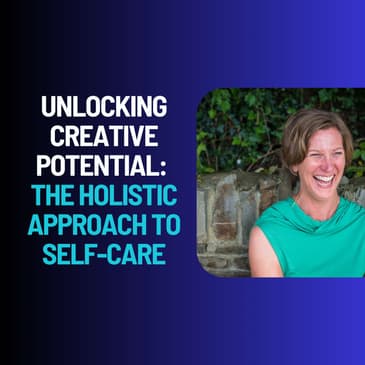
Lucy Hyland, the visionary behind the Self-Care Revolution, joins us to share her personal journey. Lucy's unique path led her to develop a holistic self-care toolbox that includes Nutritional Therapy, Art Therapy, and Human Design. Together, we explore how these tools empower individuals in their wellness journeys, highlighting the role of creativity and community in fostering a balanced and harmonious life.
Have you ever felt lost in a task, completely absorbed and unaware of time passing by? That's the flow state, and it’s not just limited to artists. Lucy and I discuss how everyday activities like gardening or rearranging furniture can become meditative experiences that ground us in the present moment. Through personal anecdotes, we reveal that creativity is an intuitive process that can defy consistent theories yet is powerfully transformative when experienced.
The conversation shifts to embrace creativity in both personal and professional landscapes. We dive into the unpredictable nature of creativity, how it can disrupt the monotony of daily routines, and the organisational challenges of integrating creative processes. Lucy sheds light on how Human Design can help individuals break free from limiting self-perceptions and unlock untapped creative potential.
We wrap up with a critique of self-care's commercialisation, advocating for a compassionate approach that focuses on community support and holistic well-being.
Join us for insights that inspire a more authentic, creative, and connected life.
You can find Lucy's full profile in our Guest Directory
Speaker 1: Today I'm welcoming Lucy Highland, who's dialing in
00:00:05
from Waterford in Ireland, so I have to say I'm looking forward
00:00:08
to having this conversation and hearing this wonderful,
00:00:12
beautiful accent for the next hour.
00:00:14
Lucy is the owner and founder of the Self-Care Revolution, so
00:00:20
no doubt you'll be able to guess what we're going to be talking
00:00:23
about today, but it might not be exactly what you think.
00:00:27
Lucy's been working in the wellness industry for over two
00:00:30
decades and has qualifications in applied art and psychology,
00:00:35
art therapy and nutritional therapy and, as a guide, she
00:00:40
brings these modalities together in her work, as well as
00:00:43
interweaving embodied wisdom, eco-arts and human design into
00:00:48
her offerings.
00:00:49
Lucy, thank you so much for joining me.
00:00:52
I'm really looking forward to our conversation and, yeah,
00:00:55
listening to your accent for the next hour.
00:00:59
Speaker 2: Good to be here, Nadine.
00:01:01
I'm excited to be here.
00:01:02
This will be fun.
00:01:03
Speaker 1: Yeah, I'm really looking forward to this.
00:01:05
It's kind of a topic that I don't know a whole bunch about.
00:01:08
Well, self-care, yes, and we'll get into that a bit, but not a
00:01:12
bit a lot.
00:01:14
But, yeah, we have quite different.
00:01:16
It's interesting.
00:01:19
I was listening to another recording of a podcast that you
00:01:22
did and we have definitely got some things in common, but quite
00:01:27
, uh, diverse as well.
00:01:30
So that's really interesting and one of the things that I
00:01:32
love about you know, connecting the dots, um, but let's doing
00:01:44
what you're doing in your work.
00:01:49
Speaker 2: I sounded great when you were listing off all those
00:01:51
things.
00:01:51
You sounds really cool.
00:01:54
Yeah, I'm always surprised at the.
00:01:59
I think the journeys we all take like we're're not on.
00:02:03
This certainly hasn't been my experience, that we're on this
00:02:06
kind of linear path where we kind of had this goal and we
00:02:11
ended up working towards that and achieving it.
00:02:14
That certainly hasn't been my perspective and I have those
00:02:16
people in my life and you know they're great, but it's not
00:02:20
something that I've been able to really relate to in my own
00:02:25
process and there's a whole load of reasons for that.
00:02:28
But sometimes I feel like I'm a breadcrumb follower.
00:02:31
It's like something will show up and it will be of interest
00:02:38
and it will be of curiosity and intrigue and I'll just follow it
00:02:41
and I never know particularly why I started it.
00:02:46
And so, even if I go back to my early education, it was always
00:02:52
people.
00:02:52
It was people and place and I learned that through geography
00:02:57
and psychology.
00:02:58
That was my blend when I was first started studying and then
00:03:03
I took this kind of dark road into the world of kind of
00:03:06
planning and social planning and ended up living in Australia
00:03:10
for many years, working in the western suburbs of Sydney, which
00:03:16
were, you know, a high immigrant, a lot of
00:03:21
socioeconomic problems, and it really got me thinking about how
00:03:27
, how do we maintain a sense of wellness and well-being in our
00:03:32
own lives, given the places that we live, given the factors that
00:03:37
influence us, given the particular paths we all we all
00:03:43
choose, and how we end up in places that we never really
00:03:46
thought we'd end up in there, and how do we react and respond
00:03:50
to places.
00:03:50
So I worked a lot with the health department when I was
00:03:55
working in Sydney and it got me really interested in the idea of
00:03:58
health and at the same time I had an illness in my own life
00:04:03
and ended up having to go back to Ireland and actually
00:04:06
recovering from that illness and while I was doing it I got
00:04:10
really again.
00:04:11
The breadcrumbs were there about OK, what's what's going on
00:04:14
in terms of health and the individual, and I kind of took
00:04:18
it away from the society aspect, where I'd spent so much time
00:04:22
focusing, and actually went into more of the individual, this
00:04:27
idea.
00:04:27
Well, if we start on the inside and we, we kind of work out
00:04:30
how's that for a model, rather than I was working kind of
00:04:33
governmentally around policy and planning and trying to set up
00:04:36
systems where people could live in some sort of a balanced kind
00:04:42
of harmonious way with their, with their environments.
00:04:46
And I ended up about 10-15 years in the nutritional therapy
00:04:51
world and I loved that and I would have been very holistic in
00:04:55
my perspective.
00:04:56
So, even though I recognized that nutrition was a cornerstone
00:05:00
of good health and I still do I recognised that there were so
00:05:04
many other factors at play and as I saw people and we worked on
00:05:08
their nutrition or their lifestyle, I just kind of felt
00:05:11
like there was something missing in it all and I didn't really
00:05:18
understand what that was.
00:05:20
But I was curious enough to start kind of digging into it.
00:05:23
And at that same time, just through kind of sheer
00:05:27
coincidence, I ended up back exploring my own creative world
00:05:35
and I started with reading the Artist's Way by Julia Cameron,
00:05:39
which is a fantastic guide for anyone who's looking to
00:05:43
reconnect with that creative side and creativity.
00:05:46
You know I have a very broad term for that.
00:05:51
I don't see that as holding a pen or a paintbrush.
00:05:54
This, to me, is how we get to be creative in our lives.
00:05:59
And so I ended up going back into formal education and
00:06:05
studying applied art and then art therapy to really start
00:06:10
getting the nuances around material connection to the
00:06:15
material, use of the material and how, when we come together
00:06:24
in community around particular tasks such as making or building
00:06:29
or creating, really interesting things begin to happen.
00:06:35
So I then have kind of I couldn't let go of the world of
00:06:41
health because it was, and well-being because it was such a
00:06:43
fundamental part of my existence.
00:06:45
But I also recognized that there was a merging and a
00:06:49
melding and a kind of a bringing together of those worlds.
00:06:52
And at a similar time I also discovered human design, which I
00:06:57
know is a love of the two of us , and it is the system I that
00:07:05
really gives you a perspective on your energy and how to use
00:07:15
your energy and how best to navigate the life that you lead,
00:07:22
through making really good decisions, through knowing
00:07:24
yourself really well, through developing self-awareness and
00:07:28
self-knowledge.
00:07:28
And so all of these things started kind of happening
00:07:33
concurrently and then they all came together in this, in this
00:07:37
toolbox which is a, which is a fabulous toolbox, where I can
00:07:41
draw on the knowledge and understanding of human design.
00:07:43
I can connect in individually with people's creative spirits,
00:07:50
with their creative intuition, but then I can also bring them
00:07:54
together in groups and allow them to recognize that they're
00:07:59
not these isolated individuals with this set of problems that
00:08:04
they need to solve, that actually, when they come
00:08:08
together in community, they can see that they're part of
00:08:10
something, they're part of the system, they're part of the
00:08:13
community and it kind of gives them a perspective.
00:08:18
And one of the things that I really noticed as I was doing
00:08:22
this work was we exist in a world of active, progressive
00:08:32
achievement manifestation and we live in a very active world and
00:08:40
I really recognize, when I've watched people, whether they're
00:08:46
being human design and they were simply going through a process
00:08:49
of looking at themselves, becoming more self-aware,
00:08:53
whether it be in the creative process where they had to
00:08:56
surrender and let go and actually submit to the material
00:09:00
and enter a dialogue with material what I noticed is that
00:09:05
creativity allows us to move into a more receptive realm.
00:09:10
It actually it's like a panacea , is a big word, but it gives us
00:09:18
something to counteract this focus on growth, achievement,
00:09:26
expansion, and it kind of allows us to sit back, reflect, rest,
00:09:33
recuperate, restore, rebalance and I think you see more and
00:09:40
more how there's an industry that is always there to assist
00:09:47
people to simply shift into another gear, another way of
00:09:52
being whereby you can open yourself up more to.
00:10:00
I don't like using the word magic, but it's very hard for
00:10:03
artists to describe what they do or what they witness when they
00:10:06
see people in the creative process, but certainly opens
00:10:10
them up in a different realm within themselves.
00:10:13
That realm is often neglected in this world that we're all
00:10:21
existing in.
00:10:22
Yes Wow we're all existing in.
00:10:27
Speaker 1: Yes, wow, I know I, I know I was like I'm just I was
00:10:30
like, okay, I've got lots of questions coming up here, but
00:10:34
I'm just going to stay present, they'll come back, if they'll
00:10:38
come back, if, um, you know if it's meant to be.
00:10:42
But I wanted, I would love, to continue with this thread about
00:10:45
creativity, because you've mentioned, like it's obviously a
00:10:49
massive part of what you do, and you mentioned that it
00:10:52
doesn't have to be artistic necessarily.
00:10:56
I don't know if they were the exact words that you were using,
00:10:59
but yeah, but.
00:11:03
But also that there is some like you're kind of, from what
00:11:09
you described, it seems like you're bringing something from
00:11:12
within.
00:11:13
It's a form of expression, um, and yeah.
00:11:29
So I wonder, like if you could kind of give us some examples of
00:11:30
how?
00:11:31
Like, how do you, when someone comes to you, like I'm just,
00:11:32
I'll just get straight in with this, because, because I'm
00:11:33
really curious about this idea of creativity and what it means,
00:11:36
when someone um comes to you and they say, lucy, I want to
00:11:41
work with you, you in whatever format it is, and you want them
00:11:47
to connect with their creativity , how do you bring that out of
00:11:52
them?
00:11:52
If it's not just art per se?
00:11:56
How do they know when they're being creative or how do you
00:12:07
know it's?
00:12:11
Speaker 2: I suppose I can only witness what I notice in people.
00:12:15
And so what I witness when I am with people individually or in
00:12:24
a, in a um, in a group, is that it's like I would, I'd be quite,
00:12:32
um, I'd be quite a sensing person.
00:12:35
Um, just, I tend to pick up on cues, kind of more from a
00:12:41
sensation based, and there's something happened in the
00:12:45
process where it's like there's a drop and it's like, it's like
00:12:51
we drop into another way of being, because you can imagine,
00:12:56
let's just pretend it's the surface, so let's just on the
00:12:59
surface there's the waves and there's the movement, and you
00:13:02
know, people will come into a session, people will come in and
00:13:05
they'll have this like this motorized vehicle that's just
00:13:11
running, and when you provide a space for them that is grounded,
00:13:19
very tactile, very sensory, then something happens where
00:13:29
they they drop and they can feel it.
00:13:34
You can feel it.
00:13:35
Can I describe it or pick a moment?
00:13:38
Probably not.
00:13:39
But there's something that happens when we drop and Chitset
00:13:44
Mahali wrote an awful lot about this concept of flow and in
00:13:54
that moment when we drop, what happens is we enter into
00:13:59
something called a state of flow and in that state, what people
00:14:04
tend to report is that time doesn't seem to exist.
00:14:13
They're conscious, they're thinking, but the activity that
00:14:17
they're doing is such that it takes enough of their focus and
00:14:23
concentration concentration but doesn't overwhelm their thinking
00:14:27
and yet they engage in the physical act of doing it.
00:14:33
So it is quite physical to me.
00:14:35
It could be gardening, it could be singing, it could be
00:14:45
doodling, it could be rearranging your furniture and
00:14:54
putting cushions in different places.
00:14:56
So this is what I notice and this is what I see, and it's
00:15:03
like the world is suspended for that period of time.
00:15:07
And for artists it can be something that they can engage
00:15:13
in in hours, you know forgetting to, you know almost forgetting
00:15:16
to eat, like not noticing the world around them, just
00:15:19
completely engaged in the flow of their own creative process.
00:15:23
Or it is something that we can dip into, whether we're, you
00:15:27
know, just waiting for a bus and you know decide to, you know,
00:15:32
just draw on the sand at the bus stop or something you know your
00:15:35
feet.
00:15:36
It's not necessarily this, it doesn't have to be staged in a
00:15:40
particular way, and that's what I notice.
00:15:44
And to me, in that there's a surrendering, because you do
00:15:50
have an element of being in control, but actually you're in
00:15:55
a much more relational place.
00:15:57
You're in a much more relational way.
00:16:00
You're actually relating and interacting to what's around you
00:16:04
in a very different way, in a very different way.
00:16:08
So that is, I have a friend, a great friend, here in for sure.
00:16:15
When I arrived here.
00:16:16
I've only just moved here.
00:16:17
I've been through kind of process in the last year or two
00:16:22
and and I met her and she's she's decided to write a book on
00:16:28
the theory of creativity, because when she was doing the
00:16:31
research on what creativity is and how do we define it and how
00:16:36
do we describe it to people and how then do we therefore teach
00:16:40
people the basics of creativity, she couldn't find, she couldn't
00:16:44
find a consistent theory, she couldn't find consistent
00:16:49
language, and so she has gone and developed her own model of
00:16:53
creativity.
00:16:54
So it's always been a very difficult, intangible thing,
00:17:14
something that people recognize and can articulate and recognize
00:17:15
when they're, when they're in it and when they come out of it.
00:17:17
Speaker 1: yeah, I think it's interesting what you said about
00:17:18
the like gardening you know that that being one of the examples
00:17:23
or changing your furniture around, and it's that, yeah,
00:17:29
that feeling of like time.
00:17:32
I know that we moved house 12 months ago and I was painting
00:17:36
and I'd never painted before and I was painting a shed, and it
00:17:41
was just like I didn't think about anything else, just paint,
00:17:45
just you know, it was like that's kind of.
00:17:50
And the same thing happens to me when I'm gardening.
00:17:53
I'm not thinking about all of the other things in my life that
00:17:55
I've got to do, I'm just in that moment doing what I need to
00:17:58
do in that moment.
00:17:59
So I think that that's, yeah, kind of where I recognize that
00:18:07
feeling for myself and I can't.
00:18:10
That makes sense, like gardening, what so many people
00:18:13
love.
00:18:13
Gardening, right, and that's probably why.
00:18:16
But it's kind of like a form of meditation, isn't it?
00:18:21
Speaker 2: exactly.
00:18:22
And so even in um like I remember lockdown I was I was
00:18:29
kind of struggling with my own creativity a bit.
00:18:31
So traditionally what I do is I weave, so I create hand-built
00:18:37
weaves and I would frame and they would be like more like a
00:18:42
wall hanging than a like a practical, useful object.
00:18:45
They're way more decorative.
00:18:47
And I and in lockdown I was struggling with that creativity,
00:18:52
um, because of everything that was going on and and the
00:18:56
difficulties that we were all facing, and so I actually
00:19:00
started doodling and it was, it was, it's, it's a drawing.
00:19:05
So you use, you know mark, know mark making tools, a pencil, a
00:19:09
pen, a marker or whatever the case may be, and you doodle and
00:19:13
you're not drawing.
00:19:14
I don't start out to say we're going to draw a cat.
00:19:17
I literally just follow a very kind of more embodied sense of
00:19:22
movement and it's about from when I, when I look at it, it's
00:19:36
it.
00:19:36
It doesn't necessarily have to achieve a result necessarily,
00:19:37
but it is an engagement in the present moment in a particular
00:19:41
way.
00:19:41
So I can sit still, I can close my eyes, I can do those things,
00:19:46
I can close my eyes, I can do those things, I can do them for
00:19:49
short periods of time, but if I'm doing something, then I can
00:19:55
meditate, quote, unquote, whatever that term means.
00:19:59
I can meditate for long periods of time, for more sustained
00:20:03
periods of time, and it gives me access to not better or worse
00:20:14
something different than what you get in a more formal
00:20:17
meditation.
00:20:18
That suits me.
00:20:22
I mean, I also dance as a form of meditation, so I'm always
00:20:27
pushing boundaries for myself so that I can find tools that I
00:20:32
can work with in order to find that space.
00:20:35
Because, at the end of the day, what I recognize more than
00:20:39
anything else is there needs to be periods of my day where I'm
00:20:44
still, be periods of my day where I'm still, and it's in
00:20:52
that stillness that I get a perspective that I can't get
00:20:56
when I'm busy.
00:20:57
And and for my own sense of well-being, my own sense
00:21:06
attempting to keep my sanity in today's world, I need that
00:21:10
antidote.
00:21:11
I need the opposite of that, and it's interesting because
00:21:20
it's finding a balance that's correct for you, because I know
00:21:24
if I'm too stationary, if I'm still for too long, I can do a
00:21:28
little kind of self-imploding.
00:21:30
So it's that.
00:21:32
It's that movement of the body whereby it desires to be still
00:21:37
and quiet and then it wants to go back out to the world and
00:21:41
interact, and then it wants to retreat again.
00:21:44
I've worked up for myself in terms of my own process.
00:21:54
Speaker 1: Yeah, I think, yeah, it's interesting because I love
00:21:59
to go, like I take my dog for a walk on my own every morning and
00:22:03
I'm not one for listening to anything.
00:22:05
I'm like I'm going to listen to nature, but I get I kind of the
00:22:11
physical movement gets my thoughts processing, but like in
00:22:16
that kind of flow where they, like I just I'm like gone and
00:22:24
I'm like, oh, I've walked this far already, so it's yeah, it's
00:22:30
a fine line between, like needing the physicality to get
00:22:32
there because I also need to, like I need to stop it within
00:22:36
that walk and and get that feeling of yeah, like, yeah,
00:22:42
taking it all in, and as soon as I start moving again, the the
00:22:46
mind, the thoughts, but they're kind of like, they're those
00:22:51
thoughts, you know, where you don't really think about
00:22:53
anything, kind of thoughts like that kind of semi-meditation.
00:22:57
Yeah, it's interesting how that physicality can make a
00:23:01
difference to it and the stillness can make a difference
00:23:04
to it.
00:23:05
I've been thinking, I wonder, and the stillness can can make a
00:23:09
difference to it.
00:23:10
I've been thinking, I wonder, well, and you probably, like
00:23:13
this is probably a thing like I've.
00:23:14
You know, I've spoken to a couple of other guests about
00:23:16
creativity and like we actually are, as humans, creative, right,
00:23:19
we create our reality.
00:23:21
So when we see creativity like that, yeah, we're creating all
00:23:30
the time, right?
00:23:31
But I wonder, but it's almost like we've tried to pigeonhole
00:23:34
it into the arts, isn't it?
00:23:37
Yeah, I was.
00:23:41
What was I going to say?
00:23:42
Oh, and I wonder whether you could speak to like creativity
00:23:47
being that kind of more feminine .
00:23:50
Would you say it's more of the feminine aspect, like intuitive
00:23:55
flow, whereas the, the male, can be a bit more kind of like.
00:24:01
Speaker 2: These are that kind of well, we live more in a sort
00:24:05
of society of that masculine it is interesting because I think,
00:24:12
I think you know, creativity is a massive term and I think the,
00:24:17
the creative process can, can, can, can go in many directions.
00:24:22
So say, for example I'll give you an example weaving is my
00:24:27
craft.
00:24:27
Okay, on the one hand, we can have, um, a large scale loom,
00:24:36
which you may have seen in on tv or in various productions.
00:24:39
Um, that's mechanized and where they're working to a very
00:24:47
specific pattern.
00:24:50
So they know exactly what they're doing and they want to
00:24:52
achieve exactly that result, and they've designed it and they've
00:24:57
, they've planned it, and then they implement it through the,
00:25:01
the creation process.
00:25:02
So that's a form, and you're going to end up with a carpet or
00:25:07
wall tapestry that may end up being very functional at the end
00:25:12
of the day.
00:25:12
So that's when creativity bears an outcome.
00:25:22
In the workplace.
00:25:23
Companies are seeing creativity now as the most important asset
00:25:28
amongst their staff, because creativity leads to such
00:25:32
innovation.
00:25:33
Okay, so that's one form.
00:25:35
The other form is, say, for example, my approach to
00:25:40
creativity.
00:25:41
So, in my weaving, I don't have any plan.
00:25:46
I don't have any plan, I work intuitively with the material.
00:25:56
So I will have a frame, like a circular frame generally, and I
00:25:58
need a container.
00:25:59
So I need to hold the weight of the pattern, I need to set a
00:26:03
really good warp which is like the foundation of the piece.
00:26:06
I need to ensure that's in place.
00:26:10
But after that I can do.
00:26:15
I can go anywhere.
00:26:15
My pieces evolve.
00:26:15
They can move into very different realms.
00:26:21
So my intention might be around healing, around connection,
00:26:29
about exploration, about navigation.
00:26:32
They might be intentions, but actually I move very much with
00:26:39
the material.
00:26:40
So then my process can be described as very feminine.
00:26:46
I'm working with the unknown all the time.
00:26:48
I don't have a set end result necessarily.
00:26:52
So it's really I'm wondering, as I'm speaking to you, the
00:27:00
intention actually is really important.
00:27:02
So I mean I do work in the organizations, communities, and
00:27:11
I'll go in and they'll.
00:27:12
They'll talk about wanting to introduce creative tools into
00:27:17
the workplace and we are going to do, um, a weekend project
00:27:23
over four weeks, and the management like right.
00:27:26
So what's the end result going to be?
00:27:28
What's the product going to be?
00:27:29
How's that going to look?
00:27:31
Can you name exactly what's going to, what the outcomes?
00:27:35
And and I'm like I don't know.
00:27:39
Let's see what happens when we put a group of people together.
00:27:45
Let's see what happens when they don't get told what to do
00:27:51
but they work from their own intuition.
00:27:54
I really like blue.
00:27:55
God, I'm really attracted to blue.
00:27:57
Today I was driving to work and the sunrise was gorgeous and
00:28:01
the sky was gorgeous and that's the blue I want to use.
00:28:04
So you're just in a very different engagement and
00:28:07
dialogue with life.
00:28:08
So that's where things get really interesting, because we
00:28:16
shift out of a very predictable, automated, outcome-driven focus
00:28:27
into something that's fluid and that scares the living
00:28:31
daylights out of people because we we seek more than anything to
00:28:38
have a sense of control over our lives.
00:28:41
We seek predictability.
00:28:43
We have a predictable brain that is working nonstop to
00:28:47
create a predictable day that will unfold in a certain way,
00:28:55
and people get so much comfort.
00:28:59
But we're not all necessarily here to be comfortable.
00:29:05
Life isn't predictable.
00:29:08
So in the creative process we can explore within a relatively
00:29:15
contained space how we can react to and how we can work with the
00:29:21
utter and complete unknown.
00:29:23
And what happens is we begin to see spaces actually arrive that
00:29:31
open up within us and outside of us, where there's the
00:29:35
potential for something completely new.
00:29:37
Because if you've packed your day full of the predictable,
00:29:44
what you think want, what you're expecting to get, there's very
00:29:49
little space there for a surprise, an inspiration, an on
00:30:01
previously thought notion.
00:30:05
And that's where creativity looks like.
00:30:10
It serves it off the plate and it allows us to explore and
00:30:17
expand in a very different way.
00:30:23
Speaker 1: Yeah, wow.
00:30:26
Speaker 2: And when you witness that within somebody, I mean
00:30:30
it's such an honor to witness that within somebody, because
00:30:34
they think they're this, you know, they think life is this,
00:30:37
yeah, and even within themselves they're like you know, and the
00:30:44
creative process opens.
00:30:45
It just opens a few doorways and you can feel the expansion
00:30:52
and people would be.
00:30:53
I've never, I've never thought about myself like that before.
00:30:56
I've never seen that myself within myself before.
00:31:00
Oh, I didn't know that existed.
00:31:02
Oh, I thought that was gone.
00:31:04
Oh, there's, there's, there's something, and that's a very
00:31:12
different way of approaching life than the way most of us are
00:31:16
.
00:31:16
Way, most of us yeah, I was.
00:31:24
Speaker 1: I'm kind of curious at this point to um here because
00:31:29
obviously we both are part of a human design community.
00:31:33
You've been working with human design for quite some years I'm
00:31:37
pretty fresh, um but you you use human design in your work.
00:31:43
I'm guessing that potentially it's not something you do as
00:31:47
much in groups like it's probably easier to do it
00:31:50
individually.
00:31:52
Speaker 2: Oh yeah, I'm very much working on an individual
00:31:55
basis, but I've done a couple of groups now and again.
00:32:00
You know we're part of a community.
00:32:02
You see how one person brings something up and it connects a
00:32:10
whole lot of dots around, so I'd love to move towards that maybe
00:32:16
in the future.
00:32:18
Speaker 1: Yeah, I'm just wondering like that kind of you
00:32:21
know, the way that you're explaining when describing when
00:32:24
someone who doesn't necessarily way, that you're explaining when
00:32:25
describing when someone who doesn't necessarily think that
00:32:27
they're creative or that like, and they live in this kind of
00:32:31
box of this is who I am, and that can be from conditioning,
00:32:38
right as we.
00:32:38
What we know in human design is conditioning, like all of the
00:32:41
layers that other people have put on us, and part of human
00:32:45
design for us grown-ups is like actually being able to go oh,
00:32:53
that's not me.
00:32:54
And so I wonder how you connect those two things and how they
00:33:02
like how that works with someone when they're kind of, because
00:33:06
that conditioning is kind of like what you explained as being
00:33:09
in that you know, yeah, not knowing that, not, not, or kind
00:33:15
of recognizing those things in yourself when you start to open
00:33:18
up your creativity, but it's almost like a remembering, and
00:33:23
then the chart could confirm that yeah, yeah, yeah, yeah.
00:33:28
Speaker 2: And I think you know I'm I'm a fifth line, so I'm
00:33:30
quite heretical and so my my approach to human design is
00:33:37
different.
00:33:37
I've never gone the road of you know the, the traditional
00:33:41
education human design.
00:33:43
It isn't something that I necessarily connected with in
00:33:48
terms of doing, you know, readings or looking at it from
00:33:57
that approach of telling people what their chart was all about.
00:34:05
Yeah, where I tend to engage is I get people creative about
00:34:11
their chart and so simple acts of drawing, connecting into the
00:34:20
particular flow of energy, playing with this very set.
00:34:28
You know it's a mechanism, it's a very kind of scientifically
00:34:34
rigorous mechanism.
00:34:35
That's how I find human design and a bit like the frame in a
00:34:41
loom, that's really important.
00:34:44
A bit like the frame in a loom, that's really important.
00:34:47
Where it gets interesting is where you begin to play and
00:34:50
explore and get curious about that.
00:34:52
And I think you know we can become very fixed on what we
00:35:01
think human design is about and who we think we are, just as
00:35:04
much inside and outside the human design community.
00:35:06
And I tend to push and nudge at those notions because I see the
00:35:17
potential that there's more to you than and, if we get stuck in
00:35:30
a particular story, whether it be a human design story or a
00:35:31
story from our parents, or a story from whatever.
00:35:33
I can't remember, even this morning, I woke up and I was
00:35:36
getting ready and I started a story in my head.
00:35:40
I can't remember what it is now and I remember saying to myself
00:35:45
well, that's just the story of what happened.
00:35:48
There's nothing in what happened before that necessarily
00:35:53
needs to happen in this particular situation, unless you
00:35:56
just want to replicate that situation again and perhaps
00:36:00
learn more from a different angle.
00:36:01
But actually the beauty of human design is it tells us
00:36:07
where we can go to, the places we can go to within ourselves
00:36:11
that are reliable, so that in times of stress or overwhelm or
00:36:16
when we're having to make really difficult choices or decisions,
00:36:20
then there's a place inside of us which is consistent and
00:36:24
reliable that we can go to.
00:36:25
Outside of that, there's 1061 variations of a gate Wow, of one
00:36:40
gate and so it's very difficult for me to think that if we
00:36:46
share the same gates in human design, if we share the same
00:36:49
line in human design, that we're going to have in any way the
00:36:52
same experience.
00:36:55
And again, creativity takes that .
00:36:57
This is who I am to.
00:36:59
Okay, well, why can't we play and explore that through a
00:37:05
visual realm, through an engaging material?
00:37:08
Yes, again, beginning to open up doors and see beyond the
00:37:16
limitation of how we see things.
00:37:18
It's interesting, you know, this limitation is and with
00:37:24
Pluto in 60 for so long which is the gate of limitation in human
00:37:28
design we're there to see the limitations, but in the seeing
00:37:33
of them we get to transcend them , we get to push beyond them
00:37:39
once we begin to acknowledge and see them.
00:37:41
It starts getting interesting when we begin to look beyond and
00:37:51
in a situation where, on a global scale, we don't seem to
00:37:58
have a whole lot of solutions right now, when we engage in the
00:38:05
creative act, we begin to see beyond the way we're seeing
00:38:10
right now.
00:38:10
Speaker 1: And that's where it gets interesting yeah, it opens
00:38:15
up like possibility yeah, yeah, yeah potentials all right, I uh,
00:38:26
your, your business, your offering is called, well, your
00:38:32
business is called the self care revolution.
00:38:34
So we've got to talk about self-care.
00:38:36
Um and um.
00:38:39
I, as I said, I I was doing a little bit of research before
00:38:44
our call and I I listened to another podcast that you've been
00:38:47
on and, um, you were talking about your uh, past work, I
00:38:52
think, in nutrition and like what, um, how your perception of
00:38:59
self-care kind of changed based on stuff that was going on
00:39:03
within the health and wellness space can you talk a?
00:39:07
little bit to us about that and how, like, how, yeah, what, I
00:39:16
guess our sorry, our um, it's like our you know what our
00:39:19
perception of self-care is, or what we're told self-care is,
00:39:23
and and in fact, what you're um suggesting self-care is
00:39:30
something a little bit.
00:39:31
Speaker 2: Yeah, I suppose what I really wanted to do and and I
00:39:35
wanted to do this personally and so I wanted to do this other
00:39:39
with others is begin to challenge and question a very
00:39:47
overused, over-commercialized word.
00:39:52
And I guess, when I started out and I was working in nutrition,
00:40:02
I was working with individual clients, I was working with
00:40:04
companies and organizations around this I just felt
00:40:14
harshness, I suppose, in it and that harshness didn't sit
00:40:19
comfortably with me because there was an assumption that, um
00:40:27
, there was a problem that you had to fix it, um, that it was
00:40:35
an individual problem, and that, um, it was another thing that
00:40:43
you were doing wrong, right, and that I witnessed people who
00:40:51
came into me who were who were sorry, you dropped out a little
00:41:02
bit there.
00:41:04
Speaker 1: Can you say those?
00:41:04
Speaker 2: words again.
00:41:06
Yeah, I met people who were using these you know these
00:41:09
overall positive traits like health, nutrition, well-being
00:41:13
but they were using it almost as a dick, rather than the
00:41:18
carriage.
00:41:18
You know it was really.
00:41:20
You know I've got to motivate myself, I've got to do this and
00:41:25
there wasn't the love there.
00:41:28
There wasn't the passion for themselves.
00:41:31
And I thought, well, if we're not loving ourselves and being
00:41:38
compassionate with ourselves whilst we change, or whilst we
00:41:51
motivate ourselves or whilst we go and orchestrate, you know,
00:41:53
particular changes in our lives, then I really struggled and I
00:41:56
didn't understand at the time that I was going to find human
00:42:01
design, which is embedded in this whole notion of self-love.
00:42:02
And I was going to find human design embedded in this whole
00:42:04
notion of self-love and I was going to find creativity, which
00:42:09
is really a portal and an opening into self-awareness, but
00:42:13
in a way that is self-acceptance, you know,
00:42:17
seeing and recognizing all those parts of yourself.
00:42:19
And so I kind of, you know, started switching this idea of
00:42:31
self-care from this thing that we did like I've got to put the
00:42:32
self-care on the calendar and people do that, they have their
00:42:36
purple and that's their time to do this, and I get that.
00:42:40
But when it's not embedded in an actual love and compassion
00:42:47
for yourself, it can get very difficult, very easy, because
00:42:54
it's just another thing.
00:42:56
Wanted it to be something that radiated from within, that
00:43:05
self-love, and that allowed you to move out into the world in a
00:43:16
particular way that there was a drawing, a pulling out of
00:43:19
expression rather than what I was feeling, which was very much
00:43:24
, and and so it's.
00:43:28
It's, it's a curiosity, it's in human design terms, it's an
00:43:33
experiment.
00:43:34
It's not a five steps to anything it's.
00:43:40
It's a, it's an incorporation of a way of being that allows
00:43:49
the softness and the gentleness to then guide the activity,
00:43:53
which is a very different, like the creative process.
00:43:56
It's turning it on its head, it's moving away from this
00:43:59
action orientated into a lot more of a of a more kind of
00:44:06
sense sensing way.
00:44:07
So there are days that you you might have a very different
00:44:14
experience of how you look after yourself one day to the next,
00:44:18
depending on how your day is going.
00:44:21
You know, and I notice people in the busyness of their day,
00:44:27
just put on the kettle, just make a cup of tea and just sit
00:44:31
for five minutes nursing that warmth of a cup of tea and
00:44:34
looking at the garden before you go to whatever next yeah, I
00:44:43
love that.
00:44:44
Speaker 1: It definitely coming from the health and fitness
00:44:48
industry.
00:44:49
You see that kind of you know that the shoulds and people
00:44:55
coming because they have to or like smashing themselves when
00:44:58
they exercise because they feel bad about themselves, and and
00:45:04
just the yeah, different energy that that creates around the
00:45:08
whole thing.
00:45:08
Yeah, it's true isn't it?
00:45:12
Speaker 2: yeah, really it's.
00:45:14
It's sticky and I, you know, you probably see it too.
00:45:19
Um, obviously from a different perspective, in terms of a more
00:45:25
physical perspective.
00:45:29
I was having this conversation with a friend the other day and
00:45:32
she's a, you know, she's a three on the Enneagram, you know,
00:45:37
she's manifesting generator, she has a lot of energy, she's very
00:45:42
achievement focused and I see, and I was very curious with her
00:45:49
and and I asked her to just wonder about what is this going
00:45:55
to get her, this thing that she wants to achieve, the body, the
00:46:00
career, whatever it is what is that going to give her?
00:46:05
And to put that into some sort of a sense, and then I was like,
00:46:09
well, imagine if you had that right now.
00:46:11
So we do these things so that we can find a pathway to loving
00:46:17
ourselves.
00:46:18
If I say I'm going to feel better about myself, I'm going
00:46:23
to look a little bit better and I'm just going to have a bit
00:46:26
more confidence when I walk down the street, and so we know what
00:46:31
we're looking for and how about you embody and incorporate
00:46:39
those aspects into yourself first doesn't stop you from
00:46:43
going out and achieving those things.
00:46:45
But there's this, this twist.
00:46:48
Speaker 1: Yeah, like turn yes yeah yeah, it's doing it because
00:46:54
.
00:46:54
Speaker 2: Yeah, it's doing it to take care of yourself,
00:46:56
because you care about yourself, compared to doing it because
00:47:00
you think, and that you'll like yourself better when yes, very,
00:47:07
very different approach yeah, yeah and quite subtle really
00:47:12
yeah, I mean, I notice, I notice now in a day I can, I can feel
00:47:19
it when I begin to push, when I I you know, I you know I might
00:47:23
start oh, I can't, you know, I really need to get to that next
00:47:28
thing and I can feel it.
00:47:30
There's a tension, there's a drive, there's a there's kind of
00:47:33
like this motoring, this kind of willing myself forward, and
00:47:42
it's it's.
00:47:43
It takes a moment in those situations to actually, you know
00:47:47
, even when people walk into a room with me, I get them to sit
00:47:50
back in a chair, I get them to feel the seat under their sit
00:47:54
bones, I get their backs to relax into the back of the seat.
00:47:59
Really simple things that switch out of this active kind of
00:48:04
ready to pounce any moment now zone into a okay, where's their,
00:48:10
where's their space within me?
00:48:13
And I dance a lot, and so a lot of dance is finding more space
00:48:16
within me to actually hold.
00:48:17
Finding more space within me to actually hold, not just that
00:48:25
thriving, successful, moving forward, progressive individual
00:48:33
that's part of who I am but that she can sit alongside this more
00:48:35
restful, more receptive, more intuitive, being that they can
00:48:43
actually have a relationship with each other that doesn't
00:48:46
have to be one bashing the other over the head form an internal
00:48:51
relationship with, and when we get those internal relationships
00:48:57
and that's where the tools come in, like the creativity, the
00:49:01
two, the human design tools to build those internal
00:49:04
relationships, we then start having a different experience
00:49:08
with our external relationships.
00:49:12
Speaker 1: I think one of the things that you said about that
00:49:14
kind of like catching your, you know, having to catch yourself
00:49:24
yourself, like.
00:49:24
For me, those moments can be almost like when you, when you
00:49:25
get caught up in that busy-ness or you know needing to do more,
00:49:27
needing to do more, that can actually be a form of escapism
00:49:31
as well from, like, you know, sitting with yourself and any
00:49:37
discomfort you might be having, like there's um's not, it's not
00:49:41
necessarily wrong, but when you can cut, when you can begin to
00:49:45
witness that behavior, it's like reaching for the phone or, you
00:49:52
know, doing things for the sake of doing them, sort of thing,
00:49:56
which I didn't catch myself doing.
00:50:00
Speaker 2: One of the things I I like about the approach of
00:50:02
human design is there there's no moral judgment in human design.
00:50:06
There's no right or wrong, there's no correct definition.
00:50:10
There's, there's, there's never a sense of judgment about the
00:50:16
complexity of what it is to be a human being.
00:50:19
So as human beings we have such an array of parts of ourselves
00:50:27
and I can even feel it in my kind of that, that G-centre
00:50:31
feeling, even as I'm talking.
00:50:33
You know that sense of continually finding ways of
00:50:40
making peace with all those aspects of ourselves so that
00:50:44
they can coexist, because that striving, focused, achievement
00:50:51
driven individual has such an important part in our lives,
00:51:04
lives.
00:51:05
But she doesn't have to be fighting all of the other parts.
00:51:06
She can exist, she can relate, she can seek advice from that
00:51:08
other part of us that may be more considered, maybe more wise
00:51:12
, maybe more experienced.
00:51:16
But I find that when we're continuously achieving and doing
00:51:20
, we're not allowing those spaces of reflection.
00:51:25
I mean you talked about your walk at the start.
00:51:27
You know that walk where you're actually digesting your life,
00:51:32
whether you're consciously focusing on it or whether
00:51:36
thoughts are just moving through one after the other, after
00:51:39
another, another.
00:51:40
You're giving yourself that space to kind of realign
00:51:44
yourself and actually allow that digestion, and then that
00:51:51
digestion gets permeated into other aspects of your, of your
00:51:57
way of being in this world yeah, we're getting close to the end
00:52:06
of our call.
00:52:09
Speaker 1: We're just getting started, part two coming up.
00:52:13
I'd just love to hear a little bit more well and obviously for
00:52:20
our listeners as well about your like, your offerings, your work
00:52:24
.
00:52:24
You've talked about working with people in person, but also
00:52:27
you work online.
00:52:28
Um, how does that all like?
00:52:32
Who would come to you?
00:52:34
Who is it?
00:52:36
Someone who feels lost?
00:52:38
Is it someone who just wants to tap into their creativity?
00:52:44
They need more time for rest and and repair, like what.
00:52:50
So I've asked you about 10 questions in in a row there, but
00:52:55
my work is is split, as you say .
00:53:00
Speaker 2: So here in Ireland I work very much on the ground.
00:53:04
I work usually I work with groups.
00:53:07
That tends to be like 80 percent or 90 percent of my
00:53:13
in-person work, um, and that creates its own.
00:53:19
I get a lot out of that personally, but also I love
00:53:24
working with that group dynamic.
00:53:26
So that's my in-person work and that is mostly creativity based
00:53:31
, and that tends to be fueling a lot then of what's happening on
00:53:40
my online in my online stuff.
00:53:41
Yeah, so for my online stuff, at the moment I am doing a like
00:53:47
one-to-one sessions where we focus particularly either on
00:53:51
human design or on the creative aspects.
00:53:53
So, as you say, for a lot of the time it's people.
00:53:59
They're at that maybe transition zone and they be
00:54:03
stuck in a particular way.
00:54:05
They may be stuck in a particular way of thinking or a
00:54:08
particular position and they they need that, they need that
00:54:11
little bit of movement and I will guide them through the
00:54:15
creative process to see where there may be room or space in
00:54:23
terms of change, or not even change, in terms of shifting
00:54:27
their perspective about the way things are, and then allowing,
00:54:32
allowing a lot more creativity and space for creativity within
00:54:38
their life, so that they begin to continuously shift their
00:54:42
perspective, kind of, about where they are.
00:54:45
Um, I also run some online courses.
00:54:47
I do some mindful doodling, meditation, doodling workshops.
00:54:52
They can.
00:54:53
They come up um, for me in in ireland that tends to be a real
00:54:58
wintry evening fire kind of a kind of an activity, um, and
00:55:04
that with that.
00:55:04
That's where we can come together in group and we can
00:55:07
begin to co-regulate as a group.
00:55:09
Um, and we go through a series of meditation and creative
00:55:14
meditative and exercises that I've developed, um, so that you
00:55:19
can see that kind of that kind of separation in terms of the
00:55:23
work.
00:55:26
I still really enjoy working with human design, working with
00:55:31
creativity, working with the tools that I have in order to
00:55:38
allow people to shift and begin to see new potentials and new
00:55:44
possibilities in their way, sometimes at a particular phase
00:55:51
in their career.
00:55:51
They may be in a particular phase of their own creative
00:55:54
journey.
00:55:54
So a lot of people are just saying, ok, how do I create
00:55:58
space for creativity in my life?
00:55:59
Create space for creativity in my life?
00:56:03
Simple act.
00:56:04
Where do I resonate to, where do I see the potential in what
00:56:07
I'm doing and opening up doorways for them?
00:56:11
In terms of that, Great Sounds, amazing.
00:56:16
Speaker 1: Yeah, quite a few avenues of yeah, and I guess the
00:56:25
you know the world is evolving and changing at what seems to be
00:56:40
quite a rapid pace at the moment and so just finding those
00:56:41
places, like with you know, with someone you who's a guide,
00:56:42
who can hold and support, and um , I guess yeah, uh, help someone
00:56:49
to find like safe, like a safe space, security within
00:56:55
themselves, um, through these times, yeah, and you know, I I
00:57:03
think I see that I see these two aspects running parallel, and
00:57:10
so I so, just to be clear, yes, I agree.
00:57:16
Speaker 2: From an individual perspective, I think us settling
00:57:23
within ourselves, finding spaces within ourselves, finding
00:57:28
spaces to rest, to recuperate, to get into our own creative
00:57:33
flow, very important so that, as we navigate the challenges that
00:57:39
we're in, that we found a place in ourselves that we can find
00:57:44
home.
00:57:44
We can come back to that we have, irrespective of how
00:57:50
turbulent the day is, we can come back to ourselves.
00:57:53
We have our breath, we have our body, we have the capacity to
00:57:57
ground ourselves within ourselves.
00:57:58
So, yes, I agree, but also and I can't, I can't separate this
00:58:04
anymore from the work the importance in finding a
00:58:08
community now that can look like anything else, and with the
00:58:13
wonder of the online communities that exist, with the wonder of
00:58:18
the communities that exist even within wherever we live, finding
00:58:23
those places.
00:58:24
I was at a dance workshop on Sunday and there's a girl.
00:58:27
It was her first time ever coming to dance.
00:58:29
I would practice with a practice called five rhythms,
00:58:33
open floor.
00:58:34
It's a very movement, meditative process.
00:58:37
So I was walking out with her at the end and she said, oh my
00:58:40
god, I can't believe there were.
00:58:42
There are places like this, that there are people that I can
00:58:45
, places that I can go, people that I can be with that are as
00:58:49
weird as me.
00:58:50
Oh, we can get weirder.
00:58:54
That was a Sunday, sunday morning, come on a.
00:58:57
Come on a Saturday like Friday, you know, just finding places
00:59:02
where you can express yourselves and that could be a walking
00:59:05
group, you know, could be a choir, that could be your local,
00:59:11
you know, um college, community college where you find an art
00:59:15
class doesn't matter.
00:59:16
But this idea that we're sole individuals on this individual
00:59:22
track, having to sort and solve and create the whole world, is
00:59:28
exhausting.
00:59:29
So, find people and find places where you can go, where you can
00:59:34
be yourself, that you can express yourself, because when
00:59:38
you're in a community of people who also love the same things
00:59:41
you do for example, dance you can begin to open up, loosen,
00:59:50
accept, build confidence.
00:59:52
All of those things you're trying to do as an isolated
00:59:55
individual.
00:59:55
When you get to do it in a group, it's just so much more
01:00:01
powerful, amazing.
01:00:03
So, yeah, here's hoping I can.
01:00:05
I don't know.
01:00:06
Interesting to see if I move to more community-based work in
01:00:09
2025, but I'm not sure about that yet.
01:00:11
We'll see what emerges Sounds good.
01:00:15
Speaker 1: Thank you, Lucy, so much for joining us today.
01:00:18
It's been a beautiful conversation.
01:00:23
I really appreciate your time.
01:00:27
Speaker 2: Beginning of the day coming up for you.
01:00:28
Yeah, thank you, nadine, and thank you for this podcast.
01:00:29
I think I was saying before we started the recording.
01:00:31
You know I'm I'm checking into to your podcast and the people
01:00:35
that the conversations you're having, and it's great.
01:00:37
So you're the one who's creating cases spaces there you
01:00:40
go.
01:00:40
Speaker 1: I'm a creator, yay.
01:00:44
Speaker 2: Here's your part of the creative act.
01:00:47
Speaker 1: Yeah, these conversational spaces.
01:00:51
Thank you so much, lucy.
01:00:53
Take care, no worries, great to have you.