When I stopped drinking in January 2022, I thought I was simply giving up alcohol.
I had no idea it would become one of the biggest turning points of my life.
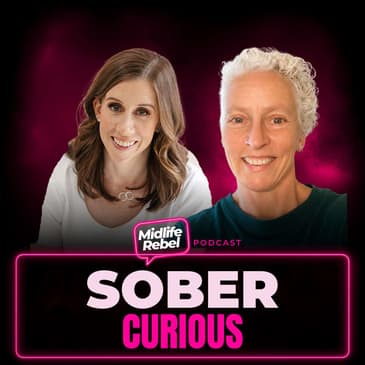
That's one of the reasons I was so excited to sit down with Kate Bee. Kate is the founder of Sober School and has helped thousands of women change their relationship with alcohol. What I love about her approach is that it isn't about labels, shame or hitting rock bottom. It's about asking a simple question:
Is alcohol adding to your life, or taking away from it?
We talk about why women in midlife are now among the biggest drinkers, how wine became wrapped up in ideas of self-care and reward, and why so many successful, capable women find themselves relying on alcohol simply to switch off at the end of the day.
Kate also explains grey area drinking, that space where life still looks perfectly fine from the outside, yet alcohol is quietly affecting your sleep, anxiety, confidence, relationships and overall wellbeing. It's a conversation I think so many women need to hear because you don't have to lose everything before deciding something needs to change.
We also explore the science behind alcohol, why cravings can feel so automatic, how habits become wired into the brain, and why hangovers are often far more than simply "having one too many."
Most importantly, we talk about what actually helps. Kate shares the approach she teaches through Sober School, including mindset, education, community and practical tools that make changing your relationship with alcohol feel empowering rather than restrictive. We also discuss taking a break from drinking, navigating social situations, alcohol-free alternatives, and why you don't have to commit to "forever" before discovering how much better you might feel.
Whether you're sober curious, questioning your drinking, navigating perimenopause, or simply wondering if alcohol is holding you back more than you realise, I think you'll find this conversation incredibly honest, encouraging and full of hope.
Because sometimes the biggest changes in our lives don't begin by adding something new.
They begin by letting something go.
Visit our website to find out more about this week's guest.
All of our guests, including this one, are included in our Guest Directory so that you can find out more about them and the work that they do.
https://midliferebelpodcast.com/guest-directory
If you'd like to support the show you can buy me a coffee!
Who Drinks Most And Why
SPEAKER_01When you look at statistics about who is drinking the most, um, certainly in the UK, where I am, where I'm most familiar with uh that that kind of numbers, is women in their 50s who are outperforming everyone else. Uh, because when we look at you know the younger generations, they are drinking less. Things have shifted there. And yeah, I think women in their late 40s, 50s, that sort of midlife period, we grew up in the 90s with that um Ledette culture where suddenly it was normal to drink as much as the guys.
SPEAKER_00Before you got sober?
SPEAKER_01Yeah. So the interesting thing about my life before I got sober is that it was quite boring, like boringly normal on the outside. Um, and this was one of my big problems is that I didn't look like I had a drinking problem. I was still holding down a good job, paying all my bills. I was very high-functioning and respectable, dare I say. And this completely went against all the cliche stereotypes that I had about what a problem drinker looked like. So I was trying to like tally that up with my own gut feeling that this wasn't right. I'd always liked drinking. Ever since I started as a teenager, it felt like I was oh, filling in all these gaps in my personality and all the things I thought were wrong with me. They went away when I drank. But as I got older, drinking became this thing that I did more and more on my own. That was my favorite way to drink on my own. And it went from just being at weekends or just being planned to drinking on a Tuesday night and waking up with a hangover on a Wednesday and then having to go to work and pretend I was absolutely fine because how could you claim to have been out the night before or doing anything fun and wild when it was just an average weeknight? So I hope that gives a taste of my drinking. Like I say, in many ways, it was very boring and there were no wild stories. And that sort of held me back because I was waiting for this dramatic rock bottom, and then I would know. Then I would know that's enough is enough.
SPEAKER_00Yeah. Lots of things that you said were familiar to me. Um, do you mind me telling you a little bit about my my journey?
High Functioning Drinking Stories
SPEAKER_00Or what my life was like.
SPEAKER_01I would love to know what your drinking was like and what led to you stuffing.
SPEAKER_00It's kind of interesting. I work in the fitness industry and have done for many years. And I similarly to you drank during my teens and kind of like upon reflection on it now, I realized that it was a bit off and on, and it probably wasn't until my 20s, probably when I could afford to drink regularly, that it became a bit more consistent and into my 30s, more consistent. And I love that, you know, consistent, like glass of wine every night, or and the glass of wine always led to at least half a bottle. And that's that went on for a long time, but same as you held down a job. Um, more recently, my husband and I have a gym. I was we were competing in CrossFit, still drinking, right? Doing really well in CrossFit, actually. Like we've competed worldwide, but and it was like a badge of honor. And you know, I can I can still drink and do all of these things. Um but yeah, eventually, yeah. So yeah, it's kind of interesting, isn't it? It's not like being pissed all the time, you don't have to be drinking, but yeah, it's been a journey post post alcohol sort of.
SPEAKER_01I think that's amazing what you were able to do while still drinking. But then again, I work with a lot of women who uh they they've got so much grit and determination, so much inner strength. We characterize people who struggle with alcohol as somehow being weak, but no, the pattern I notice is that we've got like grit and guts, and yeah, we're gonna be at that gym working out even if we feel terrible. So yeah, that your your um story is a whole new level of extreme. That's really high performance.
SPEAKER_00It's it, it's it's interesting. Oh, look, looking back on it, I wonder like there's always, you know, if you are competing or try, you know, trying to do well, if you do badly, you can always blame it on the alcohol, right? Oh well, you know, I was pissed half the time, like or you know, or hung over. You could use it as a badge of honor, but you can also, yeah, you can also kind of look at that as you know, or covering up the the cracks or weaknesses, the worry of not being able to do well, compete. Um, yeah, none of that was conscious though, which I think is one of the challenges as well.
SPEAKER_01That's really smart, actually, because then you build in this way of feeling better if you don't do well enough. Yeah.
SPEAKER_00Very sneaky. Feel better if you don't do well enough. Yeah, you you kind of yeah. And you've got an excuse. If you didn't do very well, well, it's well, you know, maybe yeah, it's it's an interesting conundrum. Yeah, so um, I'm looking forward to hearing all about um a little I I'm sure as we go along, like our conversation, we'll probably dip in and out of our own experiences and our own journeys.
Ledette Culture And Midlife Wine
SPEAKER_00Uh but you've been now helping other women to get sober, and you've got um uh your college, shall we call it, the sober school? Um so you're coaching other women to to um do that. So yeah, I guess talking talking about the the epidemic, is it an epidemic of women drinking?
SPEAKER_01I think so. I don't think that's too strong of a word to use. When you look at statistics uh about who is drinking the most, um certainly in the UK, where I am, where I'm most familiar with uh that that kind of numbers, it's women in their 50s who are outperforming everyone else. Uh because when we look at you know the younger generations, they are drinking less, things have shifted there. And yeah, I think women in their late 40s, 50s, that sort of midlife period, we grew up in the 90s with that um Ledette culture where suddenly it was normal to drink as much as the guys, even though actually our bodies can't process it in the same way. And it was almost got bundled up with female empowerment. And that was quite a big part of my drinking, though, I wouldn't have recognized it at the time. Was I'd grown up watching Sex in the City, and I was telling myself that buying a bottle of wine on the way home and then drinking it alone in my apartment, well, that's just what independent, successful women did. Thank you very much. Yeah, there was nothing wrong with that, whereas actually I never stopped to look at all the reasons why I was drinking. But yeah, I, you know, I work with women sometimes who've been drinking for 30, 40 years.
SPEAKER_02Yeah.
SPEAKER_01Yeah, wow. How old were you when you stopped drinking? So I was a bit younger. I was uh such a good drinker, I had to stop earlier than most people. So I stopped when I was 29 and a half. Wow, okay. Yeah. And and I do look back now and think, wow, that that was quite young, Kate. But I had been looking for help on and off for about six years.
SPEAKER_00Okay.
SPEAKER_01So after I stopped drinking, I found this book one day um about whether I was an alcoholic or not that I bought from a bookstore, and I could see the receipt in it was um uh, you know, I don't know, sometime in the mid-nauties. I and I was astounded by that. And then I remembered, yeah, that was about the time you were going to AA meetings, wondering, oh, this doesn't seem to make sense to me. I don't think I'm like these people, but my drinking doesn't feel normal either. So I'd had these constant waves of really worrying about my drinking, then deciding not to worry about it, then coming back to it. And I think as I'd approached turning 30, it was like my foot was on the car pedal, and my I was just drinking more and more and crossing these lines that I hadn't crossed before. Because I had a job at the time where I used to work night shifts, and I always said, Oh, never gonna drink between night shifts, because that means drinking about nine o'clock in the morning, and you feel wretched anyway on a night shift, but I'd started drinking even then, and I just realized this is gonna end really badly. Um yeah, and I don't know what it was that made you decide, okay, enough's
Googling Am I An Alcoholic
SPEAKER_01enough. But for me, I I was I was constantly Googling, am I an alcoholic? Do I need to stop drinking? So I was looking for something else to tell me what to do. And then one day I must have Googled something slightly different, and I found this anonymous blog written by someone, and it was written by a woman who's just a little bit older than me, but the way she described her drinking and her life, it was like having my own life mirrored back to me. And she'd stopped drinking about six months ago. She seemed so much happier, and it was just the permission I needed to go, you know what? This like all these signs are pointing to you stopping drinking. Like, come on, like, really do something about it now. Uh, and so I did, and I set out thinking, oh, I'm gonna stop for a hundred days. I had this obsession around, I've never stopped for a hundred days before. I need to give sobriety a proper try. And um, yeah, I wasn't sure if I'd continue past that, but I have. Now we here we are like 13 years later. Wow.
SPEAKER_00That's amazing. That's so good. Oh gosh. Um yeah, so you had you tried sort of like conventional rehab almost, the AA meetings. Like you were really quite aware of this being an issue for you.
SPEAKER_01I I was, I knew this was a problem, and the way I was drinking was problematic. I mean, at the time I was living in Oxford, I'd had this new job there and I didn't know anyone, so didn't have many friends, and I would almost drink to wish away the weekend because I just didn't know what to do with myself and I felt very lonely. And that was also very shameful to me to not have any friends, not be making friends, not be fitting in. Um, and so I just I knew all of that was wrong. But the problem was I went to these AA meetings where much more extreme stories were being told. People who uh their lives had fully disintegrated. And so I walked out of there thinking, phew, actually I'm fine. So yeah, it was I just couldn't find that um middle ground. I call it gray area drinking when you are in this grey zone, and yeah, there are some question marks about whether you need to stop or not. I couldn't find that mirror until I stumbled across that anonymous blog many years later.
SPEAKER_00Wow. I'm so impressed that you've done 13 years. And you know, even when I did drink, if I heard of anyone say that they didn't drink, I I was like in awe of them. Even when I was a drinker, even when I wasn't really thinking about stopping. Yeah, I was totally in awe of anyone who could do it.
SPEAKER_01Really? That's interesting. Because when I heard about that stuff, I was always like, God, that's so boring. Let me see how I can make this person wrong and weird, because this is bringing up all kinds of stuff for me. Um, yeah. So I've probably asked them really inappropriate questions that I would cringe at now.
SPEAKER_00Yeah, I've had people do that to me since I've stopped drinking, actually. I was talking about I didn't end up having a party, but it was my 50th a couple of years ago, and and I I was thinking about having a party, and someone's like, but you don't drink. And I was like, Well, I can still like have a good time. In fact, you're on the you actually have a much better time because you know that you're not gonna do anything uh inappropriate, you're not gonna feel crap the next day, you're just gonna be able to remember everything that happened. Like, there's so many pluses to partying sober.
SPEAKER_01Yeah. And you did you have that 50th party?
SPEAKER_00No, I didn't. No. Oh, didn't get around to it, didn't happen. My husband's having his in a couple of weeks, so yeah. Okay, cool. Piggyback on that. They're the only sober ones there. You mentioned high functioning women and this kind of grey and gray area drinking. Oh,
The Midlife Crush And Hidden Habits
SPEAKER_00I hear so many people talk about high functioning women, and I just feel like almost every woman is high functioning in one way or another. And that can you talk about that? Just talk just tell me a little bit about who those high functioning women are for the for you when you're working um in the sober school.
SPEAKER_01Yeah, and you're right to question that term, but I think it particularly when you are in midlife, you are in almost inevitably juggling a lot. Um, by that stage, many women have um much more senior role at work, maybe run their own business, um, have pressures there, and they might have children who still need them, and aging parents, and they are not out of the um yeah financial pressures of life. I think those are still all present. So it's really a kind of midlife crush, and all these different plates that are spinning, and a desire to keep the show on the road. So they they are high functioning, whatever that looks like for them. It's not as if appointments are missed or deadlines are missed, and a lot of the drinking happens when they are safely at home, you know, the cars parked on the drive, uh, front doors locked. So it in a way it's quite hidden drinking. And I guess you could say it's quite I don't want to say responsible, but it's not like the drinking that we see on the TV news when they talk about problem drinking and they always show someone falling out of a bar. These are these are these are women who buy decent quality bottles of wine or maybe have a wine club subscription. And so it has all the hallmarks of looking very normal. But the fact is, if you're repeatedly waking up and regretting what you drank last night, feeling terrible, that isn't normal. And that can change.
SPEAKER_00Yeah, yeah. So do you really see that it's well, you mentioned women in their 50s, but this is like a um almost like a breaking point for a lot of women. Are they doing it uh in midlife? I mean, but are they doing it because it's habitual and that's just what you do? Are they doing it because it's a way of winding down? Is it a way of blocking off the work, you know, if they are at work or or you know, all of the other life stuff that they're dealing with? Oh, thank God for that, the day's over, kind of thing.
SPEAKER_01Yeah. I think it's a mixture of all those things because we're socially conditioned to see alcohol as a solution for so many problems. If you are stressed out, have a drink. If you want to treat yourself, I mean, self-care has been wrapped up around alcohol as well. It's also something we use for fun, prolonging joy and high moments, and it's also a comforter. I mean, literally every single thing we could use alcohol for, really, we do. And so I think we've all got to be incredibly compassionate with ourselves. If we find ourselves in this place where we are using alcohol, it is a crutch, it is a coping mechanism. Then the problem isn't that you need that crutch or that you've got some stuff going on that you need some support with. I think it makes perfect sense that alcohol is stepped into that role. It's widely available, it's sold in these beautiful bottles, it's glamorized, romanticized, joked about. But why wouldn't you become reliant on something like that? And as I said, for women in that midlife stage, there are a lot of pressures to be facing. And we didn't even mention um perimenopause and all the physical changes you're going through where you don't really feel like yourself. I think all of that makes numbing out with alcohol more appealing, just pulling the shutters down on the world and wanting to escape, wanting to press the pause button. Um maybe alcohol is the easiest way to do that. And and the the other thing I think we can never overlook is that alcohol kind of works. There's nothing as addictive as something that almost kind of works, but it doesn't quite work, and it comes with these huge consequences.
SPEAKER_00So you mentioned addiction there, addict well, you said addictive, and I wonder like how what role does that play? Because there's there's an element of that, you know, the repetitive nature of wanting a drink, um, you know, at a
Withdrawal Cycles And Brain Pathways
SPEAKER_00certain point of the day, and the reward and that sort of thing. That in in itself is an addiction, isn't it? Like we get addicted to the process of drinking, but how addicted are we to the actual drink as a gray area drinker?
SPEAKER_01Hmm. Well, that's really interesting because yes, alcohol is addictive, it's a drug. And I know that sounds like I'm stating the obvious, but do you know how many people don't realize or forget that alcohol is a drug and it's an addictive substance? So, yes, when we are consuming it on a regular basis, it goes into your body and then you go through this withdrawal process. That's what a hangover is, really. But actually, alcohol lingers in the body for more than a few hours. And we all know this. This is why people are caught drink driving the morning after. But even longer than that, I mean, there is there's different research, sort of debating how long it stays in your body for and it depends how much you've been drinking. But I would say at least 48, 72 hours, it can still be weaning its way out of you. And you're feeling this like low-level grumbliness. And so that's why when you have that next drink, it feels so good. Not just because you're having a drink, but because you're relieving the withdrawal symptoms caused by your previous drink. So that really is an addictive little cycle. So there's that side of it, the fact that, hey, we're dealing with an addictive drug here. What do we expect? But also you teach your brain these patterns. And we establish these neural pathways where a certain thing happens and bam, oh, the answer to that is I'm going to have a wine. Oh, that person's been horrible to me. I'm feeling stressed. I'm going to pour a drink. And that's the challenge with behavior change is that you can want to change on one level, but you have these well-practiced little pathways that your brain goes down. And so you have to be willing to practice doing something different for quite a few times to then establish a new way of handling life. And it's that messy middle of behavior change that's really tricky because it just feels crap to be in. But you've got to go through that to get out the other side.
SPEAKER_00What did you actually do when you stopped drinking? Like how did you do it?
SPEAKER_01Yeah, how I did it,
Community Support Through Anonymous Sharing
SPEAKER_01and I think why this worked for me when all my other attempts hadn't worked, was that having discovered that anonymous blog, I decided, well, I'm going to write my own blog post. And so this was back in 2013, when it was a lot easier, I think, to just set up your own anonymous blog and people would somehow find it. Right? How did that happen? I don't think it happens so much these days, or the world's an even busier place online. And so I I started following other anonymous bloggers who were writing about this. This was the only place I could find people talking about this. But people weren't posting about being sober curious on Instagram or any of that stuff back then. So I started documenting my journey and I followed other people and they followed me. And so for the first time ever, I felt like I had some community and accountability. And I also had these people saying, Hey, you should really go and read this book, or now go and read this book. So I was getting a bit of an education as well. And I started realizing, yeah, my drinking is a symptom of other things that maybe I need to change within myself. It's not just this weakness, this failing. It's not just as simple as not drinking. So I think it was really the education in the community that came from accidentally starting a blog and not really knowing where that was gonna go. There was no grand plan at the beginning, but looking back now, I think, oh yeah, that is what works.
SPEAKER_00Yeah. Yeah. You um there's a couple of different things, uh, directions I could go in, but I I'm really curious about you know that hindsight, the the beauty of hindsight. And now you can see, like you mentioned right at the beginning of our conversation, that when you were in your teens and you started drinking, you were trying to fill in the you know, the gaps to give yourself more confidence, I think you said, um, and to fit in. I definitely had that as well. But it was completely unconscious. And it became, you know, so say 14, 15, you know, someone offers you some vodka, you get pissed, you're all hanging out and you don't feel so inhibited, right, by the circumstance, the situations you're in. And it's not until, and so you do it again, right? Next Friday night, you do it again because it felt great because you didn't have all of those inhibitions, but you're not kind of going, oh, I felt so great because I, you know, I feel really awkward around people. It it's yeah, it's an underlying current, and then before you know it, you're doing it every weekend, you're doing it whenever, and you're getting older and it becomes more socially acceptable to do it. And it's not until you stop. Well, this was my experience, and it still happens, but not as much. But the those kind of realizations, oh my god, all of this stuff underneath the surface that I've been carrying for years, like you've obviously been sober for I've four and a half years for me, but 13 years for you, so you've obviously processed a lot of it. But what was that like for you?
SPEAKER_01Yeah, I so relate to what you're saying there, because when I was doing all of those things as a teenager, not for one second was I really thinking about it. It was just an instinctive, oh yeah, this makes me feel better. And I don't know if that's just a reflection of age, and maybe you become more self-aware over time, or also the journey, I hate that term, but the journey of being on, and running the sober school and being so much more aware of myself and how we think and how we function. Or perhaps it's a societal thing. I mean, you and I are both British. We famously do not really do feelings, and and I think although things are changing now, there was a long period of it's don't cry, just push it all down. Totally. Yes, do not feel your feelings. Anything uncomfortable got to be put in a box somewhere. So it's no wonder that perhaps alcohol steps in at that point where we're already doing that anyway, and we can spend all these years not thinking about our thinking. So yeah, uh all those things I I wasn't really aware of until I look back now. And I think it's a practice. Um even becoming aware of what you're feeling. Um sometimes today I still there's something online called a feelings wheel, and it's got all the different feelings on. And sometimes I just look at that and think, yeah, what am I feeling? Because I had such limited ways of describing my emotions for so long. It's still a practice for me identifying what's really going on sometimes.
SPEAKER_00I think also with that, there's a societal thing because when you're and I've I don't know if you've got kids, but I've got kids um so there my kids are only 10 and 12, but I wit I see myself, you know, I hold myself back, but you can notice when like they are behaving in a certain way and you tell them how they're feeling, or you know, why it is, and it's like, well, actually, I I have no fucking idea whether you know what what's going on for them. I can only make it up from my own perspective. But if we've had that societal uh conditioning as well, where you know we've been told, well, don't cry, or it's just because you're you know tired or whatever it is that you're feeling that you're in this particular mood. Yeah.
SPEAKER_01So but that's great that you reflect that back to them rather than you know saying something I used to hear a lot, which was, you know, if you don't pull yourself together, yes, I'm gonna send you up to your room. Yes, yeah, or I'll give you something to cry about. So it teaches you from this such a young age that anything that's not happy and fine is a problem. Yeah. Whereas a big thing that I've learned since I stopped drinking is that actually life is supposed to be this mix, and it's okay to not feel great all the time. And that was part of my drinking, was always trying to feel great. I never wanted to experience anything bad, but ironically, when you make peace with feeling bad some of the time, life seems better anyway.
SPEAKER_00Yeah, yeah, because you're not fighting against it, are you? Yeah, yeah. How much does um psychology go into the work that you do?
CBT Mindset Shifts That Stick
SPEAKER_00And like when you're obviously it's a sensitive subject, isn't it? When you're when you're supporting women to to stop drinking, I know for me it's I was scared that I wouldn't be able to do it, to be honest. That was my biggest fear. No doubt there are many things that that women become attached to when it comes to to drinking or stopping drinking. How much do you deal with the psychology of the process?
SPEAKER_01Yeah, I think that's really everything the sober school is about. Because yes, there is some practical stuff. Um the practical, okay, what am I going to say when someone asks me, what should I drink instead? What should I do when I'm feeling a craving? Sure, there is a lot of practical stuff to think about and deal with. But really, for long-term sustainable sobriety, you want to feel good about it. And the only way you're going to feel good is if you know, if you've got your mindset on track and if you're thinking about this the right way. So a lot of what I do is based on cognitive behavioral therapy. It's a lot of analysing, okay, well, what do I think alcohol's doing for me? And let's put that up to the light and see, yeah, it is alcohol fixing all my stress? Is it making me feel better? So many people come to me with that story. And then when we really sit down and talk about their experiences, we realise, no, actually, we've got tons of evidence here that it's not making you feel good. When was the last time you drank and felt brilliant? Oh, actually, I can't remember. And so it's a bit of that, like unpicking what's really going on versus what is the story we have in our head about it. Because how I feel now isn't, yay, I've you know, been through 13 years of managing not to drink, go me. Where I'm at now is, oh, well, I can't really see the point in drinking. So that makes it very easy not to drink. A bit like I can't see the point in smoking, that makes it easy not to smoke. And that's the shift to try and get to because that's a lot more empowering rather than oh, I have abstained for all this time or I've given up. Even the terminology we use around uh not drinking is quite interesting. It sort of leads us one way or the other.
SPEAKER_00Yeah, and even when you say that you're sober, people just imagine that you were a complete wreck, right? And that you had to drink give up because uh because you were a complete wreck.
SPEAKER_01When you say that, even the word even the word sober, a lot of people uh don't like that because it has those connotations with boring, dull, just doesn't sound great. Um and and I do sometimes I regret calling what I do the sober school. Uh maybe it should have been something more than a few. But do you know what I mean? It's I think we we've got to be careful how we talk about that. And when I see stuff like dry January campaigns where people are raising money because they haven't drunk alcohol for a month. And I'm not knocking raising money for a good cause, but you think about the the hidden message in that is that it is so awful not to drink. You should sponsor me. Yes. So, how on earth is someone gonna look at that and then go, well, that's a lifestyle change I'm gonna make permanently. All these little things contribute to us thinking that stopping drinking is gonna be hell on earth and a real de source of constant deprivation, and that's what I'm all about, helping people see that actually it doesn't have to be that way. Yeah, honestly.
SPEAKER_00If we go back to when you stopped drinking and you said that you had this idea in your head that you were gonna do it for a hundred
The 100 Day Goal And Tracking Apps
SPEAKER_00days, yeah. Did you do that? And what did you do when you got to a hundred days?
SPEAKER_01Yeah, so I did do that, and I got the idea, I can't exactly remember where, but I read something about how it takes at least 90 days to form a new habit. Okay. And it really resonated with me. And at the time I'd moved jobs and I'd been on a 90-day um, what do they call it, probation period. Okay. Yeah. And I thought, yeah, it's funny that we give all these other things a proper shot, we give it time. And yet there's me stopping for a week and going, Oh, well, this is boring. I can't, yeah, I don't want to do this. Like I've never really given sobriety a proper chance as an adult. And I think I I had this realization that I needed to stop drinking and stop for a while and practice it a bit more so I could just get past the awkward beginning bit. So I did do that, and also just focusing on this goal really helped control my brain because otherwise you go off thinking about, well, what about this? What about that? What about next year? Whereas I was just focused on these 100 days. So when I got there, I bought myself a ring, actually.
SPEAKER_00I thought you were gonna say a bottle of wine.
SPEAKER_01Do you know? I think there was a point where I thought I would do that. I would buy myself a bottle of wine and go back to drinking. But probably about the 80-day mark, I started thinking, yeah, I don't think I'm gonna drink at the end of this. I think I might set another goal. And I think the goal I set after that was six months. And that's how I moved, that's how I really moved forward, is by just setting another goal and not really thinking too far ahead and then moving on to the next one until it got to a point where I actually realized, oh, I don't need to set goals anymore. I don't actually want to drink. So I think that's a much more uh achievable way of moving forward without letting overwhelm derail you. But yeah, when I did get to these 100 days, I was so proud of myself. I I I was like walking, walking on air. Um, it felt like this biggest accomplishment ever.
SPEAKER_00Yeah. Yeah, it's a it's a good feeling. I did uh I read a book, The 30-day alcohol experiment. So I was just in it for 30 days, and I actually found that the that day one, two, three, they were the hardest. And then getting to the first weekend, you know, where you're in the routine of having a drink and whatnot. And it was summer here as well, so you know, a nice cold beer on the veranda on a Saturday afternoon. Yeah, and I found it actually quite quite difficult to tell people that I wasn't that I was trying not to drink because I was worried that for some reason I wouldn't be able to succeed, and then I would have them to answer to if I told them. That's fine. Reflecting on that, but I did the same. I got to the 30 days and I felt better, and and so I was like, well, I've got this, I had an event coming up, and so I was like, well, I'm just gonna do it until then, and then my birthday was the following month, I'll just do it to my birthday, and then it got to a point where it was like, Well, actually I've come this far, I don't want to go back to day zero, and I tracked it as well. Like I had an app where it counted how many days, and it's like from a habit forming perspective, you know, if you if you have one day, you sort of you know do seven, but then you have one day, you go back to zero again. You have to literally start from scratch, and that was enough for me to to keep going just to check that app every day and count up. I've still got the app, I haven't checked it for a long time because it's not like you say, it just becomes not a thing anymore, but um, I've still got it.
SPEAKER_01That's great, and I really recommend getting an app because yes, the pride you see, and when you do realize, oh yeah, these early days were some of the hardest. So when you're in that pattern of giving up drinking on a Monday and then saying screw it by Thursday, actually, what you're doing is repeating those hardest days over and over, and you never get past them. So no wonder it all feels very hard. But when you start seeing them building up, it's you you've got something precious there that you don't want to give away. And there are some apps where they track all kinds of things from your money saved to your calories to this, that, and the other. And and those numbers are pretty eye-opening. So yeah, um, I think you did exactly the right thing. And what did you decide about how to tell other people?
SPEAKER_00Well, I think I was just I was a bit cagey about it, you know. Yeah. If
What To Say When Asked
SPEAKER_00we could go to, you know, go out to I mean, we're not massive parties or anything, but so you know, if you go out for lunch with someone and they offer you a drink, you're like, no, I'm just trying to trying to not drink for a week or a month or whatever it was. Um, but like always very cautious about what I said just because I was worried that I wouldn't be able to do it. I was really worried that I wouldn't be able to do it.
SPEAKER_01Yeah. Look, I think dealing with other people is one of the hardest bits. And it's such a shame because if we were talking about stopping smoking here, we wouldn't be having this conversation. We wouldn't be worried about what other people are going to think. Everyone's going to support you. Yeah. But with alcohol, it I think you get to say to other people whatever you want to say. You don't owe anyone an explanation. And you can say something that's much less um uh just like a little bit more detached if you want to. So the number of people I know who have stopped drinking because it's ruining their sleep, particularly in perimenopause, or they're getting extremely bad migraines, uh, or they're finding that their anxiety is so heightened. I think any of those reasons, anything slightly health-related, when you're in midlife, actually I I think you can sort of put the blame on that and and just deflect it that way. It doesn't have to be, well, let me tell you all the all the gossip.
SPEAKER_00Yeah, yeah, yeah. Yeah. Let you into my deepest, deepest, darkest parts. You don't have to do that, right? Um I'm with your with the sober school, like you, how long ago did you start that
Six Weeks First Not Forever
SPEAKER_00project?
SPEAKER_01Yeah, so 10 years. Oh, so celebrated 10 years this year. Yeah. Wow.
SPEAKER_00Well I've spoken, I have spoken to another gray area drinking coach over here in Australia. Um, and she, I'm not, I don't know what what's the right way, the wrong way, or if there's no way, but um, she just said that she doesn't get people to she get, I'm not using any of the right terminology, by the way. She doesn't get people to stop drinking necessarily forever, but to but potentially to just take a break. What's your perspective on it? Because we've already sort of said, you know, you that there's no really good reason to drink. Um, and you've decided to be completely sober. And by the way, the other um guest that I spoke to, she's completely sober as well. But is there a middle ground that people can find? Uh or do you just say uh this is the sober school? We're going, we're going sober. And that does sound scary, doesn't it?
SPEAKER_01It does sound scary. Yeah. No, the truth is that no one responds well when someone says, okay, you got to stop drinking and you're never ever going to drink again. That's the F word forever just doesn't work. And so my uh pitch for the sober school, as it were, is always just come and take a break from drinking. Come and stop for six weeks with me. I'll show you all the things that you haven't been doing. We'll handle this a different way. And then let's see how you feel at the end.
unknownYeah.
SPEAKER_01And for most women, the cost of the course pays for itself through not drinking anyway. So it's a fairly safe gamble on themselves. And then they have that security of knowing at the end I can do whatever I want. And it does have to be that okay, I am all in on this during this time. And then we'll put the decision up for review at the end of this. And then if I want to continue, I will set another goal and I'll move forward goal by doable goal. That is the best way to approach it. So yeah, even though I'm called the sober school, and even though, to be honest, no one works with me, if they're kind of on the fence about their drinking, they know, like deep down, that something has got to change and they do want to change. So despite all of that, we just focus on those goals. But where I am a bit different from other people is I believe that if you've been struggling with your drinking for a long time, it's very unlikely that you will stop drinking and then revert to a moderate drinker. I mean, we're talking about this addictive mind-altering substance. We don't have this expectation with other drugs that we should be able to use them moderately. If you Google how to smoke moderately, there are zero resources that come up. It's all just stop smoking. But yet, with alcohol, we have this kind of um expectation that that's what people should be able to do, and we will shame you if you can't do it, which is really painful for people. But I think, well, if we can let go of that expectation, then we can view this drug much more neutrally and say, well, really, why should I be able to exercise control over this thing that literally makes me lose control?
SPEAKER_00What was I had something on the tip of my tongue then about sober school? Um, okay. Do you have anyone who doesn't complete? So they sign up six weeks, they're up for it, but then something the wheels fall off, let's say. Do you have that happen or not very often?
SPEAKER_01Um it does happen, but yeah, not that often because people tend to decide, okay, if I'm doing this, I'm doing this. And they've got that accountability there. And the way I run the courses, I only run them a few times each year. Okay. And so everyone starts together, so they get this kind of instant community. Because those things that we talked about earlier that are so important, the education, the community, the accountability, that's what I'm trying to deliver for people. So, yeah, from time to time, people do reach out and say, Look, this thing has just happened and it's completely blown my life sideways. And of course, like we'll figure something out with them. And I do have a support system beyond the course. So between all of those things, we can always like fix it.
SPEAKER_00Yeah, I'm really interested to find out how um, like I know we've kind of gone over some of these things already, but when I wanted to stop drinking, it was very private. And so that how someone comes to a point where they want to join a group, um does that work?
SPEAKER_01Yeah, and look, I really respect that privacy because I was the same too. I know that sounds hard to
Privacy Options In The Sober School
SPEAKER_01believe now. I'm like the face of the sober school. Uh but I was incredibly um private about it. And so basically, I have a whole community and a course and everything. It runs on this platform. We use Mighty Networks, and it means you can set up a student profile and access this site that works a little bit like Facebook, but it has none of the um none of the bad things. And you could you could access everything I do under a different name. You could use a different profile picture or a profile picture of your dog. Uh you can share your story vulnerably, but with the privacy of no one actually knowing who you are. Um, though I will just I just share this quick story as a kind of flip side to that, is one of my clients, Madeline, she's a very successful lawyer, partner in a law firm. And she's like, I don't know what I was thinking. Maybe I've been drinking when I set up my student profile, but I put my full name in there and a picture of my face. And then when she started the course, she was mortified. She's like, What have I done? I should change all of this. And then she had this insight like, no, that's not what I'm gonna do. I'm gonna allow myself to be seen and be witnessed because I've been so hidden with this problem. And so I just put that, suggest that as a little um way of thinking about it. But people get to do whatever's most comfortable for them, yeah. Yeah, and then even on I have Zoom meetings, but you can attend Zoom under a different name, you can speak with your camera off. Okay. Just do whatever you can do to access that help.
SPEAKER_00Yeah, that's what I was gonna ask as well. So you have you have your Mighty Networks um sort of let's say social media group, but that's not part of the program. That's sort of like a a group that anyone can join?
SPEAKER_01It's a group for people doing the course. Okay. Okay.
SPEAKER_00So it's like live classes as well.
SPEAKER_01Yeah, yeah. So you get all your lessons on there, but you also get your it like like a face, it's like a Facebook feed, but not on Facebook.
SPEAKER_00Yeah, yeah. I'm familiar with it. Um, have you ever drunk again? Not even a sip.
SPEAKER_01Not even a sip. I have had foods with alcohol in. Um oh and no, actually, I tell a lie. I did have a drink. I picked up someone's drink once by accident. And straight away had one sip and realized, oh my god, this isn't my drink. And wow, this tastes disgusting. Which is not the reaction I thought I was gonna have. But a little side note, when you think about it, most of us don't like the taste of alcohol to begin with. And I believe our taste buds reset after a while, and we go back to that, ugh, what's this? Um, so yeah, apart from some some brief brushes with it like that, and when I stopped drinking, I had no intention of never eating tiramisu again or never eating chocolate liqueurs. But nowadays I actually find I don't like the taste of it anyway. The alcohol kind of ruins it. So yeah, I do completely avoid it.
SPEAKER_00Yeah, it's pretty much the same. I do uh cook with a bit of wine occasionally, but like I pour it in and I'm like gross. Yeah, and that isn't that interesting, yeah. And you can really, you know, some kind of um homeopathic remedies or like tinctures where you put a drop under your tongue, they use alcohol, don't they? So that's yeah, and it's very watered down, but yeah, it's a shock if that ever comes your way. Yes, it is. What do you think of um alcohol-free drinks?
Alcohol Free Drinks And Clean Breaks
SPEAKER_01I'm all for them if they work for you. Yeah, um, so yeah, if as long as you genuinely go and buy an alcohol-free beer, and you've got to watch that because sometimes they're right next to the regular ones. The fact is the alcohol's been removed. But what I notice is that people tend to go one of two ways. For some people, this is great because they really like the taste of it and it gives them all the taste without any of the hangover and all the stuff they're trying to avoid. So that's a big sober tool for some people. And yet for others, it doesn't feel tidy enough in their mind. They want this complete separation from it, they want to drink something else. And when I stopped drinking, I don't know if this was because there weren't that many alcohol-free beers then, but I didn't drink them for a long time. But I was obsessed instead with I used to drink grapefruit juice and tonic water. It was really bitter. And because I've been a big white wine drinker, I think there's something about the acidity of this drink that really I yeah, really, I really enjoyed. So I didn't drink alcohol-free beers for a long time, but actually now I do. Oh, right. Sometimes on a hot day, yeah, I do fancy one. But I just think, well, you know, it tastes nice and it's alcohol free. I kind of fancy that. But interestingly, I can just have one and then I don't feel like another one. Well, that was never the case the other way. Yeah.
SPEAKER_00Yeah. What about you? What do you drink? I haven't, um, I've just soda water. Yeah. I haven't drunk um alcohol-free drinks. I feel like for me, yeah, I've I was just like a I gotta cut, I gotta sever several ties, and and that just feels like um a band-aid solution, like replacing something that I'm trying to get rid of with something that's pretending to be that thing. Does that make sense? It does make sense out for me, yeah.
SPEAKER_01Um many other people have that view. I think what I would say just um just a note there that because some people are very cautious of, oh, well, I'm still like pouring a drink at wine o'clock time, it's just alcohol free. Isn't that still a bad habit? But touchdown, maybe it's the first time you've seen your partner all day and you're trying to debrief what's happened. Maybe it's the first time you allow yourself to just pause. So there can be a lot of really good stuff that happens around that alcohol-free drink. But I don't think there's a right or wrong here, and you have to trust your gut. If it doesn't feel like the right thing, then yeah, goodness, don't drink them.
SPEAKER_00Yeah, as we come to the close of our
Six Week Transformation And Closing
SPEAKER_00hour, I would love to for you to share the transformation that someone can expect. Like what happens when they do the six-week program with you? How many days is that? That's more than 90. 42. Uh, for less than 90, 42 days. Okay. So after that, what what's the transformation? What what can someone expect to experience at the end of six weeks? Yeah.
SPEAKER_01So different people have different experiences, of course. Uh, but for many women, they get to the end of the six weeks feeling uh properly rested for the first time in years because they've had consistent sleep. Now that you don't always sleep brilliantly to begin with, but again, that's why you've got to take a proper break so you can get into a better sleep pattern. Alcohol really screws up your sleep cycle. So you get to the end of the six weeks actually feeling like you are sleeping properly and sleeping deeply for the first time in years, your energy levels are better, you feel less anxious and ironically, feel less stressed, which might have been the thing you were drinking over in the first place. There's this like, oh, actually, I can tackle what the world throws at me a lot, a lot better. And I think you've also got this incredible pride because if you take a six-week break from drinking, it is inevitable that during that time there are gonna be some challenges. Whether it's just how do I get through Friday night without drinking, or you go to an event or a party or something in that time. So you're gonna go through this big learning curve. And then I really encourage women, if you get to the end of the six weeks and you like it, continue on, go to that 100 days because it's just gonna feel better. That's just the beginning bit, really. In six weeks, maybe you practice six sober Saturdays, but think how easy that'll feel when you've done another six. And suddenly, ah, you don't even think about it. And you run to the next thing, and then you're going on your first alcohol-free holiday or your first this or that. Like having come this far, why not continue on? Um, yeah, I always say, and I know it's really cheesy, but everything you look for in at the bottom of a bottle, you will find in alcohol-free living. And maybe people roll their eyes at that, they're like, whatever. But truthfully, the things think about the things you are looking for alcohol to do for you. And what if the answer was not in drinking, but it was in stopping drinking, and then discovering that most of this is within you anyway, and alcohol has been holding you back, it's not been delivering this stuff. Alcohol always gives you more of what you don't want. But the potential transformation for someone who is this high-functioning, determined, awesome person who's been achieving all of this stuff despite alcohol dragging them down, what they can do when they let go of that dead weight, it is amazing, you'll admit. And it deserves to be experienced.
SPEAKER_00Hey there, Rebel. Thank you for listening to this episode of the Midlife Rebel Podcast. If you'd like to support the show, you can buy me a coffee by going to Buy MeACoffee forward slash Midlife Rebel Podcast. Thanks for listening.