
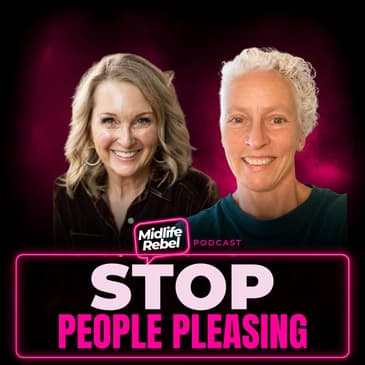

Do you ever find yourself asking, "Is this really how I want to keep living?"
I think it's a question many women eventually ask themselves in midlife.
Not because life has necessarily fallen apart, but because somewhere along the way we've become so busy looking after everyone else, meeting expectations and keeping all the plates spinning, that we've stopped asking what we actually want.
That was one of the things I loved most about my conversation with Sandra Wood.
Sandra's own wake-up call came with a breast cancer diagnosis at just 40 years old. Like so many life-changing moments, it forced her to stop and ask some difficult questions about the roles she'd been playing, the expectations she'd been carrying, and the life she actually wanted to create moving forward.
Our conversation explores what happens after that moment.
How do you begin trusting yourself again?
How do you set boundaries when you've spent a lifetime keeping the peace?
How do you stop feeling responsible for everyone else's emotions?
These are questions so many women wrestle with, particularly in midlife, when the old ways of coping simply stop working.
One of the things I appreciated most was how practical Sandra's advice is. We talked about conflict, people-pleasing, over-functioning and why so many capable women end up exhausted from carrying more than was ever theirs to hold.
One of my favourite moments was when Sandra shared a simple reframe for perfectionists: sometimes it's okay to do a "C-grade job."
It sounds almost ridiculous at first, until you realise how much energy many of us spend trying to excel at absolutely everything.
We also explored Human Design and how understanding your own energetic blueprint can help explain why burnout looks different for different people. Rather than another personality label, Sandra sees it as a tool for making decisions that feel more aligned with who you really are.
There was another phrase she shared that has stayed with me ever since:
"I have no business with that."
Such a simple sentence, yet so powerful. It's a reminder that not everything is ours to fix, solve or carry.
If you've been feeling burnt out, questioning your career, navigating changes in your relationship, or simply sensing that the life you've been living no longer quite fits, I think you'll find something valuable in this conversation.
Because midlife isn't asking us to become someone new.
It's asking us to come home to the person we've always been, underneath everyone else's expectations.
Visit our website to find out more about this week's guest.
All of our guests, including this one, are included in our Guest Directory so that you can find out more about them and the work that they do.
https://midliferebelpodcast.com/guest-directory
If you'd like to support the show you can buy me a coffee!
https://buymeacoffee.com/midliferebelpodcast
The Tap On The Shoulder
SPEAKER_01I was standing in my front yard and I felt like God or the universe or even my higher self tapped me on the shoulder and said, Are you ready? And I I kind of stopped and I sort of looked around like, for what? I said yes, and then I said, for what? And then the answer came very very quickly to stop living your life for others. And, you know, I I knew, I mean, I had no idea what kind of change was going to come from that moment, but I did know that big things were coming my way because I I wanted to stay on the planet, you know, and I had daughters that were like 10 and 14 at the time. And so I was very motivated to try to figure out what does this mean for me.
SPEAKER_00I
Coach Advisor Activator Defined
SPEAKER_00wondered whether you would start off, like if you're okay to just kick off straight away, with how you describe yourself and what you do.
SPEAKER_01Oh, oh my gosh. Okay. You know, I I like to describe myself as part coach, part advisor, and part activator. Um, because there's all these pieces of like how I like to approach my work, and I mostly work with women, um, in that um, you know, uh a lot of us who went, I I became a coach in 2005. Okay. Um, so it was like coactive coaching, and it was just it was really the active listening model, um, which a lot of us have been trained in that. Um, but over the years um and all of my life experiences, I I can't help but bring the experiences and the wisdom that I I have gained from from my own journey and also just talking to hundreds of women. Um so I I like to think of it as we start out just really curious, but then as we move forward, I find a lot of times that women just don't have certain skill sets or certain awarenesses. And so there's there's kind of an advisory portion to that as far as what what do you think we could actually do? Um, because it's great to talk about all of the things and to explore one's inner landscape, but then on top of that, that there's also what are we actually going to do with that piece so that you can have the thing that it is that you want or solve the problem that it is that you've that you're having in in this now moment. Great.
SPEAKER_00So that's the activator part.
SPEAKER_01Yeah. And you know, I think the activator part for me is I've just, you know, I don't I don't know about you, but there's some of us that are walking this planet that have always had people coming up to them and telling them everything. There's just a just make people super comfortable. And I, you know, I think I really embrace people's differences. And so I think people know it's safe. And I think when people know it's safe, it's easier for them to hear things that maybe their girlfriend's been telling them, but they've been like, you know, like, no, you know, but then, you know, if we sit down and I start saying some similar things, it becomes easier for them to take that on. And the activator part for me is that I feel like when we get into collaboration and when we get into a union um with each other, there there are pieces where things can be activated. And a lot of times it can be helpful if you know someone really has your back, and you also they see things in you that you're not necessarily seeing in yourself, like the gifts that you might have. Um, and so that activates something in each of us. When somebody says, Oh no, I see you and I see you like this, then you know it creates a different vision of who we are and how we want to experience the world.
SPEAKER_00Yeah. There
Human Design And Decision Waves
SPEAKER_00are so many things, like we've already said, there are so many things we could talk about, but I'm really curious because I know and and I want to hear about your story, but I'm just gonna go straight with the flow of what um what you've just been talking about and this idea of activating and almost reflecting someone else. You're into human design, and I'm really curious about your G Center.
SPEAKER_01I am I'm a manifesting generator, me too. Yes, I figured as much. A lot of podcast women are. There's just so much about the energy and excitingness of new things and different conversations, and then I'm a two-for profile. Me too. So yeah, oh my gosh. Yeah, so we get each other. We hermit and we come out, we hermit, yes.
SPEAKER_00Do you have um so that idea of reflect reflecting someone else? What's in your chart where you might be doing that? Is your um G center defined or undefined?
SPEAKER_01Uh defined. Almost everything on my chart is defined. Oh wow, so red to root. So, in a way, it feels like a channel, just kind of channel energy, is that I just know things, I don't have to really rely on other people, you know, to get those things. And I think just that groundedness makes people feel safe, like I'm a tree that doesn't fall over. Um, so yeah, those are my undefined is spleenic and oh my gosh, I forgot. Uh it might be the identity center. Yeah, yeah. Right? What are off to the side? Splenic.
SPEAKER_00Um solar plexus or the will.
SPEAKER_01Uh I think it's will. There you go.
SPEAKER_00That's undefined. That's undefined. Okay. Yeah, yeah, yeah. Oh well, you and I together, we got the whole thing covered. Yeah, totally, totally. I've got the will and the spleen.
SPEAKER_01So oh, you do. Okay, so you just know, yeah, you just know. Yeah, yeah. When you have a yes, it's a it's a hell yes.
SPEAKER_00It is, it is, but um, I've also got um solar plexus defined. So I've got to even if I have that instant yes-no kind of in the moment, knowing I still gotta kind of wait and see.
SPEAKER_01Yes, exactly. Exactly. I I feel like sometimes I'm a little impulsive because I feel the wave of like the new next exciting thing. And so oftentimes I have to just stop and pause for a minute and let let it move through my whole system before I can kind of come back and go, Oh, yeah. There are other things that I just know um where it's I don't feel like I need to pause, but most of the time I just give myself like 24 to 48 hours of decision making, which can be good for an MG.
SPEAKER_00Yes, yes, yes, definitely, definitely.
SPEAKER_01Yeah.
SPEAKER_00Have is is human design a part of your journey in um I read something that you wrote, and it's like finding um your way to a life that fits. And you've had your own experiences through midlife that kind of has brought you to to where you are today. Was human design a big part of that? Finding how you fit?
SPEAKER_01I I feel like human design came a little bit later, but it also put a lot of things together. And what I loved about it is just understanding my energy system better because I don't think any of the other paradigms that I had been using had that. They were more personality, you know, style things. Um, so to me, it just really and it just had the the depth of it, just you know, I'm not a gene key expert by any means, but just being able to look at those things and see myself through that was super helpful. And and then, you know, again, I don't I don't deep dive into my clients' human design because I think really want, they really want to be specialized in that. They should go get that and bring it back. But I do want to know what it is because I want to make sure I'm I'm I'm supporting them in a way that supports our energy system and also they can discover more because I feel like, you know, as coaches, a lot of times we're just helping people discover more about themselves because we've externalized so much, you know, so that when we start to come inside and start digging in, it's super helpful to have somebody to kind of help you navigate that. And I have coached women differently, knowing if they're a projector or a manifester because their energy system is totally different. And a lot of times if I work with a projector, they have to unlearn some habits of work and the stories that they tell themselves as well.
SPEAKER_00I would um I've got a good friend who's a manifestor, and she's only kind of just found this out, but she has still got quite a lot of open and undefined centers, and so she very much behaves like a generator, and undoing that is yeah, gonna be a process, I think.
SPEAKER_01It's challenging, yeah, it's challenging. I yeah, it's it's it's not a it's I've I've worked with those women and it it takes it's a process, I will say it takes a it takes a minute to kind of reframe and to rebuild like how they've been thinking and doing things. Um and you know, informing others, I think is super, super helpful. Yeah, you know. I even have to do that. I'm married to a generator and I moved way quicker than he moves on a lot of things, and so I have to let him know if there's a pivot change, even if it's just minor, you know, it's like, oh no, we're not having that for dinner. I we're doing this instead, you know. So the sooner I can inform him, and it seems kind of silly, but then he doesn't get stopped in his generator tracks of I thought I was moving over here. You move the whole thing, you know. So it's just stuff like that. I just think I think it's really helpful for us, you know, with using human design is just how to navigate some things differently, you know, yeah, and also to know how things work for us in our best interest using our design.
SPEAKER_00Yeah, yeah, for sure. Yeah.
Cancer At 40 And Clarity
SPEAKER_00I want to get there, might be things that pop up again from the human design conversation, but I'd love to hear um about that phrase that I said, finding your way to find a life that fits. So if you could take us back to part of your journey with your health, with your relationships earlier on, um how that's kind of shaped you.
SPEAKER_01Yeah. I, you know, I feel like my story is every woman's story in many different ways. We just we just have different ways that that's happened. Um, but you know, I think that were what really motivated the biggest change and start for me was having breast cancer. And and I had this moment, this pivotal moment where I was was I was finishing treatment, I was tired, and I was standing out in my front lawn and I was kind of looking around and just kind of catching my breath. And, you know, it's a lot to integrate when you think. And I just turned 40. So I, you know, it's like, I'm 40, everything's great. And then it's like, no, it's not, you know. So it was a little bit surprising. Um, I'd been on a health, I mean, I had been like really healthy. So, you know, I'd breastfed, right? So you start asking, like, how does this happen? Um, but I was standing in my front yard and I felt like God or the universe or even my higher self tapped me on the shoulder and said, Are you ready? And I I kind of stopped and I sort of looked around like, for what? I said yes, and then I said, for what? And then the answer came very very quickly to stop living your life for others. And, you know, I I knew, I mean, I had no idea what kind of change was going to come from that moment, but I did know that big things were coming my way because I I wanted to stay on the planet, you know, and I had daughters that were like 10 and 14 at the time. And so I was very motivated to try to figure out well, what does this mean for me? Um, and really that stop living my life for others became sort of this ongoing question. And I started to realize that I was not really inhabiting my life. Um, I had made everybody else's um agendas and ideas of who I was mine. Um, and I think as women, we do that a lot because we naturally want to help and we're servers, and I had had children. And so um I realized that I'd been living on autopilot and that I had just been living externally, meaning I was doing what everyone else asked of me to do. Um, and I'm not saying that I was a doormat, but I just certainly wasn't aware that I hadn't brought myself into the mix of who am I, why, who, what do I want out of life? You know, I just kind of assumed this role as a wife, as a daughter, as a mom. Um, and that diagnosis just really stopped everything in the tracks. Um, and so I just started really digging deep into that and exploring myself. And, you know, this was uh, you know, this there were still bookstores at that time. So I was drugstore. And I started to really look at where where were my biggest challenges. They were dealing with conflict. They were having hard conversations with people, they were around setting boundaries. Um, and you know, as most of us have been, I hadn't we we don't get taught how to properly communicate, how to deal with conflict, how to set boundaries. None of that happens. And so I just began the journey of exploring that on my own and just checking out books and reading them. And and you know, it it wasn't um I started changing. And I don't know if you had a moment in your life where you started changing and everyone around you is going, you're not who I thought you were, or what's going on. It's confusing for people. And so I went into that period of it being very, very confusing for those around me as I started to like set boundaries that I had never set before. And I mean, I was like, I mean, I was just taking it down to because I'd set boundaries with my daughters, you know, because of course you do that as a mom. Um, but I mean, I actually started putting my hand out and saying to my husband at the time, stop, you know, and he'd be like, you know, and that I I was starting to understand what the little little undercurrents of communication were, and I wanted to clean that up and fix it and see if he would participate in that, which he didn't have any any interest in doing. Yeah. Shoot. Yeah, shoot. So yeah, so that, you know, that basically, you know, the barriers I faced during that was just that everyone around me was confused. And I understood when they said you're not, I mean, somebody said to me, You're not being Sandra. And I'm like, yeah, because we don't know who Sandra is. Oh, you know, we know who she's been, but those were roles, and I was starting to discover I'm a soul, you know, and I think that's, you know, I think that's something we forget as humans that uh that that that we do have roles to play, but they are not who we are, you know. And so that just began my journey of leaving that marriage. I ended up, you know, uh being a single parent to my daughters and and having to reinvent a career out of nothing. So it was just, it was kind of a it was very much a tough time. Um, but I decided to be selfish. And I hear a lot of women say to me, it's hard to be selfish, you know, because we have such negative ideas about that. But I just was the I ultimately decided to be selfish and and go have the life that I wanted to have. And I'm not gonna say it wasn't messy, because life is messy, you know. So that was that was really my journal. I just turned off autopilot, became much more aware of what I wanted, who I was. And I mean, that's an ongoing journey. I mean, it changes in each of our seasons of life as women. We have so many seasons. Um, so you know, that just it it gave me the understanding of what it meant to tear something down and build something better. Yeah.
SPEAKER_00It sounds like that the way that you received that diagnosis, and that I'm sure you've had plenty of
From Victimhood To Self Trust
SPEAKER_00time to reflect on this and work through it, because I can't imagine it would have been easy at the time, but that it was a real wake-up call.
SPEAKER_01Yes, it was a very big wake-up call.
SPEAKER_00What's that like? Because when you're in you've received that message in the garden from your higher self or yes, your guardians or somewhere, but you've also got the you that human experience of like being faced with a potential um death.
SPEAKER_01Yes, yes, yeah.
SPEAKER_00And not only that, you've got you've got people who are depending on you, you've got a relationship that potentially isn't working anymore. So all of these things are kind of going at you. Um like no doubt time has helped to heal all of that. But did when at what point did you see this as like um that wake-up call? Was it like that, or was it like no, it was it well, you know.
SPEAKER_01I think I think one of the things that I had uh in the very beginning is I felt like a victim. And I laid in my bed for probably like two months, just you know, crying and you know, uh feeling sorry for myself. And and there was just a little part of me that I didn't like seeing, and that part of me was like, well, now I'll get the attention I've always been wanting. And so when I started to hear that voice, I'm like, oh, yeah, no. But thank you for showing me that that's how it feels, that I'm not being attended to or that I want attention, but this is not the kind of attention I want for this reason. And then, you know, I think people interject and project all kinds of things on you when you're going through something like that. Um, so then I just had to, you know, really spend more time like um really asking myself, well, you know, what do I want? And what I wanted was to never have cancer again. Um, and so when I got that message, I think it just became the beginning of like just like a little little light, this little flame turned on. And um, and it took a while for that flame to build. I mean, it took a it took a minute for me to even build the courage to say, I want out of this marriage. And I mean, I did everything, you know, by the book. We went to therapy and did all the things, but I just saw that he was not interested in the change that I wanted. Um, and I realized, you know, I married young and that we just we weren't going to grow further together. So, but I think it, you know, a lot of people have said to me, Well, how were you so brave and how were you so, you know, how did you get through all of that? I, you know, I it's a I love that people ask that question. And I think that for many of us who've been on this planet for a while, there are just times where you just don't have any other option but to go forward. But at the same time, there was just something in me when I realized that I have value and I want to go explore why I'm here and what I'm here to do. It was like a light turned on. And it it you just can't, you just can't turn it off after that, you know. So I mean, it might fade and I might have, you know, I certainly went through large times of like depression or sadness or grief because I didn't know who I was outside of all these roles, and that was super scary. I mean, it did feel like I jumped off a cliff, as you know, many women will say that when you get divorced or when you take a huge change, it does feel very scary. Um, but I I guess I just decided to trust myself. And actually, I decided to trust life itself. Because if the universe could tap me on the shoulder and give me that kind of message because it loves me, you know, or something loved me enough to say, hey, dude, you're worth it. So shift gears here, you know, um, then then I can trust that everything will be okay, you know. And I mean, it it was hard and it was difficult, but I I think that that as I kept doing hard things and building resilience and having a little bit of grit. And I mean, I was unemployed for a year, you know. So I mean, there were just that the realities of that, um, while a lot of people were like, oh, you shouldn't have done that, you know, you you made you made your life really hard. I wanted to know that I could, you know. So there was just a part of me, it's like, I don't want to go through my life leaning on somebody and not doing the work. And I think the other motivating piece behind it for me was that I watched my parents stay in a very tumultuous relationship, which they stayed in for 63 years. They just passed away this last year, um, like one right after the other. Um, and but it it was they had a lot of um, they had a lot of anger and a lot of control issues with each other, and it was a very loud environment to grow up in. And I remember at one point my dad left, and my mom and I, we were home with my mom, and I didn't, I didn't really pick sides because I could see the flaws of both of them, you know. But I also was like, you know, I wanted my mom to just say, I'm done, and to become her own person, and she didn't do it. She let my dad come back, and they went back into the same dynamic. So I I just looked at my life and I looked at that marriage and was like, I cannot do that for my daughters. I want to break something here by my behavior and by my actions, and I want to do it as kindly as I can. So I didn't want it to be messy for my daughters. There was definitely friction, and it wasn't always, you know, beautiful. But I just decided that I was gonna hold my integrity and I didn't care if anyone What anyone thought of me, and because nobody understood it. It looked good on the outside, it looked good on paper, but inside it didn't. And so I just didn't care. And I just let, I, you know, I had this thing inside me like, they'll see, they'll see who I am. They'll get to know me. And if they don't, then I don't care. So I think that was a big part of it. I just I let people have views of me that that I wasn't gonna defend. And I think that's a big piece of I think what we have to do as women if we're making a life pivot. We have to stop caring so much about what other people think. It's just it's just takes up brain space. And we we we we do much better if we're just attending to ourselves. Yeah.
SPEAKER_00Yeah, totally. But we I mean, you had the a a big wake-up call where it was like life or death. So that I'm sure that makes you change your perspective on what's important.
SPEAKER_01Yes, yeah, very quickly. And lean into like my soul and my spiritual life. Like, why am I here? Yeah, you know, there has to be, you know, uh there has to be, I mean, it took it probably took me five years to not be afraid every time I had like a pain in my body that it wasn't cancer spread to my brain, or you know, those things are normal. But after after a period of time, I was like, okay, I'm gonna put that story down and I'm gonna pick up a different story. And the story is that that was a one and done experience. I got the message, I'm continuing to live it. And guess what? I, you know, it's 22 years later and not not a not a thread of anything there. So, you know, I just do think that we we can change our narrative. And I'm not here to say that if it happens again that I was wrong or that I was did something, but it's just I think we have a lot of power in ourselves. And I think that's why I love working with women, is so that they can see what that is and and utilize it in in ways that are nurturing to themselves and where they can set boundaries if they need to, or go after some big dream, you know, that everyone else has said, nah, you can't do that.
SPEAKER_00Yeah. I love that. That's so good because that those big dreams. I've just been reading a book called The Big Leap, which uh is by A. Hendricks. It's a really short great book.
SPEAKER_01Yes, I have that.
SPEAKER_00I've been journaling about it this week. Just like how you you may have dreams when you're younger, but you can't put a lid on them, you upper limit, and you tell yourself for whatever reason throughout your, you know, because of potentially because of your upbringing, your conditioning in your younger years, that I don't deserve that joy, that happiness, that success, that dream. And yeah, that how when we bring we start to bring awareness to that, it's that it's actually like, well, why why not?
SPEAKER_01I know. And I mean I and I think the other thing too is that when you when you when you get older, it's like there, you know, there's not it to me, there's not as much to lose because I have everything that I need and I have a life that's that's supporting me, and that, you know, that is I have a lot of gratitude for that. So I think that, you know, I think why this kind of talk speaks to women that are a little bit older because it's like, yep, I've done all the things, and you know, when is it my turn? When do I get to go have that dream? You know, and it's I mean it doesn't have to be, you know, fame being famous or anything, it might just be starting an art cottage or you know, it's just so many different ways I can show up for women.
SPEAKER_00Yeah, yeah.
SPEAKER_01Yeah.
SPEAKER_00Oh so you you talk about high functioning women in in the work
Overfunctioning And The C Job
SPEAKER_00that you do, and that I'd love for you to sort of describe what that is. You're a manifesting generator with a lot of defined centers in your chart. So would you have picked yourself as a high functioning woman when you were pre-40, like doing life, you know, mothering and reworking? Like how do you describe it?
SPEAKER_01Because I always high functioning. I don't know if I would have corporate, but yeah, it sounds corporate, but but I'm not really meaning that, even though I end up working with a lot of corporate women. Um, I what I mean by that, or how I viewed myself, I probably wouldn't have used those words, but I was definitely somebody that was always, always um striving to help, always striving to make things better, um, lending a hand when anyone needed it, you know, and I think that creative side of myself could always see the potential for things. So wanting to kind of, you know, I mean, I ended up working in the nonprofit and healthcare arena for almost 20 years before coming back to coaching. And I was always, you know, in systems and managing teams, and you know, I'd always see where things could go. And so I think there's a lot of women that they're really, I think when I mean that, that when I when I label that, I just think that they are they aspire for more and they aspire to help and they aspire to do a lot. And what I think happens in women that are um, you know, particularly in a professional realm, but even this happens to women that are at home and you know, attending a home, is that we tend to like, I mean, I'm I'm gonna use words from three women. So I just did um I did a video in my home. Um, and I had three women come to my house and they applied to come to my house, and I coached them for an hour, and I had a filmmaker there, and they agreed that for a couple coaching sessions, I could use their video um to kind of show what coaching looks like and what kind of conversations women have, because I think women don't see the inside of what the conversations I have all the time with women. Um, and so we captured different things. And one of the women in the that I interviewed, the first woman, she was working in, she's working in the tech industry, and um and it's all changing, you know. So she was talking about, you know, uh how that's changing and basically she's not regarded as as qualified or as highly as she had been in the past, and that's happening to a lot of women. Um, and she said, you know, I run circles around everyone at work. And I asked her, why do you do that? And she was like, I don't know, I just do. And I was like, okay, so what is that getting you? And she's like, Well, it gets everyone giving me the hard things. And I was like, Okay, so now you're working twice as hard as everyone else because you can run circles around everyone because you're super smart, you're super talented, and you want to do a really good job. And she was like, uh yeah, I guess that's why I'm doing that. And then I then I asked her, I said, okay, so they don't care about you as much as they used to. And I'm not saying you have to give them the same energy back, but what if you just lean back, let the let the let everything roll along and do a C job at your job. Do a C job. And she just about her, she dropped her jaw and she's like, a C job? I was like, Yeah. And she's like, that's like failing. Like, no, that's an F. That's an F. That's failing. C is good enough. C is doing the doing the things that need to happen. And that was the homework I assigned her because that is that overfunctioning piece of all of it, you know. Um, I would say uh another woman that I spoke with that day um was um another job shift that was happening. I mean, it's a s it's it's shaky for women right now in a lot of industries that they're in. Um and her whole thing was that she was getting a new job title, um, but she didn't know who she was outside of the title that she had. And so I think that we also tie ourselves to that identity. And so, you know, and we we can overfunction in that identity and get really good at it because we we want to get paid more or we want, you know, we want validation for it. But I I will often say, and I said to this woman, so you don't you don't know who you are. Um, so what's your backup plan? And she was like, I don't have a backup plan. And so it's like, okay. So I think these are kind of the examples of what happens when women are high functioning, is that they're just rolling forward, but they're not necessarily looking at all the different pieces of like, what if I don't have this, or what if this changes? What else would I do? You know, because they just get so involved and there's there isn't a backup plan. And you know, you don't have to have a backup plan because guess what? We adapt and we we carry on. But it's nice to be able to help women take a look at those pieces of you know where where they've been over serving others, and that's that's kind of what I mean by that. And I use this line that your competency has become everyone else's convenience.
SPEAKER_02Oh.
SPEAKER_01Right?
SPEAKER_02Yeah.
SPEAKER_01So you're the person that gets that done, you're the person that organizes the barbecue, or you know, this is where I think highly functioning, over functioning women can be in those roles. And I'm I'm here to say that you're these women are talented, these women are smart, but what they're not realizing is that they've stopped serving themselves. So now it's more performative rather than inhabiting themselves. Does that make sense?
SPEAKER_00Yes, absolutely. Um, it it popped into my head when you were um uh sharing all of that, that I wonder how much of that is based on self-worth and the expectations. And like I I wonder whether we kind of with women's equal rights, whether we shot ourselves in the foot a little bit.
SPEAKER_01Yes, yeah. Well, I think we feel like we have to prove ourselves and we still prove ourselves. And I found that um I I exited the healthcare industry in 2020 um for lots of reasons, you know, lots of things going on, but also because I was still up against the male-female ceiling, you know, and and there were still, you know, there there was still the head of the cancer center that I worked for. Um, and I have nothing against anyone with a strong faith, but his faith just didn't include that women could be more than homemakers, you know. So I I think that's yeah, that exists still. So, but you know, I I think that we we have overperformed because we are, I mean, it does make us feel good when somebody comes to us and said, Oh my god, you're so good at that. We do get our self-esteem and our self-value from that. So then if all that goes away, then we find that it's kind of a short shaky foundation of who self is. And so, you know, I like to encourage women to take um inventory of how much energy you're spending over functioning for other people because it makes us burned out, it gives us health issues, you know. And the last thing I want is for a woman to get a pink slip that says cancer on it, you know? It's like, yeah, I mean, we we all have those little things that are niggling at us, and it's it's up to us to start to pay attention. And I I don't think it's spoken enough, which is why I love podcasts for women these days, because now they're hearing it and it's just we're normalizing this, these are the challenges that that we face, right?
SPEAKER_00Yeah, absolutely. Yeah. I said to I spoke to another guest this week, and I just said to her, Do you think that this is kind of a movement like that that women are coming to a point where they're like, hang on a minute, what's going on? Yes, and it's awakening to our true selves. It's there is an element of spirituality to that, isn't there? But it can still be very human. It's like awakening to our bodies and what's going on, like listening to our intuition.
SPEAKER_02Yes, yes, yes.
SPEAKER_00Those things that we've kind of that we override and we or we ignore. When do women come to you? You uh I've read somewhere that you talk about the breaking point. What does that look like?
Breaking Points In Midlife
SPEAKER_01I would say that it's anywhere between, I would say I see this. I mean, sometimes I'll have a woman who's in her late 30s because she's got um you know early menopause coming along. So it can be that. But I would say my average woman is usually noticing these things and realizing they want to do something about it. Between 45 and 53, I'd say that's the the sweet spot. And of course, I've worked with women that are 70 and women that are, you know, 35, but I would say that that's really this 40s, really, you know. I mean, a part of it too is for women that have had children, they're they're that now they're you know moving into empty nest. If they had their children a little bit younger, some women that's later in their life. But I think it's just now all of a sudden their identity is shifting. And then I also think for women that have been married for a while, you know, sometimes the marriage goes on the back burner, and so they're looking at their relationships, you know. It's just interesting what breaks a woman and what and I, you know, I don't I don't necessarily like to use that word, but what what is the thing that is making them be motivated to do something different? What is that catalyst that's happening? And I think for a lot of women, it's either like I'm in a roommate marriage or my kids are gone, or actually some women are coming to me and saying, I don't have great relationships with my children, you know, so there's those kinds of things that come up. And then also the whole, the whole career, you know, orientation of women like I don't, I don't want to do this anymore. It's not who I am anymore, or I'm tired of this hustle. And so there are a lot of women that are looking at how do they take their talents back out in the marketplace on their terms, which I you know, which is what I've done, you know, because I just couldn't have anyone tell me anymore what to do. Just I just called it. I was 57 and I said, I'm done. I just can't do it anymore.
SPEAKER_00What was that like for you? Because I think that we I think that part of the um that internal process when you are making a big decision, and you talked about some big decisions that you had earlier in your midlife. But uh yeah, we have the all of these we're scared, right?
SPEAKER_01Oh my gosh, terrifying. Yeah, terrified. It's gonna happen. I know.
SPEAKER_00How do you overcome that? And how do you help other women overcome that?
SPEAKER_01Yeah, I mean, first of all, I mean I I help women make good decisions, so you know, so that they're not necessarily I mean I will always have women revisit their relationship before they're thinking that it's done. I mean, sometimes it's just been done and that's there's nothing to do there. But I will I will just make sure that there's that we can create a strategy so that they don't put themselves in a situation like I did, where it's like, you got nothing, you're out of your beautiful home, you're living in a crap apartment, you know. I mean, that's a rude awakening. But for this time that I moved this time out of the work environment and started my business, it still was really scary. But I was able, I had, you know, I had my own little nest ache. So I was able to make that transition. And some women, that's not available to them. Um, but I think there's a lot of women that, you know, say they don't have those things, but when they start to really, you know, level it down and look at all the ways that they that they are investing in things that aren't actually really doing anything for their personal growth. I think a lot of women can shift gears and go, no, actually, this is so important. I'm gonna shift how I'm doing things. But it's still terrifying to do that, you know. I mean, I I had an identity. I was an oncology manager, you know, but at the same time it already removed identities, so it wasn't such a shock to me. But it's still it was still a struggle to figure out how to go from working for someone to creating a business. Like that's that's a huge leap. I think you probably know that probably as well.
SPEAKER_00Yes, yes, and sometimes sorry. Oh yeah, I was I was just thinking about that. And sometimes you make decisions and you feel pretty confident about it, and then it's a lot harder than you realize as well.
SPEAKER_01It is, it is, yeah. And you know, I will say that I think the things that I learned through like my first journey of going through cancer and starting to rebuild my life, and then even this next time around is I'm a highly independent woman. But what I've realized over both those two situations is that I haven't always gotten support
Why Women Struggle To Ask
SPEAKER_01or asked for support. And I think that's a big flaw that women have is we don't ask for support. We're like, no, no, we'll bother them, or then, you know, or they might think, you know, and sometimes we don't want everybody's opinion of how we want to do things, but having the right support is a game changer. And I think that that's why I like being able to work with women so that we can really figure out what that needs to look like for them because they might not they may already have some things in motion that we could really put into play more, or they may need to to be building that more in their lives because we just don't as women, I I think we support each other, but I don't think when we're really in the it down in the dumps, I didn't call anybody, you know, I just dealt with it myself. And I think that that's what has to change for us as women and what we need to start doing for each other moving forward is just showing in those kind of environments. And you know, it's it's fun to have friends where you, you know, you go and have wine or you know, do those kinds of things. But I I always ask women, what is what are those relationships giving you? Um, what are you what are you getting out of those? Is it mutual? You know, are you do you feel like you could just be yourself? And I have a lot of women say to me, I can't even be myself with my husband. So, you know, that's that's challenging. So it's being able to figure out who you are and be yourself and be comfortable is I think the ideal situation for every human. But I just see women that often don't have those support systems, and I think that's really important.
SPEAKER_00Yeah, wow. God, that's a that's a deep, deep place, isn't it? Yes, but it and it comes back to that whole thing with identity, is like who actually am I? And am I being that thing or that person in every situation, in all my relationships? And and if I'm not, then why not? Yeah, like why is it that I feel like I can't be? And that is confronting. Like, if you can't be who you really are in your intimate relationships, that yeah, this it's a lonely place to be for sure.
SPEAKER_01Yeah, it is a lonely place to be for, and that often can be what tips somebody over. Like, wait a minute, I don't have anybody, like I'm alone, I'm lonely, and I don't, I I don't know what to do about that. I mean, that's that's a daunting thing to to see within yourself. But I also would say that I think sometimes even when women are 45 to 52, they still have the narrative it it's too late, I'm stuck now, I'll just keep going. And I'm I am I'm always saying it's never too late, you're never too old, there's always opportunity. And I I say that because I felt it myself too, you know, and I've had to kind of regroup and go back to my support system and and and look at the beliefs that I've had under there. Because I mean, and you know, I I also see women that are retiring that are like hanging up their hanging it all up, you know. And I mean, nothing wrong with heading to the mountains and going camping and just relaxing. But I also see that, you know, there are a lot of women out there that are so talented that if they were able to pursue something that they really loved or some sort of dream they might have had, then they would continue to be engaged and productive in ways that meet that's meaningful to them, not in, oh, well, I guess my husband and I are moving here and we're playing golf and that's the end of my life. Yeah. It's just like I mean, it happens, you know. Um, and I I just I don't prescribe to that. I think we can keep on growing and learning. And yes, our bodies will age and we will have situations that arise because of that, but I don't think we have to do what my mom did, which is surrender to aging and then just be miserable for her her last 30 years. Like I don't stand up for that. No, thank you.
SPEAKER_00No, thank you.
SPEAKER_01No, thank you. So I go to Pilates and I walk, and you know, so I do actions, you know, it's not just mindset, it's behavior at the same time, too.
SPEAKER_00Yes, yes, yeah. I'd love to um in a minute for to hear like if you've got any sort of uh examples of of women that you've worked with and and the sorts of you know dreams. That they're starting to chase. But I wonder whether you could um talk about you you mentioned boundaries,
Internal Versus External Boundaries
SPEAKER_00and say a big problem for women when they're in this, you know, overfunctioning is the absence of internal and external boundaries. What do you mean by that?
SPEAKER_01Okay, so what I mean by that is when I say internal boundaries with yourself, I mean do you know what your non-negotiables are? Do you know when somebody crosses your line and you have a little niggling in you that's like, ugh, you know, that thing inside you that knows something's not quite right, but you override it because you're trying to be nice and you think, oh no, they didn't mean that. So that's what I mean by internal boundaries. Do you know your values? Do you know your non-negotiables? Do you know where the line in the sand is for certain things? And then also, do you know where you end and other people begin? Because a lot of times we're all whooshy and codependent in the realm of not knowing that. And as women often we're so intuitive that even if our partner is feeling funky, then we start feeling funky and then we start trying to fix that. And that's not having a very good internal boundary of like, nope, that's his stuff. You know, I can ask if there's anything that you know I can help with. And if it's no, I'm okay, then I'm gonna leave it there. So that's the internal boundary part, is just really knowing. And that's what I started working on when I was still married. It was like, well, what are the things that are what is crossing my boundaries constantly? And one of those things was teasing. And teasing can be an insidious little, I don't like teasing. And my husband is a he is a great teaser, but he will never tease me because it's just off my list. I just don't take it. It just feels like it's my it's my internal boundary. Don't tease me. I mean, we can have fun and we can joke around, but it's just so I learned those things. And then what I mean by external, then now you're taking it to the situation that I mean internally, if you just know where your boundaries are, half the time you don't even have to, you don't even have to do anything about it because you're like, nope, you know, I just think women sometimes get confused about what that is. Like I'll have women say, Oh, I have a boundary with them, I just don't talk to them anymore. And I'm like, that's not a boundary, that's avoidance. Sure, you said no, you know, but if you didn't, if you didn't really get clarity on, you know, what are you gonna do if they come back, you know, you're just gonna keep ignoring them, that's not a boundary. That's just a survival strategy, you know, and there's differences between those two. But um, but then the external is if it has to do with someone, now you're having to go out and have the skill. And this is where I end up spending a lot of time with women, is teaching them the skill of setting boundaries. Because oftentimes if we say no to something, then as women, we tend to explain why we're saying no. And then if the person feels bad, then we take it back because we don't like the feeling of them feeling bad, because we don't let people feel bad, because we want everyone to feel happy around us.
SPEAKER_02Yes. Yes.
SPEAKER_01So we have to let people have their feelings and we have to let them feel our boundary. And it's beautiful on the other side because you are actually respecting the person that they can actually manage your boundary. And if they can't, then that just tells you something about the relationship. So that's what I mean by internal and external. And I'm always working with women on, you know, how to set that boundary, like what words to use. And then, and then if the person starts to argue or fight back, you can't engage because now they're you're caught in, they're basically dismantling your your boundary. And people don't mean to do this on purpose. This is just like human beings, so it's not all nefarious, right? But we get energy from each other, you know, and a lot of times if if you're not setting boundaries, somebody's getting energy from you. And so when you start to set a boundary, you're basically cutting them off from access to that your life force energy, and they don't like it because that was easy for them. But if you stick with it and that person is able to stick with it, now they're gonna rely on themselves instead of other people. So that's what I mean by the internal and external. But if you don't know what your non-negotiables are, and you don't know, you know, my when my daughters were growing up, there was this book called Madeline. Did you ever have, do you ever see that book, Madeline?
SPEAKER_00Possibly.
SPEAKER_01It's about a nun, and it's all these girls in like a school, and the nun and Madeline starts getting sick in the night, and the nun wakes up intuitively and says, something is not right. And then she rushes to Madeline, they get her to the doctor, and so I think every woman should have a something is not right in her about something that happens. And it might be you, it might be like you crossed a boundary somewhere too. So it's not all, you know, everyone else is wrong, because we do it too. You know, we we cross a boundary, and I I'll do that with my husband. I'm like, I am really sorry. But if we have the something is not right person inside us, then we start to know what those things are and we start to value those and we take note of them, like, no, that's not okay when I say no and a big guilt trip comes rolling down my way. Or if I say no at work and then they just keep persisting and asking me to do the thing that I that I'm that I don't want to do, or it's not part of my role, you know. So I think those are the things that I that that make women that help us continue to overperform for others because we aren't saying no to things.
SPEAKER_00Right. Yeah, got it. And I guess a lot of that comes back to identity, doesn't it? And knowing yourself and who you are. Yes. Um yeah, I love how that's kind that's sort of all interconnected because and and I actually love it when I meet a like there's there's a fear in me of how will I be received if I am strong with my boundaries. Like, what will other people think of me? But when I come when I'm with a woman who has wrong boundaries, I am like, I love it. I've got so much respect for someone who says, This is who I am, this the way it is for me. Take it or leave it kind of thing.
SPEAKER_01Exactly. In fact, that's actually some of my favorite clients because now I know, okay, we're gonna move through all the other stuff without all of the the the um the back and forth, you know.
SPEAKER_00I suppose you would get like the I don't know, what do you think I should do? Did you get that rather than someone who's clear clearly gonna make decisions and that sort of thing?
SPEAKER_01Yeah, and I mean I feel like some of the some of the work that I do with women is helping them figure out who they are, knowing themselves and asking those questions that that they haven't asked of themselves or no one else ever asks them. They'll be like, oh my god, you have so many good questions. And it's uh they're just they're just exploration, you know, so that they can figure out like you know, who are you and what's important to you, and what do you truly desire, and what what's not working, and what would you rather have instead, you know, and and and being able to navigate that journey of going towards that thing, you know, without falling apart, without you know, dismantling boundaries. I mean, I I had a woman, here's an example. She um she was a um she was a uh night head
Delegation And Having No Business
SPEAKER_01charge nurse for a e for an emergency room. And so she ran all the nurses and she was a projector. So that meant that she was an expert, and that also meant that she was, you know, that was a I mean, those are shifts are hard for anyone but a generator, really. Yeah. But she was trying, she was also overfunctioning for all the nurses that were coming to her. So half the time she just go do the job because, you know, they were it was easier. I think a lot of women, it's so much easier to go do it myself, you know. And so she was doing that. But once she started understanding that it was making her feel bitter and that she was absolutely exhausted and angry, when I when we started to reframe it in like, why can't they go do the thing? Why don't you just tell them to go do the thing? And then just leave it there. And and she was she started doing that. And then the nurses were kind of coming in and saying, Um, what's going on with you? And she was like, What's going on with me is that I I am realizing that you're all highly capable and I was standing in your way of that. Oh and we're all like, Oh, okay, you know, and so then all of a sudden she's now, you know, just delegating more and not running down to go grab something because somebody else was, you know, scrolling on their phone or you know, whatever ridiculous thing was happening. She started she started really delegating that way. And then we started honing in what her expertise was. Like what did she, what was she so good at that she needed to like really let everyone else know so that they could utilize her more. And so that's kind of how we shifted gears with her. But she also was overly invested in her sons. She was overly invested in a friendship. Um, she had one son who was autistic. So, you know, she had had some challenges, you know, with parenting. Um, and I I just taught her my favorite line of all time is, you know, I have no business with that. So there are a lot of things as women, we make it our business, but we have no business with that. What's happening at your neighbors right now? I mean, unless, you know, their house is burning and you want to go help, you know, and and I think the same as gossip. I have no business with gossip. Like that, what is that doing? I'm I I don't want to play in that. I don't want to play in that game, you know. So I don't have business talking about politics. I I have, you know, I I just know what I have business with and I don't. And so when women start learning that you just have no business with it, nobody's right, nobody's wrong. You don't have to go prove to them that they're an idiot. You can just say, I have no business with that. And she started doing that. And all of a sudden her friendship with her best friend changed. And then her sons all of a sudden were like, Mom, you're so much different. And it's because she just was letting them be young adult sons and not necessarily over parenting or giving too much advice and you know, just kind of just pulling herself back from all of that. And I think those are things are powerful things, you know, for for and this is a 63-year-old woman who is like, I'm not retiring for a while. I'm like, okay, but you got to make some changes if you want to keep doing this because this is it's intense work, you know. So, but she's highly respected, and I think she just didn't see that in her dysfunction of trying to run everything. So that's just an example of like helping someone in a design, but also helping her figure out what she had business with and how to not overfunction for all of the other nurses.
SPEAKER_00I love that, and the fact that you've given that example, she didn't have to go blow up her life, she didn't have to give up her career, she didn't have to leave her family, she didn't have to break up with her friend, she just had to approach it in a different way and one that was more aligned with who she was, so that she had the energy and the enthusiasm to keep going. I love that.
SPEAKER_01And then she had the internal boundaries to know what she would and wouldn't do, you know, and once she had that clear, I mean, she was like fierce. That's so good. I mean, I wouldn't have wanted to be, you know, a nurse that was screwing up around her because she would have been like, nope, you know, but I mean that's good. I mean, and and also and also what she was realizing is that all of a sudden all the nursing staff and even uh all the other staff that was on the floor started respecting her differently because I think she was just so clear on who she was and what she was good at, and that she was also, you know, uh uh challenging people to really grow, then all of a sudden she had a lot of respect. And I think that's what happens for women who start doing that. All of a sudden, people are like, Oh my gosh, I want to do what you're doing because they're noticing that they're being respected. And as a projector, recognition huge, huge, which is why I wanted it to happen for her, because I was like, Okay, we're gonna rearrange some things because I I always want a projector to see, you know, you know, that to get the validation for for how you know, because they have special abilities and skills and they're they're potent. They can see, they can see so far ahead and figure out all the pieces that need to go together. And they don't have to do the work, you know. Yes, exactly. They need the generators to do that. Yeah, exactly. You know, and so yeah, so that that's just one example of you know a problem that got solved for that woman. And it really, I think a lot of it ends up affecting all of our relationships when we do these things. Yeah. And you know, relationships are the most important thing, the people that we care about. Um, but also, you know, I think many of us have the need to to dismantle some as well.
SPEAKER_00Yeah.
unknownYeah.
SPEAKER_00Okay. So it's not always um stay, stay with what you've got. It's sometimes it's not always.
SPEAKER_01It's not always but we I always want to give people the opportunity to, you know, pivot. It's you know, it's a big, it's a big pivot if a woman goes from having no boundaries to having boundaries. Of course, everyone's gonna go, what is going on? So I like to, you know, I like to help everyone try to catch up to that, but there are just some folks that are just not interested in that whatsoever. And you know, and that to me is is a unhealthy, toxic dynamic. So, you know, the process of her removing herself from that is also a huge process of her saying, I will not do this again. Yeah, you know. So, I mean, some of us have made lots of decisions in our lives that we have regret around. And so sometimes we
Coaching Containers And Real Change
SPEAKER_01get into a conversation with a woman who would start coaching and she's just lamenting all the mistakes and all the things that are broken. And I I like to apply like a certain alchemy to that. How about we just realize that we're at the school of life and that was your education? And yes, there's some probably really crappy things that happen there that aren't your fault, but some of it might be. And so, how about we just transform that into wisdom? So now you can take all this and be like, oh, well, I did all these things and now I know these things differently. And then we don't have to have regret. We can just look at it like, oh wow, that was quite that was a master's degree in conflict resolution, or you know, um, like I have one woman who just kept saying, I'm a bad picker, I'm a bad picker, I can't pick the right men. And I've had men say that to me too. And it's like that's a very doable, fixable situation, um, you know, because a lot of it just has to do with um boundaries, family origin, yeah, and boundaries and also just internal boundaries. So, you know, so it can be those things can be shifted. But you know, it's it's helpful to have someone um in the same room with you that is looking through all of the things with you and being able to sort through them and be able to also like paint a picture that maybe you can't see right now that that has more hope and that has more love, you know, because I I haven't met a human yet that I haven't felt that there was some way that they could love themselves differently. Yeah.
SPEAKER_00Love that. How myself yes, yes, yes, me too. Yeah. And that's a process in itself. And I'm wondering when you work with your clients, how long do you work with them? Like, what does it look like to join you for yeah?
SPEAKER_01Um, you know, I have had some clients that have been very, very long term, but that was because we've solved a problem and then we've decided to solve another problem. So they were problem by problem. Um, but you know, I would say that I usually like to just get started with women on a three-month um three-month container because then we really get to see is this gonna work? You know, is are there other layers of things that need to shift? I used to sign women up for six months, but I really like to just do the three-month and then we can re-up as we go. But it just feels like, you know, the the right amount of time to to make some shifting happen it happen and you know, for them to get a taste of the success that they're having. And then, you know, if we if we see that there's so much more we could do, then we can continue on. But I'm also fine with a woman who comes in and says, this is this one problem that I'd really like to work on, and I just I want to get to here by the end of three months, and I'm totally fine if that's where they get, because you know, sometimes just that process then informs them like, oh, I just need to keep doing this for myself, you know. So it's just starting that process. But then there are some people where it's just we unpacked one thing, you know, and there were some other things. And I have worked with other human designs where more time is better. I will say with manifestors, I've I've, you know, more time sometimes can be better because it's such a long process of them understanding how to use their energy and then also the projects that come up and come and go. It's it's just a more, it's just a different variation. I will say a manifesting generator does well in a three-month you know, um, generator. Sometimes it's it's a little bit longer because it's just a little bit more methodical and they just want to make sure they've covered all the pieces. So it really just depends. I like to, you know, I I um I can be an accountability coach, but I mostly like it to be more activation, like there are things that are happening, and you know, and it's not all just you know task-oriented, it is inside out stuff. Yeah, yeah, it's the inner work stuff too. Um, and you know, a lot of times I, you know, sometimes I'll get on a call with someone and I'm like, actually, you need therapy for a while first, um, because I don't want to go into the lane of a therapist. And I also don't want the client to think that that's how I operate.
SPEAKER_02Yeah.
SPEAKER_01You know, so there's just there's there's subtle differences, and I, you know, I mean, there there we are lines cross for sure. Totally, but I would just say that, you know, a lot of times I I will I will set somebody off to go do that and then come back, you know, when it feels less rocky, you know, if there's heavy depression, okay. It's you know, those things are hard, you know, and I have lots of empathy for that, but I want them to get the right services and I don't want to pretend that I could do that for them. Yeah, you know, yeah. So makes sense. I I had I had a woman once hire me and then she wanted her, she wanted to refund, and her feedback was I thought you were an energy healer. And I kind of smiled. Because you are because yeah, it's just not how she thought it was she wasn't laying on the table. Yeah, she did. She just wanted ding, you're you're healed. I mean, I was making her go set boundaries, you know, with her family. That was really hard. And she wanted, you know, something easier. And I totally understand that. I how many times have I just wanted to reach for something and make it all go away? We all have that, but uh truly, you know, it's it, you just it you just gotta take one bite at a time and and and and yeah, all of life is energy. So coaching is energy, Reiki is energy, everything is energy.
SPEAKER_00Yes.
SPEAKER_01Yes, yeah. But you know, I think I think what people have to come to this knowing that they're committing to something about themselves that is so important to them that they're willing to be uncomfortable.
SPEAKER_00And I mean, it can start with uh a breakdown, as you know, we've talked about. Yes, but it can also start with curiosity, like just you know, what something feels off. Yes, what is exactly? Yeah, I don't know what it is, I don't know what it is, it's not obvious, yeah.
SPEAKER_01It's nothing's like I mean, I've had women come to me and say, I don't need to leave my marriage, uh you know, my job is okay, but I just I don't know. There's just I just feel like there's something more. It's like, okay, yeah, let's explore that, you know. I mean, uh it's it's nice not to have to blow up your life. Yes, yes, totally. Sometimes, you know, I mean, we just yeah, we cross all kinds of bridges as we age and move through different phases of our life, you know. And I think it's when women under start to understand that there's so many different identities that we have, and in and it doesn't mean like, oh man, there's a poem that I absolutely love. It's like the the the million ways we are as women. Oh, I'll have to come find it. Um, but she just basically says none of it dies, none of those parts of ourselves die. They're just another day, another, you know, another part of us, another thing. If she's there all along, and that's why I like to think about you know who we were when we were young. That little girl still has that dream. Yeah, she still has that desire. It didn't go away, you know. And you can be 65 and say to yourself, Hey, I'd like to explore that now.
SPEAKER_00I love that. How exciting! And I love that um, you know, that three months the the the promise of some kind of outcome, you know, within such a short time when you're slided by someone like you compared to just trying to slog it out on your own, like Yes, and I mean how the insight to be able to say these are the things. That we need to work on. I love that.
SPEAKER_01Yeah. And then they always end up telling me too like, once the curiosity is open and the doorway is, you know, that collaboration, now they're telling me, oh my God, I had this insight. Now I'm going to go do this. And I'm sitting back like, you're amazing. You know, so I'm always impressed. And I'm writing down like what they're telling me because I'm learning too. Because I just think when women get the potency of someone believing in them and somebody who's skilled and and is non-attached to who they need to be, or you know, I mean, I will often women are like, I can't believe I'm telling you this, or you must you must be so t tired of this kind of story. I'm like, no, this is the story of women. Yeah. There's there's tiring of it. This is just our narrative. This is this is this is our story. And we get to keep telling our story, but let's tell it from a place where we like ourselves and we're doing what we love, and we're saying no to the things that that drain us.
SPEAKER_00Yeah.
SPEAKER_01Yeah.
SPEAKER_00Yeah. What a perfect, um, perfect way to close, really, with that beautiful insight. Yeah. Yeah. One more question if you've got time.
SPEAKER_01Yes, I have time.
SPEAKER_00I'd love to hear just your perspective. I talk
Women Getting Bolder Together
SPEAKER_00to many of my guests about this, just like this idea of um, you know, women coming into their own in their midlife and beyond. Do you feel there's a do you feel the shift? Do you feel the shift that's happening? Like there's a big divide, obviously, going on globally.
SPEAKER_01Yes.
SPEAKER_00What do you feel our role as women?
SPEAKER_01Oh my god, I'm in. I think our I think our role, oh man, I just got gifted when you asked me that. I think the the how I so how I know things are changing is I know five years ago, if I had put a post in social media and asked women to come to my house and be filmed being coached, they never would have showed up. Really? But women are much braver right now. They don't give a shit what other people think about them. And I mean, one woman was like, I just don't want you to talk about my work. I'm like, oh, we won't, you know. I mean, and really, if you watch my video, it's just little bits and pieces. So there's no nothing deeply, you know, that would cause any strife for these women, but that that wouldn't have happened even five years ago. So what I'm seeing with women is they're they're much they're bolder to call out the thing that's not working. And they're also um, I think, much more um savvy to finding the real things. So I think there's been a lot of you know, smoke and mirrors, even in the coaching industry, in in all of this self-development, there's there's been a lot of people that say they help, but they actually don't help. So I think women are more discerning right now. But I also think at the same time, with their discernment comes a real need for action and change. And I think that the ability to be more vulnerable and more honest about where they stand, that has been shocking to me. And I think that's the movement that I'm feeling. And so how we can show up for each other is to really acknowledge and honor that a woman is doing that, that she's being brave, that she's being courageous. And for those three women that came and the things that they said, I was shocked by how transparent they were. Um, and how, you know, even one of the women was very um, very uh type A, very, very focused, very she had her pen and I mean everything was, you know, just so and um and but she also was so bold and so willing to say the things and throw it out there and not care about what her peers might perhaps see. So all these women didn't care that their friends could see them on video. So that's changing for women. And and I think there's a lot of women that are reaching that even younger, where they're like, wait a minute, I don't want to wait till I'm 50 to fall apart and figure this out. Like I think they're watching some of us going, um, I think I'm gonna be hiring a coach before I'm 40, just so I understand the things I need to look out for. You know, and that's who I'm hoping also comes my way because we have wisdom. Um, and and also we can help, we can help them not fall into some of the the traps that we've fallen into, right? With our beliefs and all of those things. So I think that's what I'm really seeing is we just need to really um stop gossiping, stop cutting each other down, stop competing, and realize we're all in this together. Yeah, and that the more we support each other, the more we get to grow, and the better it gets for us too.
SPEAKER_00Hey there, Rebel. Thank you for listening to this episode of the Midlife Rebel Podcast. If you'd
Final Thoughts And Support The Show
SPEAKER_00like to support the show, you can buy me a coffee by going to buy me a coffee forward slash midlife rebel podcast. Thanks for listening.