

Let us know what you thought of this episode!
This stories showcases how a passion for Pilates can transform not only your own life but also the lives of others.
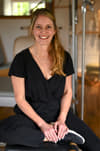
Meet Lou Lyus, a remarkable Pilates teacher who has journeyed from teaching mat classes to running her own boutique studio in the charming rural setting of Mid Devon in the UK.
Lou's story begins with a move from Wiltshire in 2016 and takes us through her rigorous Romana Pilates training, including the unique hurdles she faced while apprenticing during the global COVID-19 pandemic.
As a mother of three and hobby triathlete, Lou shares how she balances her professional ambitions with her personal commitments, along with her profound love for nature, being both a dendrophile and thalassophile!
Through our engaging conversation, Lou opens up about the demanding nature of intensive Pilates training, from the financial and emotional strains of travelling for in-person sessions to the supportive role her family played throughout the process. The pandemic reshaped her training methodologies, leading to the creation of her home studio and a flourishing business. Lou emphasises the importance of hands-on practice and acquiring personal movement experience to become an effective teacher.
We also delve into the evolution of Pilates training from its mat-based origins to the modern practices involving various apparatus, underscoring the need to master foundational movements and continuous learning for body awareness.
We also explore her empowering recovery from a serious knee injury without surgery, highlighting the role of movement and self-trust in healing.
The conversation rounds off with the unique challenges and rewards of running a successful Pilates studio in a small country village. Lou sheds light on the power of word of mouth, the differences between village and city studios, and the delicate balance she maintains between her professional commitments and personal interests.
Tune in to be inspired by Lou’s dedication to Pilates and her passion for educating clients about its transformative power.
Check out Lou's Instagram account here
And visit her Bio page in our Guest Directory here
Speaker 1: Hello, it's Nadine and I'm here with this week's
00:00:05
episode of Life, health and the Universe, and this week I'm
00:00:10
joined by Louise Lyas.
00:00:13
Welcome, louise, do you prefer Lou?
00:00:16
Yeah, I do.
00:00:18
Okay, so from now on she's Lou, lou Lyas, but we'll just just
00:00:22
say Lou and Lou and I are cousins, so this is how we are
00:00:29
originally connected.
00:00:30
We've known each other for many years and we've managed to
00:00:36
maintain contact by this wonderful thing we call the
00:00:41
internet, since I've lived here for nearly do I want to say
00:00:48
nearly 30 years, is it?
00:00:51
Yeah, so we've lived a long way away from each other.
00:00:55
But anyway, for our listeners, let's do an intro and I'm
00:01:00
basically going to read from your bio that you've included
00:01:04
for my new website, which I haven't officially launched, but
00:01:10
if you guys are listening out there and you want to check it
00:01:12
out, it's lifehealthandtheuniversecom
00:01:16
forward slash podcast.
00:01:18
No, at podcast page.
00:01:19
I don't know.
00:01:20
I don't even know what the URL is's.
00:01:21
Be honest, I'll put it in the notes.
00:01:24
I haven't practiced that bit yet.
00:01:26
Um, okay, so enough about that.
00:01:29
You can find Louise on the website, but I'm waffling
00:01:36
already.
00:01:36
Okay, so you're.
00:01:38
You're first and foremost.
00:01:40
What we're going to be talking about today is your work.
00:01:42
You're a Pilates teacher of 11 years.
00:01:44
You've got your own studio, but you're also a mum of three, a
00:01:49
wife, a mother to two labradoodles and two farm cats,
00:01:54
and you also are a hobby triathlete.
00:01:56
It's kind of a yeah, I don't even want to go where like hobby
00:02:02
triathlete.
00:02:03
Really it's not quite the same as knitting or something, is it?
00:02:11
It's not a very good triathlete, not competitive, or maybe I
00:02:16
don't know, so you live in beautiful, rural Mid Devon,
00:02:20
which is where we grew up, and you are a dendrophile and a
00:02:32
thalassophile and a country girl at heart.
00:02:34
We'll go into what those words mean later.
00:02:38
Your pilates journey has been one of two halves.
00:02:39
You've taught mat classes for years and had a very successful
00:02:41
business when you lived in Wiltshire before you moved to
00:02:43
Devon in 2016.
00:02:45
In 2019, you began a journey of teaching with is it pronounced
00:02:52
Romanas, romana, romana Pilates, and you've apprenticed through
00:02:58
the global pandemic and completed your training after
00:03:01
two years.
00:03:02
So we'll be talking all about that.
00:03:03
And you've got a beautiful boutique studio in Mid Devon,
00:03:09
working from home, raising your children at the same time and
00:03:13
promoting the best comprehensive Pilates in the land Very good,
00:03:20
so we're going to be talking about Pilates.
00:03:22
I'm not going to read the rest of the bio.
00:03:24
I'm going to talk to you instead of me talking, so
00:03:31
welcome.
00:03:32
Thank you for joining me.
00:03:35
It's really cool to have you here, obviously because we get
00:03:40
to catch up, and the great thing about you know, this 21st
00:03:45
century life we have, is that we do see each other online, you
00:03:49
know, and you kind of get to see what what we're doing, what
00:03:52
people are doing.
00:03:53
But, um, it also means that we can talk to each other right now
00:03:57
and in person, kind of in person, online um yeah, it kind
00:04:04
of feels like I saw you just now on the internet actually, we
00:04:11
haven't seen each other in person since you were here that
00:04:15
was nearly five years ago five years ago yeah, yeah, god, I
00:04:21
know it's kind of a weird.
00:04:23
It's been a weird time, hasn't it?
00:04:26
yeah, yeah so we're going to be talking all about your work,
00:04:31
your life, your journey with Pilates today, and I kind of had
00:04:35
a little chuckle to myself because I was like, oh, an hour
00:04:38
talking about Pilates.
00:04:39
And I was like, yep, I reckon that an hour might not even cut
00:04:45
it, because I feel like, yeah, you've been on this massive
00:04:52
journey and I'm really looking forward to you being able to
00:04:57
share it with us.
00:04:59
I'm still talking and haven't really given you a chance to say
00:05:03
anything.
00:05:03
Carry on, yeah, I'm really looking forward to't really
00:05:04
given you a chance to say it yeah, I'm really looking forward
00:05:06
to you sharing your journey with us, because it's really
00:05:10
easy especially when you have a business and people see you
00:05:13
online for them to think that you've made it, yeah, and you're
00:05:21
doing this amazing work.
00:05:21
But you've done a shit ton of work, like, to get to this point
00:05:24
.
00:05:29
Speaker 2: And it hasn't always been easy.
00:05:30
No, and it's been a really long uh process to get to this point
00:05:35
and, um, as you mentioned, I, um I was a math teacher for years.
00:05:41
So for those who don't understand what that means, it
00:05:44
just it means that, um, in this country especially and I think
00:05:48
probably in Australia as well, but maybe not so much in the
00:05:52
states, I think it's a little different there is that Pilates
00:05:55
uh, when it was bought here, um, back in the 70s, 80s, maybe, uh
00:06:02
, 70s, um, it was kind of it kind of was broken down into uh,
00:06:08
into mat and then apparatus teaching, and so a lot of the
00:06:16
teacher training in the uk anyway is very mat based work
00:06:21
and so that's really a lot of the time where people start
00:06:24
because of the cost and also because that's what's accessible
00:06:28
for people, because they just need a mat and you can take the
00:06:33
mat wherever you want to go and do Pilates on the mat.
00:06:38
So that's what I did for a really long time and it was, you
00:06:41
know, it's it, it's great um, and it was accessible for people
00:06:47
and um, I, yeah, did that for about I'm trying to I judge the
00:06:55
time by the ages of my kids because I was doing the exams
00:06:59
when I was pregnant with the twins, so that was 11 years ago,
00:07:04
um, and those are some of the sort of later mat exams.
00:07:12
Some of them I did before that, so yeah, for.
00:07:14
About for about 10, 9, 10 years .
00:07:18
That's what I was doing, solely that.
00:07:20
Wow, just that the kids were tiny, so I would Dan would get
00:07:24
home from his day job and then I would pack up my stuff, hand
00:07:29
the kids over and go to work, and that was my um.
00:07:33
I loved it because I didn't.
00:07:35
Speaker 1: I got out of the bedtime, yeah right, yeah, three
00:07:40
under three, yeah but going to work like that's full-on right,
00:07:46
doing it like, yeah, you kind of I don't know about you.
00:07:50
But I look back and I think how the hell did I even do that?
00:07:54
Speaker 2: I don't know, but at the time it just felt good
00:07:57
because I got energy and that's that was important for my uh,
00:08:04
health and um identity.
00:08:06
It was important to to not and I'm not saying just be mum I
00:08:12
think that's a very important role to have but to just have
00:08:15
something else to identify with um and and yeah.
00:08:23
So that that was, that was it.
00:08:25
And then we moved to Devon back to Devon, I should say um, in
00:08:31
2016, late 2016 and um.
00:08:35
I did the same thing here for a couple of years get settled in,
00:08:39
taught classes, um, actually, I taught them in this room before
00:08:44
I had these toys.
00:08:46
I just had mats in here and I taught classes here and was
00:08:51
teaching for um, my friend Catherine in a in another studio
00:08:55
and teaching back there.
00:08:57
Um, yeah, and then I just got curious about what else was.
00:09:04
What else is there in this world that I'm not accessing?
00:09:08
And I've done some reformer stuff historically.
00:09:11
I've worked on the reformer before, but just the reformer,
00:09:13
nothing else.
00:09:14
So then is to you this whole probably year-long process of
00:09:21
research into what else is there , what could, could I, where
00:09:26
could I train in that, and how much is it going to cost me?
00:09:30
How much time is it going to take?
00:09:31
For a year and I went here, there and everywhere talking to
00:09:37
different um provide training providers, different Pilates
00:09:42
teachers that I knew that had done different training, and
00:09:45
gradually kind of got all the information together and just
00:09:49
like, okay, this I need to go here.
00:09:52
And that's when I embarked upon this rather epic training
00:09:59
journey with Romanas Pilates.
00:10:02
Speaker 1: That was full-on.
00:10:03
I remember when we were there five years ago we came to stay
00:10:06
with you and you telling me about it and you like, sometimes
00:10:09
you come, you get like you're just in tears from the intense,
00:10:15
from the intensity of like going away and like the teachers
00:10:19
being really strict and you feeling like all of the things
00:10:26
it's an intense.
00:10:28
Speaker 2: It is an intense um, it was an intense training, yeah
00:10:33
, and I think when you're in it it feels very different to when
00:10:35
you're the other side of it, definitely back and forth and uh
00:10:39
, but I, I realized why it was the way it was and, um, and you
00:10:47
look back on it quite you know fondly, when you're in it it's a
00:10:52
very different um, it's a very different story.
00:10:54
But, um, I knew it was the, I knew it was the best training.
00:10:59
Um, because of that, in a way, because it was like this is
00:11:04
going to teach you everything you need to know to be able to
00:11:07
teach your clients safely and get results, get the results you
00:11:14
want.
00:11:14
There's other training, of course, that you can do, which
00:11:17
is good, but I just knew, from what people had said and my
00:11:22
initial experiences with those teachers, that this was going to
00:11:26
be what I wanted to do and it was really difficult.
00:11:33
I mean, it's traveling up to London every week.
00:11:36
Once a week, was it Two days?
00:11:39
Speaker 1: Holy crap, I didn't realize it was that often.
00:11:43
Speaker 2: So it was really difficult, and it was that often
00:11:44
.
00:11:44
So it was really difficult and it was.
00:11:46
You know, it was financially difficult, it was emotionally
00:11:49
difficult.
00:11:49
I'm trying to think how all the kids were, they wouldn't have
00:11:51
been that old my father would have been nine, I think, so the
00:11:55
twins would have been six, seven .
00:11:57
Speaker 1: Yeah.
00:11:59
Speaker 2: So it was really difficult and I could not have
00:12:04
done that without a mum, child care and then, you know, being
00:12:13
very supportive and saying you know, if this is what you want
00:12:15
to do, then go, go and do it.
00:12:18
Yeah, um, and then COVID hit, which changed the whole
00:12:34
landscape of training and I think, because the training had
00:12:39
been very in-person, well, very in-person, it had to be
00:12:42
in-person up to that point, all of a sudden, everything was
00:12:49
thrown up in the air.
00:12:49
Well, how do we do this now, um , and, and how we did it was we
00:12:54
did a lot of stuff online, and I'm not just talking now one,
00:12:59
two days a week, I'm talking every day.
00:13:01
We seem to be doing something on zoom in, lockdown and working
00:13:06
and homeschooling.
00:13:07
So I have very good memories, um, of the lockdown, actually,
00:13:15
because we live in a, a really lovely place, and the kids, I
00:13:19
think, were maybe the perfect age to not be in school.
00:13:25
They didn't, you know, they didn't school that age, let's
00:13:27
face it, um, and we had amazing weather, which had not been
00:13:34
repeated so far, but we had really good weather, and so
00:13:39
actually I was working, teaching , training, learning,
00:13:44
homeschooling, and it was all a mad, mad juggle, but actually,
00:13:50
you know quite good, in some ways no travel.
00:13:54
No travel exactly.
00:13:57
I was saving some money and that's when I got my.
00:14:00
Well, I borrowed a reformer.
00:14:03
I think I did.
00:14:05
I borrowed a reformer from my friend, catherine, her studio,
00:14:08
because obviously she couldn't open as a studio and I bought it
00:14:11
here.
00:14:12
And then I bought some other equipment and so over that year
00:14:16
I started accumulating bits of apparatus to work on at home and
00:14:21
that was the beginning of the studio here.
00:14:24
So in a way as awful as you know, covid wasn't um, you know
00:14:30
the suffering that went on.
00:14:32
I think, um, that was a real turning point for the business.
00:14:37
And you suddenly have to get apparatus, have to have it,
00:14:44
because otherwise where am I going to practice my training?
00:14:48
Speaker 1: yeah, because you it's very hands-on in terms of
00:14:53
you actually have to be able to do all of the things right,
00:14:57
compared to like, like I think it's as a personal trainer, it's
00:15:04
important for us to be able to do all of the things, but there
00:15:07
are plenty of, probably plenty of personal trainers out there
00:15:10
who can't do the things.
00:15:13
But with Pilates, like, you have to be able to know how to
00:15:18
use this equipment properly, and part of from what I can gather
00:15:22
on your Instagram and when you were going to London and doing
00:15:26
the in-person stuff, it was very much about your own movement.
00:15:31
Speaker 2: Yeah, very much, very much.
00:15:33
I mean, even before, to be fair , even before that you start
00:15:37
that training program, you're expected to be at a very certain
00:15:40
level.
00:15:41
Right, practice this yourself at a very certain level, right,
00:15:49
practice this yourself.
00:15:50
So, um, so definitely that's a big element of that training.
00:15:51
That's not a big element of all training, by all means.
00:15:53
I think it's the same need to world.
00:15:55
I think you can probably get away but I know you can get away
00:15:58
because I did it for 10 years with not not being able or not
00:16:07
being willing, maybe, to do certain things.
00:16:10
But definitely that training is about your practice.
00:16:13
Your practice, um, feeling the work in your body, um, and that
00:16:21
doesn't mean that doesn't mean that you every, every exercise
00:16:25
is not for everybody.
00:16:27
Therefore, every exercise is not for me.
00:16:29
There are definitely exercises that are inaccessible at, maybe
00:16:36
just at the moment, but inaccessible um were
00:16:39
inaccessible to me then and and some now.
00:16:42
But that practice is really important.
00:16:46
So you know, if you're not working out, really, how are you
00:16:49
going to understand how the exercise feels, how it's
00:16:54
executed, um, for the people that you're teaching?
00:16:58
So that was a really, really big part of the training and and
00:17:02
in many ways, for me the the best bits because I love doing
00:17:08
it.
00:17:08
So you know so that I'm very happy to be working out a lot.
00:17:16
Speaker 1: Yeah, great, yeah, um oh, did you at any point like,
00:17:24
well, firstly, when you, when you were going through this
00:17:27
process and you started getting some equipment and it was really
00:17:29
to do the training at home, did you, did you have a bigger
00:17:35
picture of where this was going to lead you, or is it really
00:17:37
just evolved over time?
00:17:39
Did you go?
00:17:39
Did you kind of go, I want to get this qualification and then
00:17:43
start my own business, or you know?
00:17:47
Speaker 2: I think for me, really, it was about filling in
00:17:49
the gaps, filling in the gaps in my knowledge and understanding
00:17:55
of what Pilates was, is and um.
00:18:00
And I didn't really foresee, I certainly didn't think this
00:18:06
space was going to be quite big enough to have a whole to have
00:18:12
every piece of apparatus that a Pilates studio really needs,
00:18:16
because it's not a big, you know , it's not a big room, but
00:18:19
actually as it has evolved, I've realised that actually I do
00:18:24
have everything and it works and it's great because I'm at home.
00:18:34
It works really well.
00:18:36
I'm not paying rent on a studio , which is amazing.
00:18:39
So I didn't really.
00:18:41
I don't think I really saw before COVID.
00:18:43
I don't really think I saw where I was going to be teaching
00:18:46
.
00:18:46
It was going to look like I just wanted to know more, I
00:18:51
wanted to experience a little bit more and, yeah, just to
00:18:56
learn really.
00:18:57
So no, I think it has just evolved quite organically and um
00:19:03
gradually?
00:19:04
Speaker 1: yeah, yeah, did you?
00:19:06
When you were going up to London and you were doing all of
00:19:09
the the stuff, did you the training?
00:19:13
Were you worried at any point that you wouldn't pass?
00:19:19
Was there like a pass fail situation going on?
00:19:21
Yeah, yeah, yeah.
00:19:24
Were they really strict on it or were they like you?
00:19:28
Speaker 2: you need you know these are the things you need to
00:19:30
work on yeah, it's tough, um and um.
00:19:38
Yeah.
00:19:38
No, I, it's definitely a thing, but it I knew that I I kind of
00:19:44
did know that.
00:19:45
You know however long it took that I would eventually get
00:19:49
through it.
00:19:49
But it is.
00:19:51
You know, it's not the, it's not the easiest, it's not like
00:19:54
you pay the money and here's how you much know you have to be a
00:20:00
very certain standard of teacher to to to get, to get through it
00:20:05
.
00:20:05
But, um, and I don't, I don't think I ever doubted myself
00:20:09
because I knew that, uh, I wanted it, yeah, so I knew that
00:20:15
I would do it.
00:20:17
Yeah, um and yeah so so yeah, tough, but but not but doable.
00:20:25
Done, actually, done, done.
00:20:37
Speaker 1: What does training look like for you and for your
00:20:40
clients?
00:20:40
Because I am back in the day when I was first studying
00:20:45
fitness.
00:20:46
I remember going to an expo and trying out like a Pilates
00:20:49
reformer and like I did some Pilates mat class and I was like
00:20:53
what is this?
00:20:54
You know I was doing strength training and like high intensity
00:20:56
cardio.
00:20:57
I was like flapping my arms on a mat and I kind of got the gist
00:21:06
a bit more with the reformer when I had a go at that.
00:21:10
And you know, I've heard and I feel like it has evolved like
00:21:13
just like you said there's it was all mat work, I'm pretty
00:21:17
sure, like back then when I first started in the fitness
00:21:20
industry.
00:21:20
And when I hear people say that they go to pilates classes now
00:21:25
it's usually with a reformer.
00:21:26
So I don't know if they do the full you know realm of things
00:21:32
that you have like with the apparatus.
00:21:33
Then maybe some studios do.
00:21:35
But what does a typical session look like for you?
00:21:40
Because I know that the videos that I've seen you post on
00:21:44
Instagram like there's a real element of like flexibility,
00:21:48
coordination, strength, like all of those things are encompassed
00:21:53
a whole bunch of core control obviously.
00:21:56
With that, what would a session look like?
00:22:00
Speaker 2: So the session.
00:22:01
I suppose I could just go back very briefly to the mat and the
00:22:06
reformer.
00:22:06
So the reformer Pilates now is.
00:22:10
I mean that's an explosion of something else and it's a rabbit
00:22:16
hole that I won't go down because we could just get stuck
00:22:18
there for another hour.
00:22:23
Speaker 1: It's kind of like where Matt was 15 years ago,
00:22:26
right, kind of like that's what people think pilates is.
00:22:29
Speaker 2: Yeah, maybe, maybe it is and um, and I think a lot of
00:22:36
it is exercises on a reformer yes, okay, yeah, rather than it
00:22:43
being the purest, it's not Pilates on it.
00:22:45
Yeah, yeah, sure, yeah yeah, and it's all good, it's all
00:22:49
movement and people love it and great they're moving.
00:22:53
I'm happy.
00:22:56
Speaker 1: But you've worked your ass off for several years
00:23:01
and they're not fucking doing it right.
00:23:04
Speaker 2: You do your thing.
00:23:04
They're not fucking doing it right.
00:23:05
You do your thing In the studio .
00:23:09
In the Pilates studio it looks like you have, I mean, hundreds
00:23:15
and hundreds of exercises at your disposal and you have an
00:23:18
order of exercises.
00:23:20
Okay, that has not changed.
00:23:25
So Romana was a student of Joseph Pilates.
00:23:32
She devised, I think, introduced basic, intermediate,
00:23:36
advanced level exercises.
00:23:38
Joseph Pilates did not, he just you do it, we don't.
00:23:43
You know it was like.
00:23:44
And so we worked through a basic system of exercises,
00:23:51
graduating to an intermediate system of exercises, graduating
00:23:55
to an advanced system of exercises, and the different
00:23:58
pieces of apparatus.
00:23:59
So you've got your reformer and your mat and you're maybe going
00:24:03
to work initially on the reformer, because it's very easy
00:24:06
to see somebody's alignment because of the shape of the
00:24:10
apparatus you know, to see how they're working, how they're
00:24:13
using their muscles, where they're maybe tight, where
00:24:16
they're maybe too flexible, maybe where they're weak,
00:24:19
whatever, and so it's very easy, uh, to see what that body needs
00:24:25
from that piece of equipment.
00:24:28
The other pieces of equipment, you know, your Cadillac, your
00:24:32
barrels, your chairs, one of which I'm using as a chair, are
00:24:37
really for honing in on those things that need work.
00:24:44
So if somebody, um, for example , as you know, has got tightness
00:24:51
somewhere, then you're going to take them to a certain piece of
00:24:53
apparatus to work on that tightness.
00:24:55
If they need strengthening somewhere, you're going to take
00:24:58
them somewhere else.
00:24:59
So the reformer and the mat are kind of like your, your your
00:25:02
bread and butter, if, if you like, your kind of you know the
00:25:08
kind of meat of the work, and then the other apparatus just is
00:25:14
for their individual needs and requirements.
00:25:18
So an individual session is going to look quite different,
00:25:24
even though their reformer might look the same as the person
00:25:27
next to them, because you're working through this order of
00:25:30
exercises and you're going to miss some out that aren't
00:25:33
suitable for them, for sure, but then you're going to go and
00:25:37
you're going to look around the studio and you're going to go.
00:25:39
OK, I think we need to do this.
00:25:40
This is going to be whatever tight shoulders, lower back,
00:25:45
whatever it might be.
00:25:47
So it's kind of it's very individualistic in that aspect.
00:25:50
And and then you, you know, you , you, as you get stronger, as
00:25:56
the body changes, you know, and you're just, you're looking at,
00:26:01
you know different exercises, more advanced exercises, and
00:26:05
generally the more advanced exercises are the choreography
00:26:08
is a little bit more complicated , but actually once you've got
00:26:11
the strength and the control of your body, those exercises
00:26:18
actually are not as hard maybe as they look initially, because
00:26:26
you've already got the foundation of the, of the
00:26:28
strength.
00:26:29
Um, so I would say, the more advanced exercises, which are
00:26:34
the ones that people always were like, oh, that looks amazing, I
00:26:36
want to do it, I want to do that, and you're like, sure,
00:26:42
yeah, but let's just, let's do this first.
00:26:46
Yeah, let's see if you can touch your toes.
00:26:48
I do always say, I do always say to clients that, um, if you
00:26:55
can find the work in the basic I always go back to the basic
00:27:01
basic reformers it will kill me if I'm really working.
00:27:05
Basically, if you can find the work in the basic stuff, then
00:27:11
you're probably ready for the.
00:27:13
The other stuff, yeah, right, yeah, because you've got it's
00:27:17
and it's.
00:27:17
It's different almost every time you, almost every time you
00:27:22
get on the reform, your body feels different.
00:27:23
There's always something to find something to to work on,
00:27:29
something to discover about yourself, um.
00:27:35
So it's a continual learning process and it's not something
00:27:39
that you um, I don't think.
00:27:42
I don't think you get good at Pilates.
00:27:43
I think people like to would like to get good at Pilates.
00:27:47
I think people would like to get good at Pilates.
00:27:48
Yeah, get good at it.
00:27:50
I think it's a very humbling experience that there is always
00:27:57
something to learn from it.
00:28:01
Yeah, definitely.
00:28:04
Speaker 1: Yeah, I mean, we do completely different things.
00:28:06
I do crossfit, but it's the same.
00:28:09
It's the same with that, right, there's all.
00:28:10
There's a continuous yeah, you need your bread and butter, you
00:28:13
need to be able to squat body weight, like it doesn't matter
00:28:16
how, how strong you are.
00:28:17
We still go back to the basics all the time and, um, yeah,
00:28:21
there's always something that humbles you, like like whether
00:28:25
it's going faster or moving better, being more efficient,
00:28:28
getting stronger, like there's always something.
00:28:33
I'm happy sticking with the basics these days.
00:28:36
To be honest, I'm not in pursuit of all those fancy
00:28:42
things anymore.
00:28:42
Why do people come?
00:28:48
I think that also there's a?
00:28:51
Hmm there's I don't, I can't think of the word.
00:29:02
People think that when you say that you're going to pilates,
00:29:05
it's because you've had an injury.
00:29:06
Um, yeah, so it's like that.
00:29:07
Um, I feel like that's probably changing a little bit now as
00:29:12
well.
00:29:12
Speaker 2: I think I think as well that that has, um, I don't
00:29:18
know how it is, maybe in australia I think it is very
00:29:21
similar actually.
00:29:22
But I think here you could split pilates into a couple of
00:29:27
different areas really.
00:29:29
And clinical Pilates was very big, I think, here in the 90s.
00:29:34
Clinical, which kind of combined some Pilates exercises
00:29:43
on the apparatus, heavily modified I think, with a
00:29:48
physical therapy, okay, um, which I'm not sure how I feel
00:29:58
about it because because actually I have lots of clients
00:30:03
who have very, very different physical needs, injuries, issues
00:30:08
, and actually the exercises, the pilates exercises, actually
00:30:14
encompass all of those things, and if they don't, then you
00:30:19
leave them out.
00:30:19
So I think, um, I think a lot of people are still, I would say
00:30:29
my main referrals, are people who have back pain, okay, so it
00:30:37
still has that um, that kind of um characteristic of being known
00:30:45
to be safe, yes, and maybe quite gentle and therapeutic,
00:30:58
maybe even relaxing.
00:31:00
Speaker 1: I would go so far as to say that people think but
00:31:03
then they just have to look at your Instagram feed to know that
00:31:08
it's none of those things.
00:31:11
I'm sure the therapeutic like obviously there's, a there's a
00:31:16
yeah, I'm sure that you're.
00:31:17
You know exactly what people need, your clients need, and,
00:31:20
and you know, back injuries are always um, something that, uh,
00:31:26
we need to be cautious of.
00:31:27
But, um, it would be.
00:31:29
The reason that it's um recommended, I guess, is because
00:31:33
there is such a high level of core strength required, and
00:31:40
we're not just talking about your abs, but like, well, body
00:31:43
control, right, and and like body awareness well, I would
00:31:47
expect anyway that there body awareness and control.
00:31:52
Speaker 2: Also, the apparatus is very supportive.
00:31:55
Okay, you're getting on a reformer and you are you're
00:31:59
starting lying down for a start, so you've got that support.
00:32:03
So I think I think, um, I think it definitely has evolved from
00:32:12
from that.
00:32:13
I think, I mean, we know so much more now about pain, and
00:32:18
back pain specifically, that we know that any exercise is good
00:32:22
for back pain.
00:32:23
Yeah, so I don't I definitely don't, uh, advertise or promote
00:32:32
myself as somebody who's going to fix anything.
00:32:36
Actually stronger I'm going to make you feel better, um, but
00:32:42
certainly I think any exercise you do is is going to help you
00:32:47
with back pain, and I definitely advocate in doing anything
00:32:51
really.
00:32:51
So I do think people still come for that.
00:32:55
I think some people still come because for the core, and I
00:32:59
think they do mean abs, yeah, Once they've learned a little,
00:33:12
they know that core means a whole bunch of other things too,
00:33:14
everything, everything, everything so, and I and I think
00:33:16
that's it may- be, a shame, in a way, that pilates has this
00:33:20
reputation.
00:33:20
I want to.
00:33:21
You know, I want my core strength well great, but I mean
00:33:26
honestly, it's so so much more.
00:33:31
You know and I the thing that I that fascinates me is that we
00:33:34
can go through our lives, you know you're having a really
00:33:39
strong core but really poor shoulder flexibility or really
00:33:44
poor hip flexibility or really, you know, don't even or spine
00:33:48
flexibility yeah, tight hamstrings yeah and you're like
00:33:52
but the core's good, fine, actually I mean, and that's the
00:33:57
brilliant thing about about Pilates, like for me, is that
00:34:03
you can see all that stuff in somebody's body and you go okay,
00:34:06
we're gonna, we're gonna work on your hamstrings, we're gonna
00:34:10
work on your tight hip flexors or no glutes or whatever it
00:34:15
might be tight upper back, and I mean we don't think when we're
00:34:20
thinking, oh, I don't think.
00:34:22
Maybe lots of people don't think , uh, of their spines having to
00:34:27
have a certain amount of movement in them.
00:34:29
And quite often when we make what we've done they've done
00:34:34
horse stability stuff before you know there's this rigidity to
00:34:40
it and actually I mean, moving your spine is the most delicious
00:34:46
feeling in the world, so it just encompasses every possible
00:34:57
aspect of movement in your body, it's fingers, eyes there's
00:35:03
exercises for eyes.
00:35:08
It is just yeah, it encompasses everything.
00:35:10
So I think people come very much going back to your question
00:35:13
, sorry, that's fine.
00:35:14
People come for very specific things and I think if they
00:35:21
continue the journey, they realize there's lots, there are
00:35:25
a lot of things actually, yeah, yeah, that's breathing, or
00:35:32
actually, you know, being able to move their toes independently
00:35:36
of each other, or things that they didn't really think about
00:35:40
before.
00:35:40
Yeah, we'll explore a little bit.
00:35:43
So I think it's it's more than it's more than what they come
00:35:48
for.
00:35:49
Speaker 1: They leave with more than what they walked in the
00:35:51
door let's um talking more about the um, like the injury side of
00:36:00
things, and I know you mentioned back specifically, but
00:36:04
you had your own personal experience with injury when you
00:36:10
were skiing.
00:36:10
How long ago was that, was that ?
00:36:12
That was two and a half, two and a half years ago.
00:36:16
Okay, did you?
00:36:17
You had to be airlifted off the slopes or taken down on a sled
00:36:25
as my, as my children like to recall this.
00:36:28
Speaker 2: I was put in a body bag and skidded off the mountain
00:36:36
did you tear a cruciate ligament, so I ruptured my ACL,
00:36:44
yeah, and damaged my meniscus, okay um and so what happened
00:36:54
following that?
00:36:55
Speaker 1: did you have surgery?
00:36:56
You didn't have to have surgery .
00:36:58
Speaker 2: I didn't have surgery .
00:36:59
No, at this I was offered surgery.
00:37:00
So this was a funny time because it was post-COVID so the
00:37:13
NHS was not really in a place to be offering any thing.
00:37:15
I think I got a phone call.
00:37:17
When I got, I had all this wonderful service in France, in
00:37:24
the hospital there.
00:37:25
They sent me home with some x-rays and so when you get home,
00:37:27
you know go to the hospital there, sent me home with some
00:37:28
x-rays, and so when you get home , you know, go to the hospital.
00:37:30
Like it's that easy here to go to the hospital.
00:37:35
So I phoned the doctor and he I think I did see a GP actually
00:37:41
and he said I'll make an urgent referral to the hospital.
00:37:44
Well, this was post COVID, so that urgent referral never
00:37:49
materialized into anything.
00:37:50
So I ended up actually paying to go and see a knee specialist
00:37:59
in a private hospital and he did the MRI and everything else and
00:38:04
said I can do surgery if you really want, but given that
00:38:10
you've walked in here without a knee brace on and you can walk
00:38:14
back out again without a knee brace on, I wouldn't recommend
00:38:16
it Because the recovery was such a long time.
00:38:20
I think they were saying you know you wouldn't be able to do
00:38:25
anything, you know running, cycling, whatever, for nine
00:38:30
months, I think, which you know.
00:38:33
I was like, oh, okay, but then if you had surgery.
00:38:37
Speaker 1: It would probably not be much better, would it?
00:38:39
No, it was that with the surgery.
00:38:41
Oh, that was with surgery.
00:38:42
Okay.
00:38:45
Speaker 2: And he said, given that you know how it is and how
00:38:50
you know, you're not really hobbling around that much, maybe
00:38:53
it will get better over time.
00:38:55
And so I just did decide to leave it, because the surgery
00:38:58
just actually just freaked me out a little bit and I'd spoken
00:39:00
to a couple of people who'd had surgery and the outcomes didn't
00:39:06
seem that great, to be honest.
00:39:10
In fact, I think my brother had had surgery for the same thing,
00:39:16
where they take a piece of the hamstring off its side, and I
00:39:21
think he'd had problems with his hamstring.
00:39:23
So I was like I don't really fancy it.
00:39:27
Speaker 1: So I just didn't.
00:39:33
Speaker 2: And then I just thought, well, I'll just see,
00:39:35
see what happens, I'll just do what I can do.
00:39:36
And um, so, probably and actually I saw this video came
00:39:39
up not that long ago on my memories of me working out with
00:39:43
my knee brace on, doing everything that I could possibly
00:39:47
do without disturbing the knee, so keeping the brace on, you
00:39:52
know, doing lots of upper body stuff, lots of basically any
00:39:57
exercise I could think of that didn't involve bending,
00:39:59
straightening my leg.
00:40:00
So that's what I did and um, and very, very quickly it all
00:40:06
got much, much better, I would say within about.
00:40:10
Well, I tell you, by the July, july and it was February that it
00:40:18
had happened.
00:40:18
July I was running a 10k race, wow, with no pain.
00:40:25
So it's all a mystery in a way to me and I kind of want to go
00:40:31
back and have another MRI and see what the situation is but
00:40:34
you're not not getting any discomfort at all now, what's
00:40:38
been a few minutes when people ask how is your knee, what does
00:40:41
it feel?
00:40:41
like I'm like, do you know what?
00:40:42
It doesn't feel the same as the other one doesn't feel the same
00:40:46
in that uh, I can't really explain how it feels.
00:40:50
It feels almost, um, feels slightly swollen, to be honest,
00:40:55
but but not, but that doesn't really restrict the movement.
00:40:58
And here I, here I am just sort of bending a string just to
00:41:02
check um, but it doesn't feel the same as the other one.
00:41:05
Definitely there's differences in the feeling of it, but, um,
00:41:10
but interestingly, the muscles on that leg are you?
00:41:14
Speaker 1: know they're strong, so I'm hoping fingers crossed.
00:41:18
Speaker 2: I feel you know I'm always waiting for something to,
00:41:23
to maybe trip it up and see, but we're going to test it okay.
00:41:29
Speaker 1: Well, that will test it.
00:41:33
Speaker 2: You've given it a fairly good break yeah, yeah, I
00:41:38
know it's been three years, so, yeah, I think like you, you used
00:41:44
um pilates a lot, didn't you, in your recovery and your rehab.
00:41:50
Speaker 1: Yeah, so like you're a living testament to your work,
00:41:53
really.
00:41:55
Speaker 2: Yeah, I think so and I think, and that's what I think
00:42:01
people and I don't want to get it confused with a therapeutic
00:42:06
setting, because it's not, it's movement.
00:42:08
Movement heals right In a way.
00:42:11
It doesn't matter what it is.
00:42:13
I I don't think I.
00:42:14
I love Pilates, you love CrossFit.
00:42:16
They're both good, they're both gonna heal people in different
00:42:20
ways, make people stronger, make people more resilient.
00:42:22
You know, and I and I do think that it's not necessarily a
00:42:31
therapeutic um uh environment.
00:42:36
The way I see the Pilates studio is it's a physical
00:42:39
exercise environment.
00:42:41
But movement is always going to make, it's always going to
00:42:46
improve things.
00:42:46
Speaker 1: It's never going to make things worse yeah, and I
00:42:50
think a massive part of it is like for all of us is trusting
00:42:59
your own body, isn't it like we're not?
00:43:01
Well, I think you and I probably, you know, not in the
00:43:06
same category as I'm referring to, but many people that we
00:43:09
probably both work with don't trust their bodies or don't know
00:43:14
how it should feel, or they're just a little bit.
00:43:18
They can be a bit disconnected and so like, if something, if
00:43:22
you have an injury like you had, it's like the alarm bells go on
00:43:26
and and they kind of go.
00:43:28
I I can't fix myself where, in fact, you're um you putting
00:43:37
trust in?
00:43:38
I know my body, I know how I move, I know what pain feels
00:43:42
like, yeah, um, yeah, absolutely , and I think that's the big
00:43:47
thing as well, yeah, it's teaching people to be in control
00:43:51
of their own body, yes, and giving them.
00:43:57
Making them feel empowered really.
00:44:01
Speaker 2: It's definitely giving them the authority to
00:44:04
make good decisions.
00:44:06
So we have a thing that's probably very universal when
00:44:11
you're teaching somebody movement or exercise, but at the
00:44:15
beginning of a session or beginning of a class, a group
00:44:18
class, you know, do what, do what feels good, don't do what
00:44:23
doesn't feel good yeah, and make that decision, and some people
00:44:27
are very, really like okay, okay , I'm not, I'm going to miss
00:44:30
this exercise out because it feels horrible.
00:44:32
Today, some people just are not in that zone.
00:44:37
They just can't quite get the can't quite like no, I'm just
00:44:41
going to push through the pain.
00:44:47
So, you know, I always encourage people to take responsibility
00:44:52
for what they're, for what they're doing and for their body
00:44:54
, because ultimately, I mean, don't you want to be responsible
00:44:58
for your body?
00:45:01
Yeah, but I think we've spent a long time in this industry of
00:45:07
of taking that away from people and and being experts.
00:45:10
I am not.
00:45:14
I'm the expert of my own body.
00:45:16
I'm not the expert of yours.
00:45:19
Yeah, I can tell you probably gonna feel really good and what
00:45:22
is probably gonna feel horrible.
00:45:23
Are you that this is gonna make you stronger?
00:45:27
But if you do it like this, it's probably not gonna be as
00:45:29
effective.
00:45:29
But I'm but I'm not the expert.
00:45:32
I'm not in your head.
00:45:34
I don't know what you're trying to promote with people.
00:45:36
As please take responsibility for this going forward, because
00:45:41
you know we get to a a certain point in our lives where, uh,
00:45:47
where things maybe start failing a little bit more frequently.
00:45:51
And actually, you know, in this country and I don't know if it's
00:45:55
the same, but there isn't really the facility of the
00:46:05
health care to help you when you need to fix something in your
00:46:12
body, and an example of that is my teeth.
00:46:15
There wasn't anything there for me that was free, and so you do.
00:46:23
Really, I think, as you get older especially, you have to
00:46:25
really start taking responsibility and making sure
00:46:30
that you're doing all that you can to preserve what you have,
00:46:34
but also to to make things stronger for the for the future
00:46:40
yeah, is that where you're?
00:46:42
Speaker 1: so when we were doing our um little um online chat,
00:46:48
like talking about what we were going to talk about, you said
00:46:51
maybe we should talk about aging , was that?
00:46:55
Was that the bit?
00:46:57
We're all doing it.
00:46:58
It's something we all have in common.
00:47:00
Have you noticed?
00:47:02
How old are you?
00:47:03
I'm a bit older than you.
00:47:04
You're early 40s.
00:47:05
44, oh, 44, yeah, um, that's early 40s.
00:47:14
Yeah, yeah, it is it's not mid-year um, have you noticed
00:47:20
your body start to change, but also like your desire to do
00:47:26
things differently?
00:47:27
Like can you feel things changing when it comes to
00:47:32
movement?
00:47:33
Speaker 2: yeah, I mean, I think I'm quite, I think I am, I
00:47:37
think I'm lucky in a way that I have, um, I suppose I've always
00:47:42
had a, a fairly uh, I don't know what the word is really, but I,
00:47:51
I've always moved in that way, shape or form.
00:47:55
So, whether that was gymnastics , horse riding or I don't know,
00:48:00
I wasn't particularly sporty at school.
00:48:02
Really a bit of athletics maybe , certainly as a young, a young,
00:48:20
a younger adult, and through my sort of 20s, 30s I was, I was
00:48:23
doing stuff.
00:48:23
So I feel like my body, you know it's okay, it does stuff
00:48:26
that I want it to do most of the time.
00:48:27
Want it to do most of the time.
00:48:35
Oh, my god, I've got to, um, I've got to do more, be stronger
00:48:37
, be fitter, be whatever.
00:48:38
I don't think it was an age thing.
00:48:38
Particularly, I think I was training quite a lot Pilates
00:48:44
wise, when I was 40, because that's when I started my uh
00:48:49
studies apprenticeship.
00:48:50
Yeah, yeah, yeah, I started.
00:48:52
It started in 2019, so I'm 2020 , I'm 40, and so I was quite
00:49:01
like, oh, I feel quite good, maybe I could do other things.
00:49:05
And actually that was when I entered entered the first uh
00:49:10
triathlon when I was 40.
00:49:12
My friend and I 40 that year like, oh yeah, let's do a
00:49:16
triathlon, why not?
00:49:17
So I think as I get older I get a little bit more like, well,
00:49:24
let's just see what this body can do okay, so.
00:49:31
I just like to test it out.
00:49:33
Speaker 1: It's kind of interesting, isn't it?
00:49:35
Because it's like we get there.
00:49:40
There's so much subliminal messaging everywhere about age,
00:49:46
yeah, yeah, and like what's old, what's young, what's
00:49:49
middle-aged, that it's, even if you don't feel bad or feel, you
00:49:57
know, like you're getting old or anything like that there's.
00:50:00
There's a I mean I?
00:50:01
I just occasionally get these little questions should this be?
00:50:06
Maybe this is going to start hurting, kind of thing.
00:50:09
You're always waiting.
00:50:11
Should I still be able to do these things?
00:50:15
Speaker 2: No.
00:50:15
Speaker 1: Is it okay to do a handstand?
00:50:17
Speaker 2: when you're 50?
00:50:17
I know, with a handstand, a handstand thing is like that's
00:50:22
my kind of weekly ritual.
00:50:23
Every week I'm like I'll do a handstand.
00:50:26
Speaker 1: Just to test it, just to make sure I can still do one
00:50:29
.
00:50:29
Speaker 2: I think that I've still got that strength and I
00:50:33
and I really, you know, there's a couple of things that I would
00:50:35
really like to still be able to do.
00:50:37
Um, forever, you know, forever yeah like I just don't you know,
00:50:46
you, um, definitely I have a mindset of move it or lose it,
00:50:53
um, and I see that in people a lot.
00:50:56
You know, you get to a certain age.
00:50:58
I think it's not always a physical thing, but also a
00:51:03
psychological thing.
00:51:04
Yeah, yeah, yeah, it's to move.
00:51:09
Speaker 1: And what we were saying about trusting trusting
00:51:11
your own body to do things that you want and we just don't do
00:51:17
certain things anymore, right, well, or we can easily not do
00:51:21
certain things, like sit on the floor or, um, get up without
00:51:26
using your hands, or, you know, stand up to tie your shoelaces,
00:51:30
like that kind of stuff.
00:51:31
Like you, just they're.
00:51:33
Speaker 2: They're things that you can easily lose just because
00:51:35
you don't do them anymore yeah yeah, and I'm a big, uh, a big
00:51:42
sort of advocate of, um, a functional movement as well, you
00:51:47
know, and a lot, there is a lot of very functional stuff in
00:51:50
Pilates.
00:51:50
Some of it's uh, you know, not some of it is just why.
00:51:56
Why do you need to be able to do this?
00:51:57
But it's fun, but, um, you know , and I, uh, you know, I've had
00:52:03
a couple of occasions where clients have come in with these
00:52:09
um shoes, um maybe I shouldn't mention the brand, but I will
00:52:13
anyway sketches where, where they have the where they have
00:52:17
that, um, the the back of the shoe just allows you to kind of
00:52:23
slot your foot in, like it's like a slip on slides.
00:52:26
Yeah, I think it's like a slip-on chain.
00:52:27
Slides yeah, I think it's called a slip-on chain and I'm
00:52:34
absolutely horrified by it so you don't have to bend down to
00:52:39
put your shoes on, right.
00:52:40
But that movement that you've just lost because you haven't
00:52:44
got to bend down to put your shoes on, and I find that really
00:52:51
fascinating.
00:52:52
Speaker 1: Well, yeah, because, like there's so many things,
00:52:55
it's like flexibility, coordination, like yeah, and
00:53:01
there's so many things, there are lots of things that have
00:53:03
been invented in this era that are to make things easier, like
00:53:10
I always think reverse cameras in cars, like yeah, yeah, so we
00:53:15
don't have to turn our head.
00:53:17
You don't have to turn your head anymore, yeah yeah, things
00:53:23
like that.
00:53:23
Speaker 2: I'm a big fan.
00:53:25
I'm a big fan I'm sure you are as well Katie Bowman's work on
00:53:30
nutritious movement.
00:53:32
Speaker 1: Oh, I haven't heard of her.
00:53:33
Yeah really really good, nutritious movement which I
00:53:38
really like that idea of that.
00:53:41
Speaker 2: You know, movement, snacking and all that stuff.
00:53:46
But you know, I encourage and that's why I think, in a way,
00:53:51
pilates encompasses a lot of functional, um, almost
00:53:59
animalistic movement, but also the different body parts.
00:54:03
So we, you know, we're encouraging people to use their
00:54:06
fingers, we're gripping, we're holding on to give you an
00:54:11
example of a spring and a handle , you know, holding on, grip,
00:54:15
strength, all the stuff that is also, um you know, very
00:54:22
prevalent in other modalities.
00:54:24
Yeah, and very important, like they say that grip strength is
00:54:28
one of the most important indicators of longevity and I
00:54:34
tell my clients that all the time like, hold that, hold on to
00:54:38
that, handle, rip it hard, and I think that's the brilliant
00:54:46
thing about the studio is it has all of those aspects where you
00:54:49
can work, all of those.
00:54:52
Speaker 1: Um, there's different things you know like, like in a
00:54:55
gym as well, working on all of those aspects.
00:54:59
Speaker 2: So, um, but yeah, I just, I just really.
00:55:04
I mean I do practice what I preach but I really do hope that
00:55:09
when I reach 80, 90, that I'm still doing a handstand.
00:55:16
Just test it, test it out and um, and I've got some brilliant
00:55:21
clients who really defy age and really, you know, you're like I
00:55:26
mean I'm terrible at actually aging people.
00:55:29
Um, and you're like I mean I'm terrible at actually ageing
00:55:34
people.
00:55:34
But when I found out last week that one of my clients was 70,
00:55:41
and I honestly was like no, she's not.
00:55:43
Speaker 1: She can't be.
00:55:43
She can't be 70.
00:55:51
Speaker 2: But you know, because she moves so well and she's
00:55:54
strong and confident.
00:55:55
I think confidence is a big thing when it comes to moving.
00:55:59
It gets lost quite quickly.
00:56:00
You only have to have one fall, one slip trip and suddenly
00:56:07
you're a little bit unsure.
00:56:09
Speaker 1: There's that mental, yeah, yeah, or maybe I shouldn't
00:56:13
do that again, getting old yeah yeah, yeah, why I'm, which is
00:56:19
why I'm going skiing again, just get back on the horse.
00:56:24
Yeah, yeah, totally, we've, um pretty like we've, we've hit the
00:56:29
hour and so we have talked.
00:56:33
Have you got time to go a little tiny little bit longer?
00:56:36
Yeah, sure.
00:56:37
We have talked for an hour about Pilates.
00:56:41
Speaker 2: I knew it We'd be able to do that.
00:56:43
Speaker 1: I had all these other things I was going to talk to
00:56:45
you about.
00:56:45
We don't need them.
00:56:46
That's good.
00:56:47
I'd just love to know a little bit about your business, because
00:56:51
you live in essentially the middle of nowhere.
00:56:56
Nothing's in the middle of nowhere really in England.
00:56:58
Like you're never far from anything.
00:57:01
You live in the middle of nowhere yeah, kind of, but
00:57:07
there's still.
00:57:07
Yeah, I'm not like outback or anything but middle of nowhere.
00:57:12
Here, for people is like you know, you don't see another car
00:57:17
or house for three hours.
00:57:19
Yeah, but you do.
00:57:22
You're in a small country village and you've got a
00:57:26
thriving business.
00:57:27
Like what's the, what's the secret behind that?
00:57:32
Do you have people coming from far and wide to see you?
00:57:38
Speaker 2: I do actually, um, I mean it, it is thriving, but, uh
00:57:45
, and I have, I have been very lucky, I think, in terms of word
00:57:49
of mouth, but uh, also it's.
00:57:52
It seems like it's uh happened very quickly, but actually, when
00:57:57
I think of it now, it's been going for four years.
00:58:04
Speaker 1: The studio as it is now, yeah, so actually that is
00:58:09
quite a long time in terms of that, since you've had all of
00:58:12
your equipment in there and everything no, and not even all
00:58:15
of it.
00:58:15
Speaker 2: I mean, I didn't have the Cadillac until this year,
00:58:20
okay, so, um, so I had.
00:58:24
Yeah, I've got a couple of reformers and chairs and barrels
00:58:28
, um, and the tower, but yeah, this this year is when I've had
00:58:34
absolutely everything, like a child in a sweet shop.
00:58:38
What can I spend my money on?
00:58:41
And, um, so it hasn't.
00:58:47
Speaker 1: You know it's definitely not been an overnight
00:58:48
success.
00:58:49
Speaker 2: And it's.
00:58:52
I would say it is a very different landscape.
00:58:56
If you were to, you know I'm thinking of the studio, the big
00:59:02
studios in London, talking sort of classical Pilates studios.
00:59:06
You know, the football is massive, they've got big spaces,
00:59:15
they're teaching a really wide variety of clients and it's
00:59:21
totally different and it's a different client base.
00:59:25
Really, the majority of my clients are over 50 um and
00:59:33
people want to cut, people want to do reformable parties, but
00:59:36
they don't necessarily want to come and actually do the parties
00:59:40
.
00:59:40
Yeah, because they want that kind of cardio element, that um,
00:59:47
reformable offers, I think but they don't want to do the work
00:59:56
necessarily because the work doesn't look that interesting.
00:59:58
Let's be honest.
01:00:00
Speaker 1: Okay.
01:00:03
Speaker 2: So it's a very different landscape, but I am
01:00:06
lucky in that there aren't me, my, my friend, catherine, who
01:00:12
have studios with classical apparatus, and we are the only
01:00:15
people in this, uh, in, not in Devon.
01:00:20
There is somebody else in Devon , that's Devon, but in this part
01:00:23
of Devon there's nobody else doing it.
01:00:25
In a way, you know that that's, that's our market.
01:00:30
It's really only people.
01:00:31
Yeah, um, I mean, there are lots and lots of blinders,
01:00:37
teachers teaching, teaching math , um, but so so it hasn't been
01:00:44
an overnight success is what I'm saying, but I'm, but I think,
01:00:47
slowly, gradually, and a big part of my passion is really
01:00:51
educating people about what it looks like, what it does and
01:00:56
what it's all about, to try to just get away from some of the
01:01:00
things that I think people think Pilates is.
01:01:03
I've hated it for a long time, like me.
01:01:07
When are we doing the relaxation?
01:01:09
Like me?
01:01:13
Speaker 1: When are we doing the relaxation and what do you have
01:01:23
a vision for the studio as you keep?
01:01:24
You know, move forward.
01:01:25
Are you just kind of happy letting it tick along, or are
01:01:29
you going to get bigger?
01:01:32
Speaker 2: Some days I do have a vision.
01:01:33
Some days I have a vision, and some days I'm actually like you
01:01:41
know what?
01:01:41
Um, I think I think, when you are passionate about something
01:01:45
and you, you practice something and you do it a lot, some days I
01:01:49
have a, I have a feeling of can I just, can I just shut the
01:01:54
Pilates off for a little bit?
01:01:56
Can I just shut the door on it for a little bit, because I do
01:01:59
have other interests.
01:02:00
Do you know what I mean?
01:02:03
Yeah, like I just don't want to think about Pilates today.
01:02:08
Yes, but on those days I'm like this is my job and this is my
01:02:15
life and I would like sometimes the two not to be quite so
01:02:19
intertwined.
01:02:22
Um, and other days and other days I love the fact that it it
01:02:29
kind of flows between, and some days I feel very, um, passionate
01:02:36
about making something bigger and better and, um, in terms of
01:02:42
studio space, can I do something else, get a bigger space
01:02:49
somewhere?
01:02:50
And other days I'm like why would you do that?
01:02:52
Why would you?
01:02:55
You don't pay rent and you're fully booked.
01:02:59
So, yeah, a little bit like this for me.
01:03:05
And I think, maybe when the kids, maybe when the kids are
01:03:09
gone, I think maybe I'll do something then.
01:03:10
And then I think, maybe when the kids are gone, I think maybe
01:03:11
I'll do something then.
01:03:11
And then I think, maybe, when the kids are gone, maybe I'll
01:03:13
just go traveling around the world.
01:03:16
Speaker 1: Leaving your options well and truly open.
01:03:19
Speaker 2: Wide open.
01:03:22
Speaker 1: I love that.
01:03:23
It's so true Like it's really easy to just assume that
01:03:27
everyone's doing all of the things and that it's amazing,
01:03:30
but like the truth is that you do don't feel like doing it and
01:03:36
sometimes you love it yeah, yeah , and sometimes I desperately do
01:03:42
not want to work out.
01:03:43
Speaker 2: I don't sometimes I have that feeling when she's in
01:03:45
this, in this space, when I've been teaching all day and I
01:03:48
really think I should really bust out for myself and I just
01:03:54
can't bear to be in the space because I've been in there for
01:03:56
eight hours and you're like I just need to go.
01:03:59
So you know, there's definitely that.
01:04:02
So it's really it's a fine balance.
01:04:06
Yeah, I don't.
01:04:08
I don't know.
01:04:09
Is the answer where this might go in the future?
01:04:13
And it's so dependent, isn't it on what happens you?
01:04:20
Speaker 1: know what the kids do you know?
01:04:22
Speaker 2: I don't know, but for now it's perfect.
01:04:26
Yeah, yeah.
01:04:29
Speaker 1: Amazing it's great, yeah, yeah, amazing it's great,
01:04:52
yeah, I mean, I think, when you hear the story behind it and
01:04:53
that you've been doing it for so long and you had to go run from
01:04:55
home, like you show persistence , determination, resilience and
01:04:57
obviously a great love for your art, so like it's pretty cool.
01:05:04
One closing question I did ask you offline, but I'm gonna um
01:05:12
ask for the record here, before we say goodbye pilates or
01:05:17
pilates, what do you say?
01:05:26
Speaker 2: I say pilates.
01:05:27
Speaker 1: Okay, my mum says pilates yeah, I think maybe it's
01:05:33
the oldest, older generation, I think it's my parents that say
01:05:36
pilates.
01:05:37
Speaker 2: I think, uh, the historians would say pilates
01:05:41
pilates.
01:05:42
Speaker 1: Okay cool, it's good to have that confirmed.
01:05:47
Thank you so much for joining us.
01:05:49
It's been great to catch up with you and, um, yeah, keep
01:05:53
doing what you're doing.
01:05:54
Do and do take care.
01:05:58
Lou bye for now.